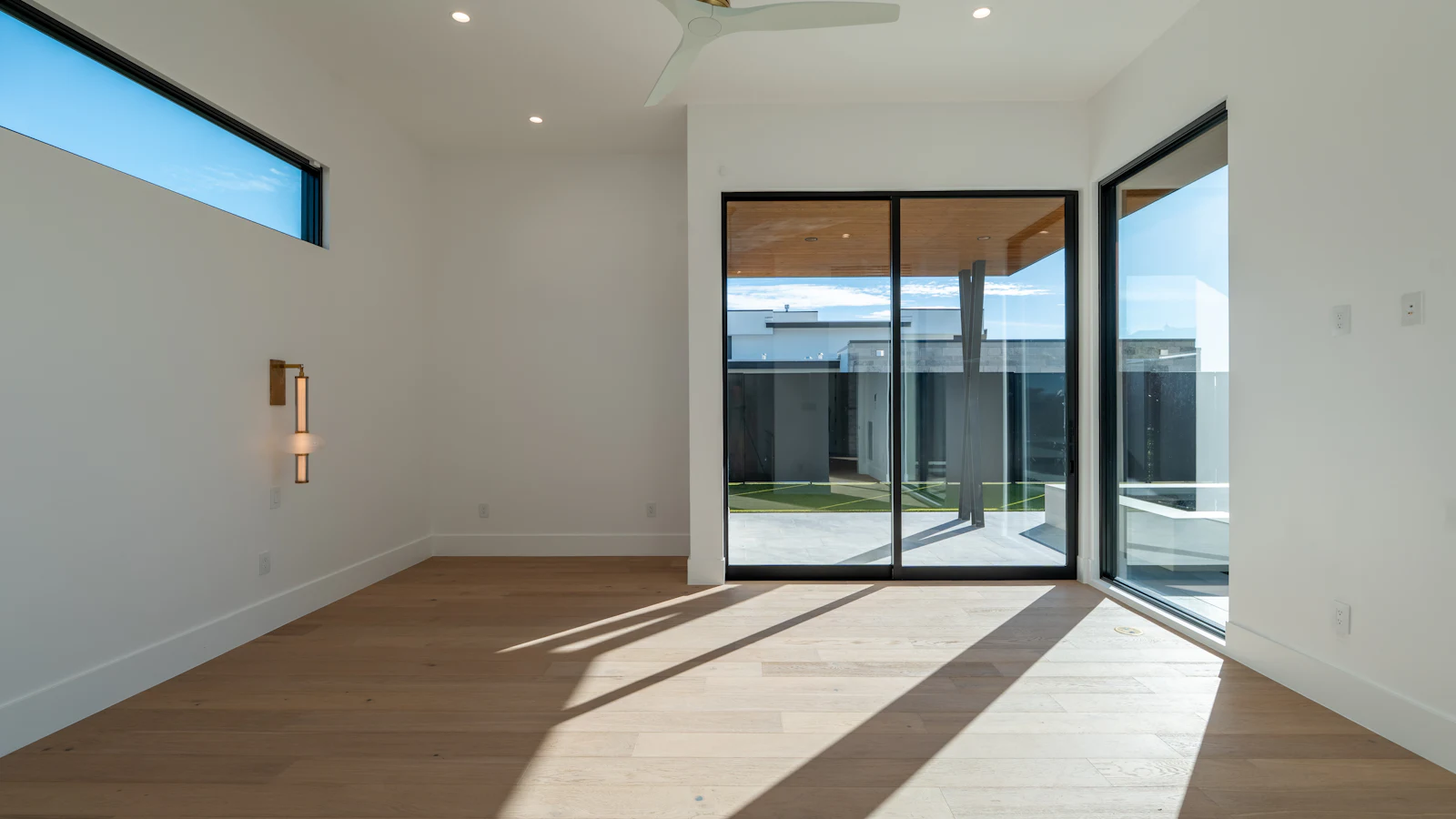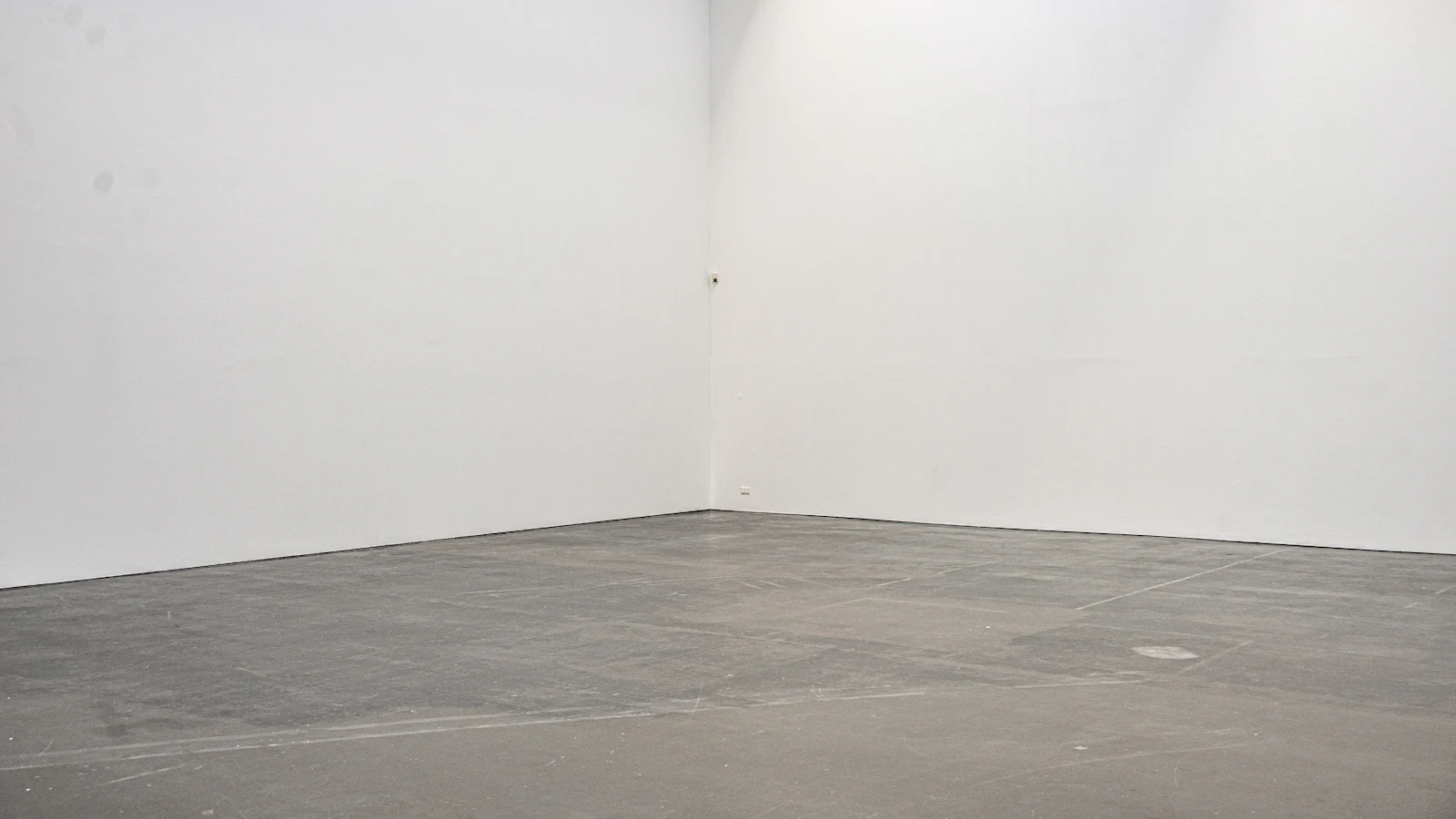
Concrete slabs are common across Monmouth and Ocean County — ranch homes, additions, garage conversions, ground-floor condo units — and the question comes up on almost every one of them: can I have real hardwood there? Usually yes. How you get there matters more than which wood you pick.
The short answer
Yes — in most cases as engineered hardwood, glued down or floated, after the slab has been tested and prepared. Solid hardwood over concrete is much harder and usually means building a wood subfloor first. Everything below is why.
Moisture comes first
Concrete holds water and releases it slowly, and wood reacts to every bit of it. A slab that looks and feels dry can still be giving off enough moisture vapor to cup a floor within a year. So the first step is not choosing a species, it is measuring the slab. Relative-humidity probe testing is the standard method — we explain it in our post on ASTM F2170 moisture testing, which is written for commercial projects but applies the same way to a house.
If the reading is above the flooring manufacturer's limit, the answer is usually a moisture-mitigation system or coating under the floor, not hoping for the best. That is a planned line item. Skipping it is how floors get voided warranties. Shore-area slabs deserve extra caution — our shore humidity post explains why.
Flatness is the second gate
Wood flooring manufacturers commonly specify a flatness tolerance of about 3/16 of an inch over 10 feet, and some are tighter. Slabs are rarely that flat. High spots get ground down and low spots get filled with self-leveling compound. Check the instructions for the specific product, because the number varies. A floor laid over a wavy slab will feel hollow, creak and eventually show gaps.
Engineered hardwood: glued or floated
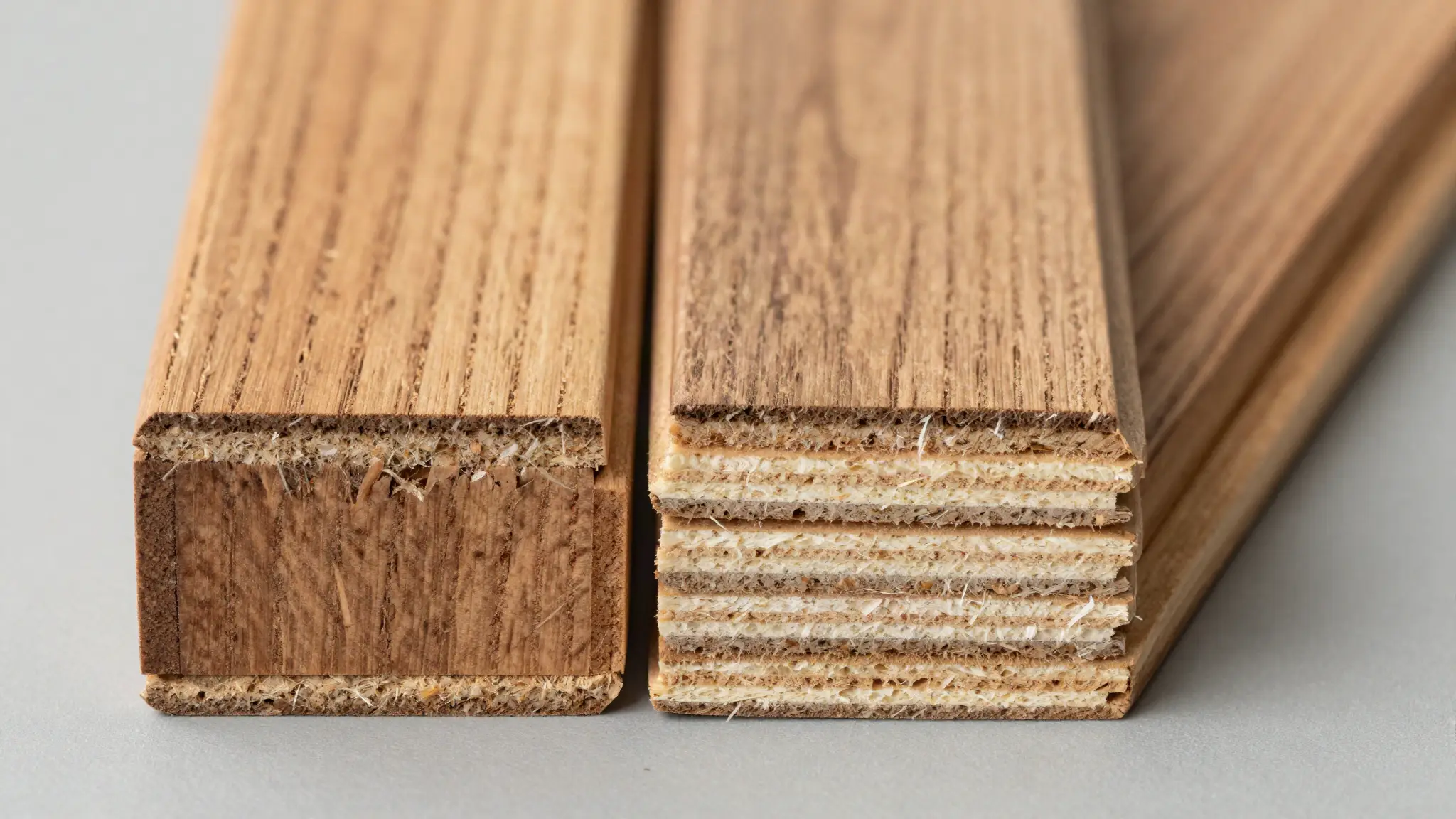
Engineered hardwood is the practical choice over concrete because its plywood core is more dimensionally stable than a solid plank — the same reason it suits radiant heat and humid homes. Two installation methods work. Glue-down bonds the plank directly to the slab; it feels solid underfoot and transfers heat evenly. Floating lays the planks over an underlayment without bonding them to the slab; it is faster and forgiving of small slab imperfections, but it can sound more hollow. The product's instructions decide which are allowed.
Solid hardwood over concrete
Solid hardwood is normally nailed down, and a flooring nailer does not hold in concrete. Getting a solid floor onto a slab means installing a wood subfloor system first, which adds height, cost and a moisture-management question of its own. For most slabs we steer toward engineered instead — see engineered versus solid for how the two compare.
Height and transitions
Whatever goes over the slab adds thickness, plus underlayment or adhesive. That affects door clearance, appliance heights and how the new floor meets tile or carpet in the next room. It is worth measuring before you order, not after.
Below grade is a different question
A slab at ground level and a basement slab below grade are not the same risk. Basements sit in constant contact with ground moisture, and our basement flooring guide explains why we usually recommend waterproof LVP or tile there instead.
What to ask your contractor
Was the slab tested, with which method, and what was the reading against the manufacturer's limit? How will flatness be handled? Is moisture mitigation priced in if the reading is high? What does the product warranty require? A contractor who answers those specifically has done this before.
We tell you plainly if a slab is not ready for wood or if another flooring suits it better. See our hardwood flooring page for installation options, or book a free in-home assessment anywhere in Monmouth and Ocean County.