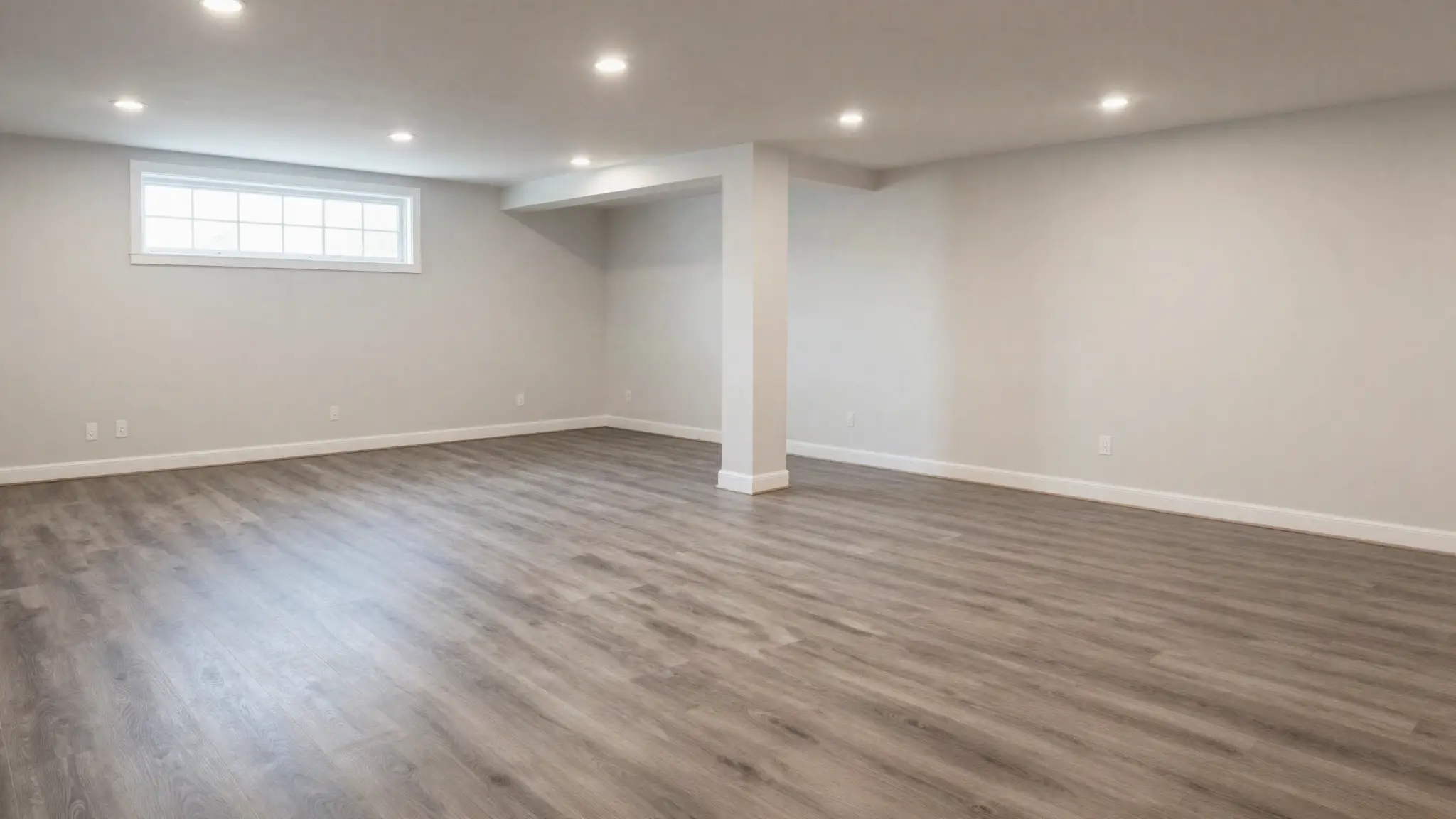
Basements are the one room in the house where the "right" flooring answer changes completely, and generic flooring advice — most of it written for an above-grade living room — routinely gets it wrong for NJ basements specifically.
Why solid hardwood is off the table below grade
Solid hardwood is not a below-grade flooring option, full stop. Basements sit in constant, direct contact with ground moisture, and even a basement that's never visibly flooded is more humid than the rest of the house. Solid wood installed below grade will cup, warp, or buckle — it's a matter of when, not if.
LVP vs. tile: the real basement decision
Once solid hardwood is off the table, the real choice is between waterproof LVP and tile. LVP installs faster, feels warmer underfoot, and handles minor water events (a sump pump hiccup, a small leak) without damage at the plank level. Tile is more work to install and colder underfoot without supplemental heat, but it's the more resilient option in a basement with any real flood history, since it has no core material that a prolonged water event can compromise the way even waterproof LVP eventually can at its edges.
Engineered hardwood as a middle option
If the goal is a hardwood look and feel in a basement that's dry and well-managed, engineered hardwood with a strong moisture-resistant core is sometimes viable — but this is a case where we're conservative. A basement needs a real vapor barrier and reasonable humidity control before we'd recommend anything other than fully waterproof LVP or tile.
Vapor barriers and ventilation matter as much as the flooring choice
We cover this in more depth in our post on shore-area humidity, but it bears repeating for basements specifically: the best flooring choice in the world underperforms over a moisture problem that was never addressed. Part of every free in-home assessment for a basement project includes checking for a vapor barrier and reasonable ventilation before we talk flooring material at all.
Subfloor prep is its own step in a basement
Concrete basement subfloors are almost never perfectly flat, and any high or low spots telegraph straight through LVP or thin-set tile if they're not addressed first. Self-leveling compound before flooring goes down is a common, necessary step in basements specifically — it's worth asking whether a quote includes it, since a basement quote that skips this line item is quietly setting up an uneven finished floor.
The bottom line for NJ basements
Lead with waterproof LVP for most basements, consider tile if there's real flood risk or a preference for a colder, more durable surface, and don't skip the moisture fundamentals conversation. Get a free in-home assessment and we'll tell you honestly what your specific basement needs — see our LVP options for more detail.