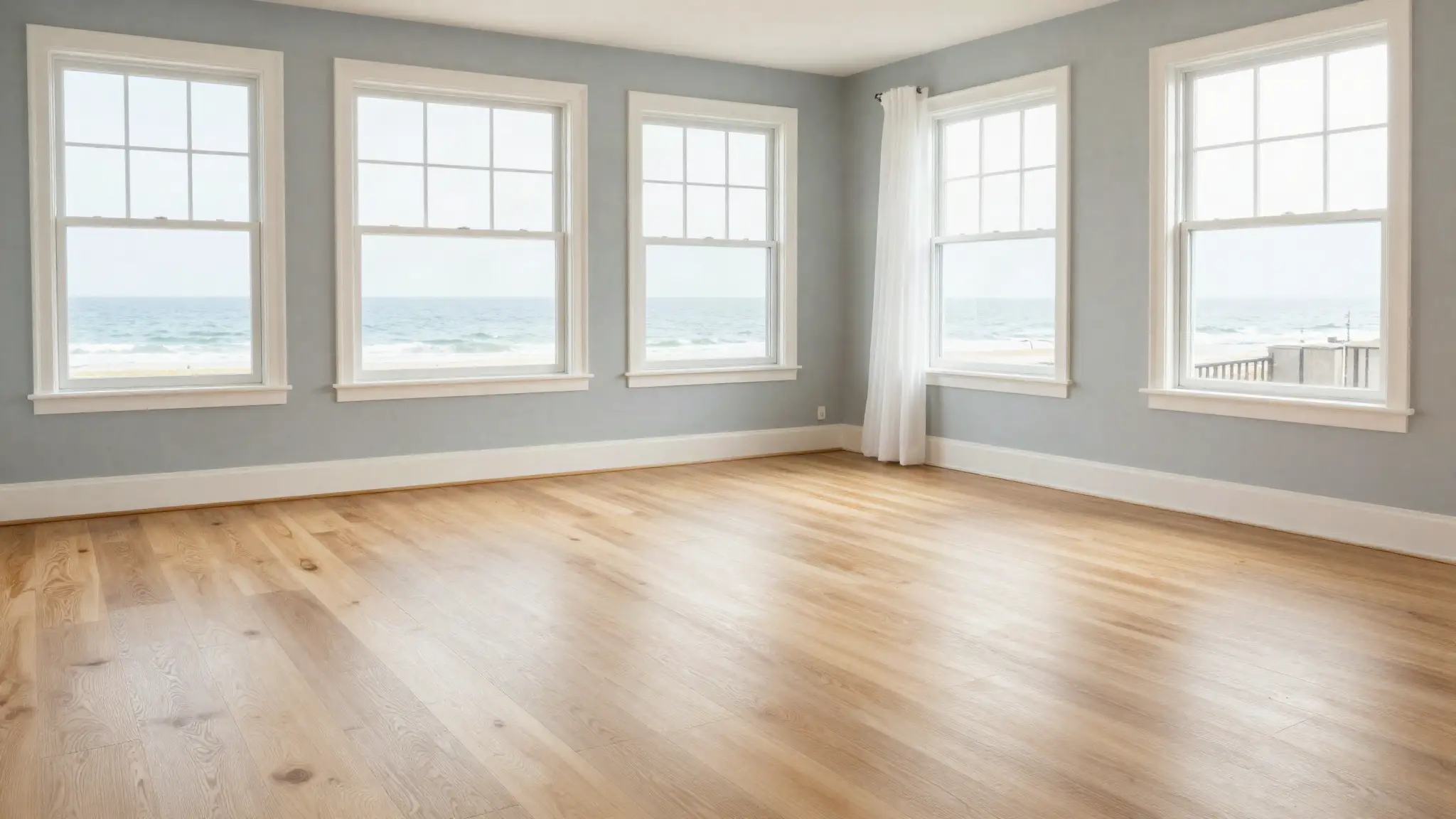
Generic flooring advice online is written for the average American home — not a house three blocks from the beach in Manasquan, or a bayfront property in Brick. Shore-adjacent homes deal with humidity swings, salt air, and occasional flood risk that changes which flooring actually makes sense.
Why solid hardwood struggles closest to the water
Solid hardwood expands and contracts with humidity more than any other flooring type. In homes within a mile or two of the ocean or bay, we see more cupping and gapping complaints on solid hardwood than anywhere else we work — not because of bad installation, but because the humidity swings are simply more extreme.
What we recommend instead
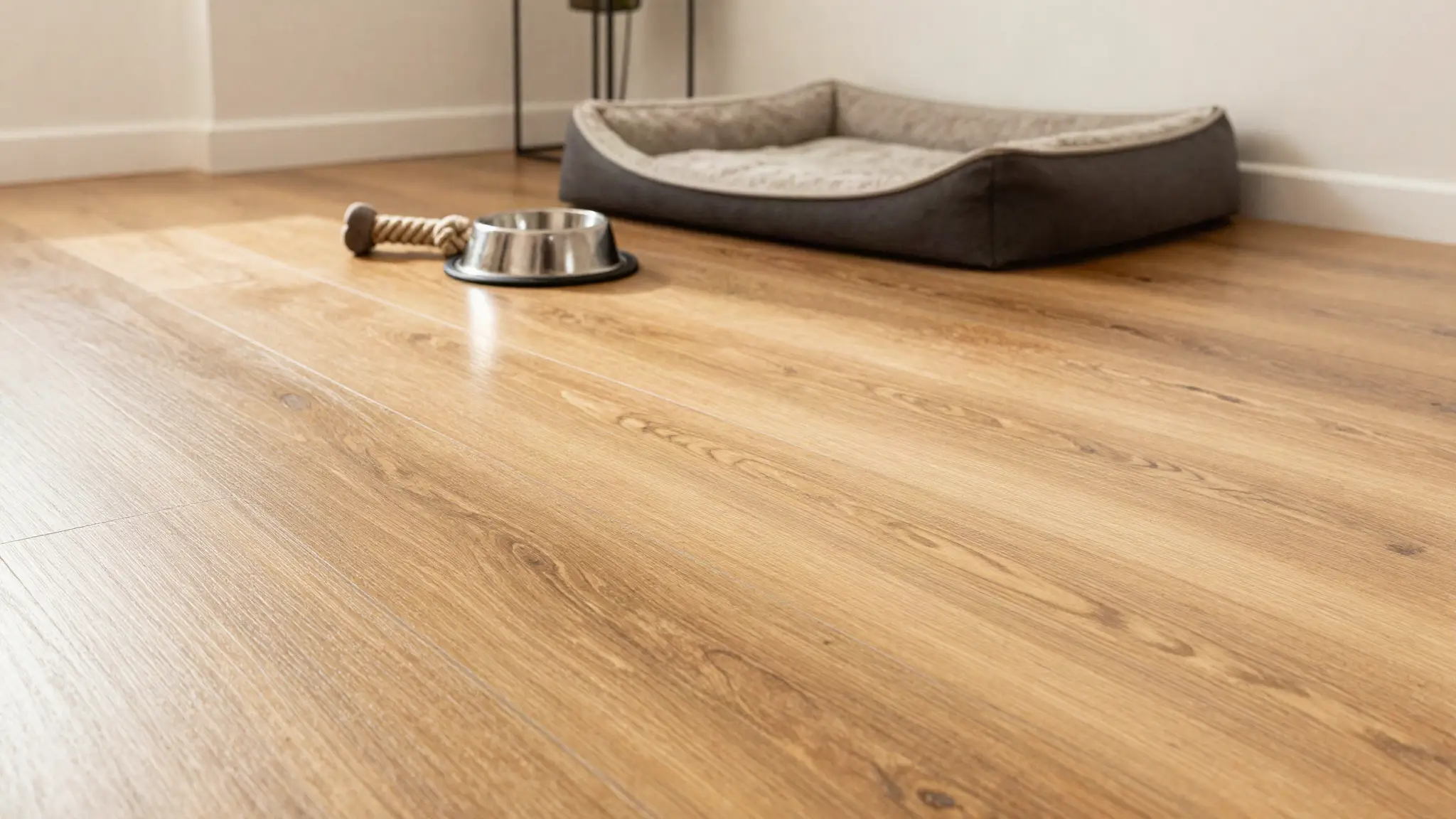
Engineered hardwood, with its plywood core, handles humidity swings meaningfully better than solid wood while still giving you a real hardwood wear layer on top. For rooms with any flood risk — mudrooms, ground-floor living areas in flood-zone homes, basements — waterproof LVP is the more resilient choice, full stop.
Ventilation and vapor barriers matter as much as the flooring itself
A lot of shore-home flooring problems actually trace back to inadequate crawlspace ventilation or a missing vapor barrier, not the flooring choice itself. Part of our free in-home assessment includes checking these fundamentals — because the best flooring choice in the world won't perform well over a moisture problem underneath it.
The bottom line for shore-area homeowners
If you're within a mile or two of the water, lead with engineered hardwood or waterproof LVP over solid hardwood, and don't skip the subfloor/vapor barrier conversation. It's the difference between a floor that looks great for one season and one that looks great for fifteen.