When we price a refinish, one of the first questions is oil or water — and most homeowners have never been told there is a choice. Both are polyurethane finishes and both protect the wood. They behave very differently while they go on, and over the years after.
The short version
Water-based finish dries clear, dries fast, smells far less and costs more. Oil-based finish goes on warmer, ambers over time, dries slowly, smells strongly and costs less. Neither is simply better. The right one depends on the wood, the look you want and how you live in the house.
Color now and color in ten years
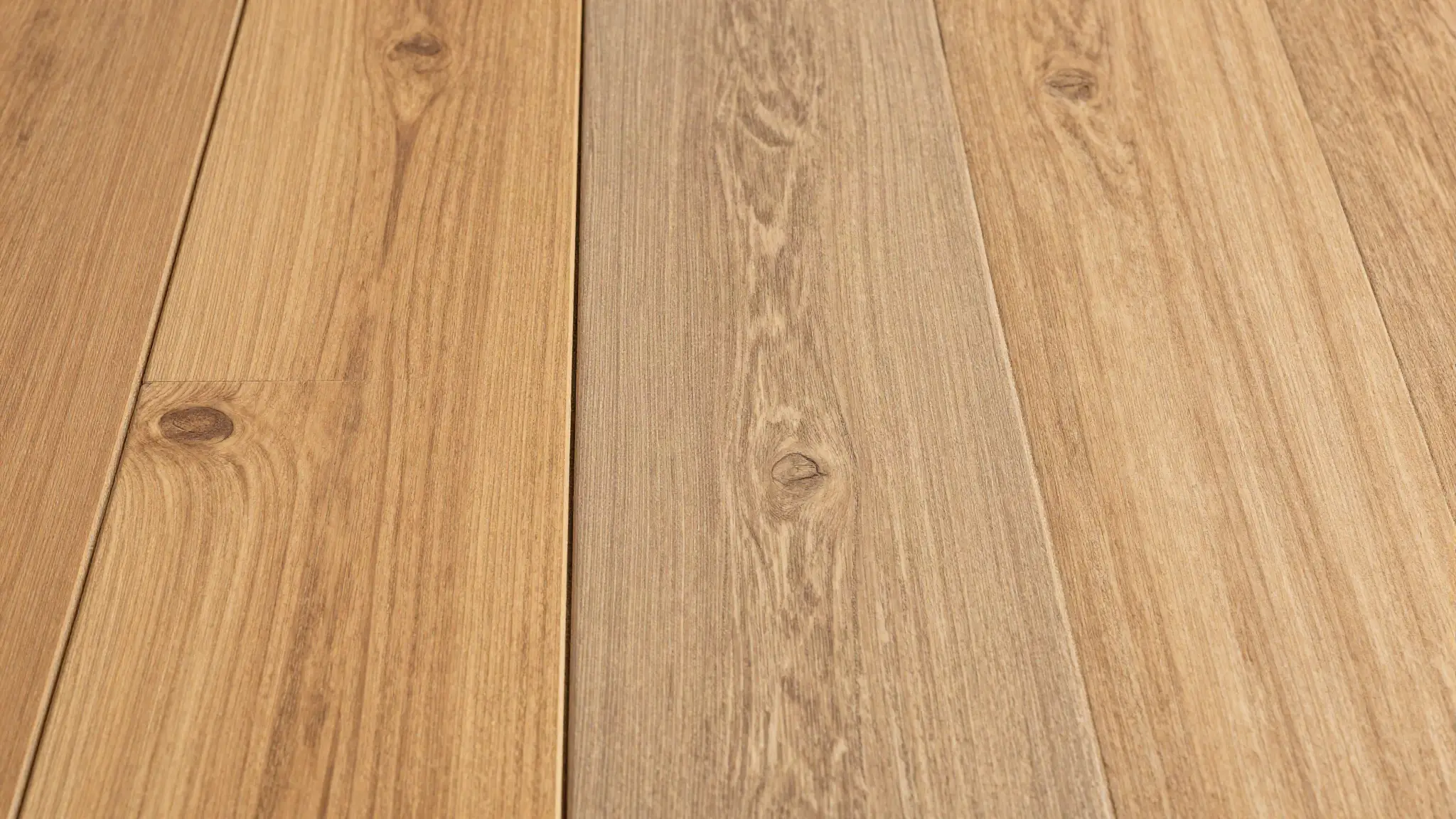
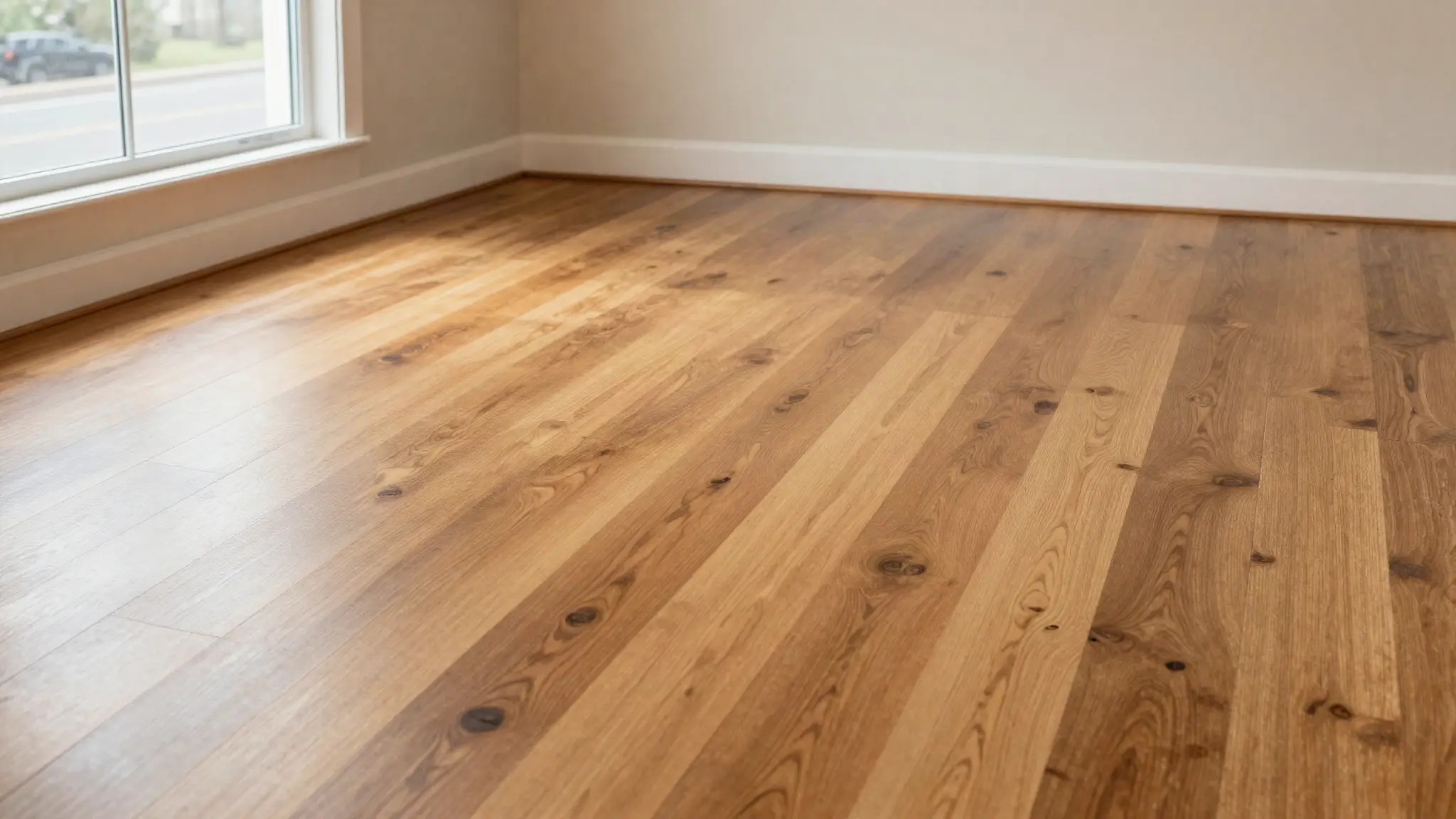
This is the difference people notice most. Oil-based finish has a warm amber tone that deepens as it ages. On red oak, that warmth is the classic look many people want. On pale woods — maple, ash, white oak — or on a modern natural or gray-toned floor, the same amber reads as yellow, and it keeps getting yellower.
Water-based finish stays much closer to the color of the bare wood and does not change much with age. If you are trying to keep a floor light and neutral, that is usually the deciding factor. Stain works under either one; the finish decides what the color does afterwards.
Dry time and how long rooms are out of service
Water-based finish dries quickly enough that several coats can go on in a single day. Oil-based usually needs overnight between coats, which stretches the schedule. Dry to the touch is not fully cured for either one: furniture and rugs have to wait longer than foot traffic does, and the exact timeline depends on the product and the season. Our post on the stage-by-stage timeline covers what each step involves, and humidity affects dry time for both — one reason the time of year matters.
Smell and living in the house
Oil-based finish has a strong solvent smell that lingers for days, and many households want to be out of the house while it cures. Water-based finish is much milder and is far easier to live with. If anyone in the home has asthma or allergies, there is a baby, or you simply do not want to move out, that points hard toward water-based. Sanding dust is the other half of that equation — see dustless versus traditional sanding.
Durability
Both are durable, and modern water-based finishes are very good. In a family home, how many coats go on and how well the floor was prepared usually matter more than the label on the can — which is why "how many coats?" is one of the five questions in our refinishing cost guide. Be wary of anyone who tells you one type is bulletproof and the other is junk.
Cost
Water-based finish costs more per job, mostly because the material itself is more expensive. Oil-based costs less to buy, which is why a very low refinishing quote is sometimes oil-based with fewer coats. It is worth asking, since the two are not like-for-like.
Recoating later
Once a finish has been on for a few years you cannot tell by looking which type it is, and it matters: a screen and recoat bonds best when the new coat suits the old one. If you know what is on the floor, tell your contractor. If you do not, a good one will test adhesion in a small area first rather than assume. That is also part of working out whether a dull floor needs a recoat or a full sand — the water-drop test answers that in about ten seconds.
What we would choose
For most occupied homes we lean water-based, because the faster schedule, the milder smell and the color that stays true are worth the extra cost. Oil-based still makes sense when the warm amber is exactly the look you want, or the budget is tight and you are not living in the house. We will tell you which we think suits your floor — see our sanding & refinishing page, or book a free estimate anywhere in Monmouth and Ocean County.