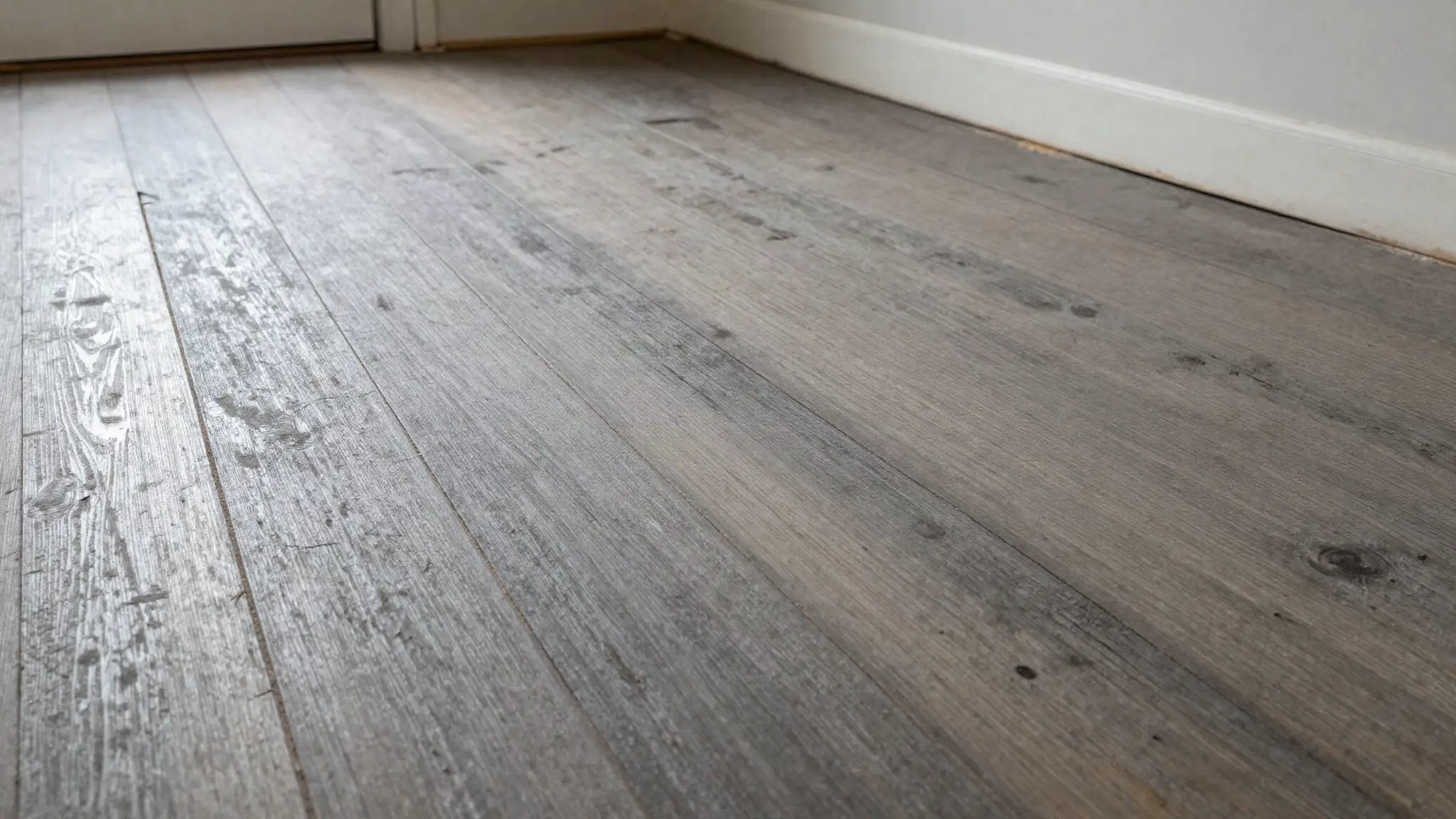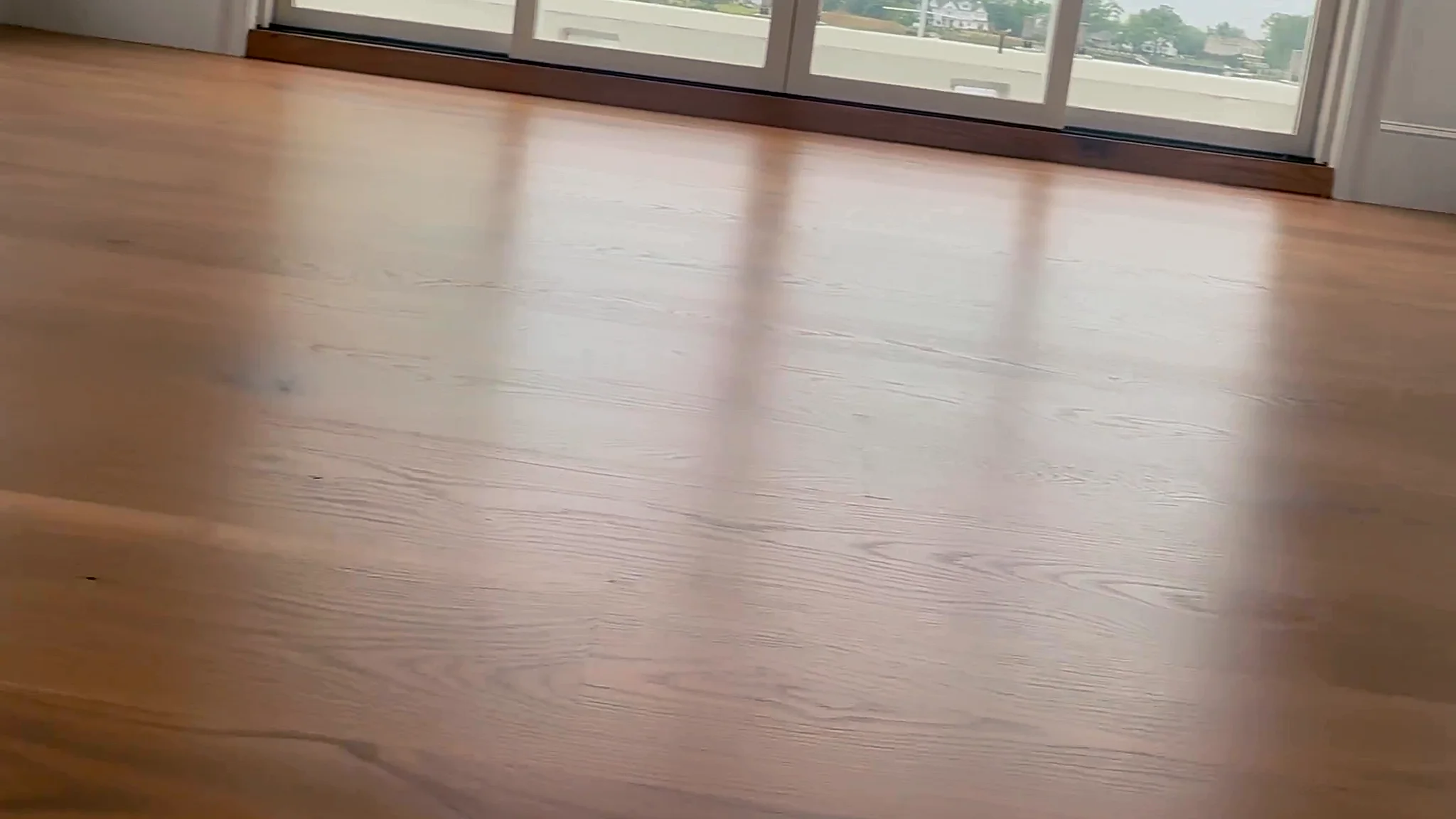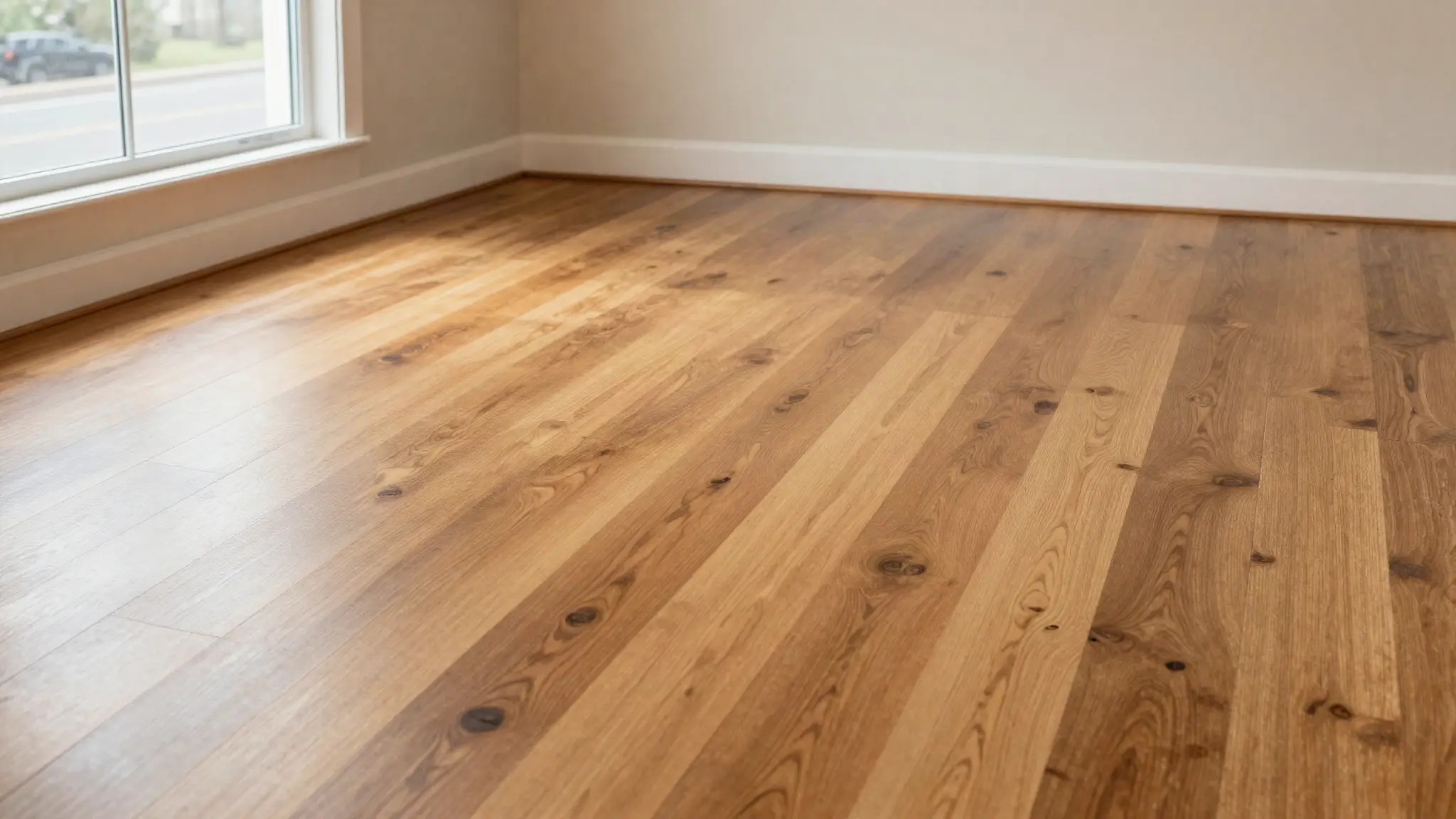
Most dull hardwood floors are not worn out — they are dirty, and dirty in a specific way that ordinary mopping makes worse. Before spending anything, strip the residue off the floor and clean it properly. That alone brings back the shine on a large share of the floors people assume are finished.
A dull floor almost never means the wood is ruined. What you are looking at is the finish — the clear protective layer sitting on top of the wood — scattering light instead of reflecting it. Either something is sitting on that finish, or the finish itself has been scratched or worn thin. The first is free to fix. The second is not.
Step 1: strip the residue and clean it properly
Years of "mop and shine" products, oil soaps and furniture-polish sprays leave a film that builds up coat on coat. It looks cloudy, it feels slightly tacky in humid weather, and no amount of further mopping removes it — because you are mopping with the thing that caused it.
Vacuum first, on the hard-floor setting. Not a beater bar. Grit left on the floor during mopping is dragged around and adds fresh scratches, which is the opposite of what you are trying to do.
Then wash with a pH-neutral hardwood cleaner, working in small sections with a barely damp microfibre flat mop and drying as you go. Standing water is the enemy — it gets into the seams and swells the boards.
For heavy build-up, use a dedicated hardwood floor stripper or a wax-and-residue remover made for polyurethane finishes, following the label. This is the step most people skip, and it is the one that actually changes the look. Do a small area first, in a corner, before doing the room.
If the haze lifts and the floor reflects light again, you are done. That is genuinely the whole fix for a lot of floors, and it costs the price of a bottle of cleaner.
What to keep off the floor
Vinegar and water. The most repeated advice on the internet and it is wrong for modern floors. Vinegar is acidic and dulls a polyurethane finish over time. It does not "cut through" anything except your finish.
Oil soaps. They leave a residue by design. The floor looks good the day you use it and progressively cloudier every month after.
Anything promising shine in the bottle. Acrylic "restorers" and mop-and-shine liquids lay a soft plastic film over the finish. It scuffs, it yellows, it goes blotchy, and it has to be stripped before a professional can recoat — which turns a cheap job into an expensive one.
Steam mops. Heat plus moisture forced into the seams is how you get cupped boards and a failed finish. Manufacturers void warranties over this.
Wax on a polyurethane floor. Wax belongs on wax-finished floors, which is a small minority of modern homes. On polyurethane it prevents any future coat from bonding.
Why the floor looks dull right after you clean it
If the floor looks worse when it dries than it did before you started, the cleaner is the problem, not the floor. Three things cause it.
Residue drying back down. Anything with a polymer, wax or oil in it redeposits as the water evaporates. You lifted it, spread it around, and let it dry in a thinner, hazier layer.
Too much water. A soaking mop leaves a film of dissolved dirt behind as it dries, which is why the floor looks fine wet and cloudy twenty minutes later. Damp, not wet, and dry behind yourself.
Hard water. Municipal water in much of Monmouth and Ocean County carries enough mineral content to leave a faint film on a dark floor. If everything else is right and it still hazes, try distilled water on one section and compare.
Should you buff the floor?
Buffing means running a weighted rotary machine with a soft pad over the floor. On a floor with a wax finish it genuinely restores shine — it melts and re-levels the wax.
On a modern polyurethane floor, which is nearly every floor installed in the last thirty years, buffing on its own does very little. There is no wax to re-level. Polishing pads on polyurethane can raise the gloss slightly for a short time, and an aggressive pad will burn through the finish in the traffic lanes where it is already thinnest.
The version that does work is a screen and recoat: the floor is buffed with an abrasive screen to key the surface, then a fresh coat of finish goes on. The buffing is preparation for the coat, not the fix by itself. Anyone selling you buffing without a recoat on a polyurethane floor is selling you an hour of shine.
The 10-second test for whether cleaning will be enough
If a proper clean did not bring it back, the finish itself is the problem, and this tells you how far it has gone. Put a few drops of water on a dull, high-traffic area and wait five minutes.
Water beads and sits on top. The finish is still intact — what you have is scratching, not wear-through. A screen and recoat will bring it back, and that is the cheap professional option.
Water soaks in and darkens the wood. The finish has worn through and bare wood is absorbing. Recoating will not fix this, because a new coat needs sound finish underneath to bond to. This one needs a full sand and refinish.
Run it in a few places. Floors rarely wear evenly, and one worn-through traffic lane is enough to rule out a recoat for the whole room.
Why the floor went dull in the first place
1. Micro-scratches from grit. This is the number one cause and it is almost entirely preventable. Sand and street grit tracked in act like sandpaper underfoot. Each particle is tiny; a few thousand of them across a winter is a hazed traffic lane. It shows up first in hallways, in front of the sink, and along the path from the door people actually use — not the front door, the one everybody really uses.
2. Residue build-up from the wrong cleaner. Anything marketed as "mop and shine," most oil soaps, and vinegar-and-water all leave something behind or slowly attack the finish. The irony is brutal: the product bought to restore shine is frequently the thing killing it. Residue builds a cloudy film that no amount of additional mopping removes, because you are mopping with the cause.
3. UV exposure. South and west-facing rooms fade and dull faster. You often see it as a rectangle of brighter floor when an area rug gets moved — that is not the rug protecting a shine, that is the rest of the floor having changed around it.
4. The finish is simply old. A residential polyurethane finish has a service life. Ten to fifteen years of normal family traffic is a reasonable expectation, less in a busy entry, less again with big dogs. Nothing went wrong; it wore out.
What the two professional fixes involve
Screen and recoat — the existing finish is lightly abraded so a fresh coat can grip, then one or two new coats go on. No stain change, no dust from sanding to bare wood, and the room is usually back in service quickly. Across New Jersey this typically runs in the range of $1.50 to $3.00 per square foot. It is the single most cost-effective thing you can do to a tired floor, and most homeowners wait too long to do it.
Full sand and refinish — the floor is taken down to bare wood, which removes the scratches, the old finish, and most surface staining, then it is stained (if you want a colour change) and sealed with multiple coats. Typically $3.00 to $6.00 per square foot in NJ for a standard job. This is also your only opportunity to change the colour of the floor.
Heavy restoration — deep water staining, pet urine that has penetrated the wood, or damaged boards needing replacement push a job into $7.00 per square foot and up. (Full breakdown of what moves each tier is in our NJ refinishing cost guide.) Pet urine in particular is worth an honest word: once it has soaked past the finish into the wood and the subfloor, sanding alone does not always remove the stain or the odour, and boards sometimes have to come out.
Why dust control matters more than people expect
A full sand generates a serious amount of fine wood dust. Traditional sanding puts a lot of that into the air and, from there, into every room in the house. We run dust-containment sanding on refinishing work for exactly this reason — it is not a luxury add-on, it is the difference between living in your house during the project and finding a film on your kitchen counters for a fortnight.
How to keep hardwood floors shiny
Walk-off mats at every entry, and get the grit before the grit gets the floor. Felt pads under furniture legs, replaced when they flatten. A pH-neutral cleaner made for hardwood — not vinegar, not oil soap, not anything promising shine in the bottle. Trim the dog's nails. And keep indoor humidity somewhere around 35 to 55 percent, which in a Jersey Shore home means a dehumidifier in August and often a humidifier in January.
Do that, and plan on a screen and recoat every several years rather than a full sand every decade. It costs less over the life of the floor and puts less wear on the wood, because every full sand removes a bit of thickness you never get back — a floor can only be sanded so many times.
Not sure which one you need?
If the water test gave you a mixed answer, or the floor looks worse in some rooms than others, that is normal and it is exactly what an in-person look sorts out in a few minutes. We cover Monmouth and Ocean County and the estimate is free — see our sanding & refinishing page for the full scope, or book a free in-home assessment and we will tell you plainly whether you still have the cheap option.