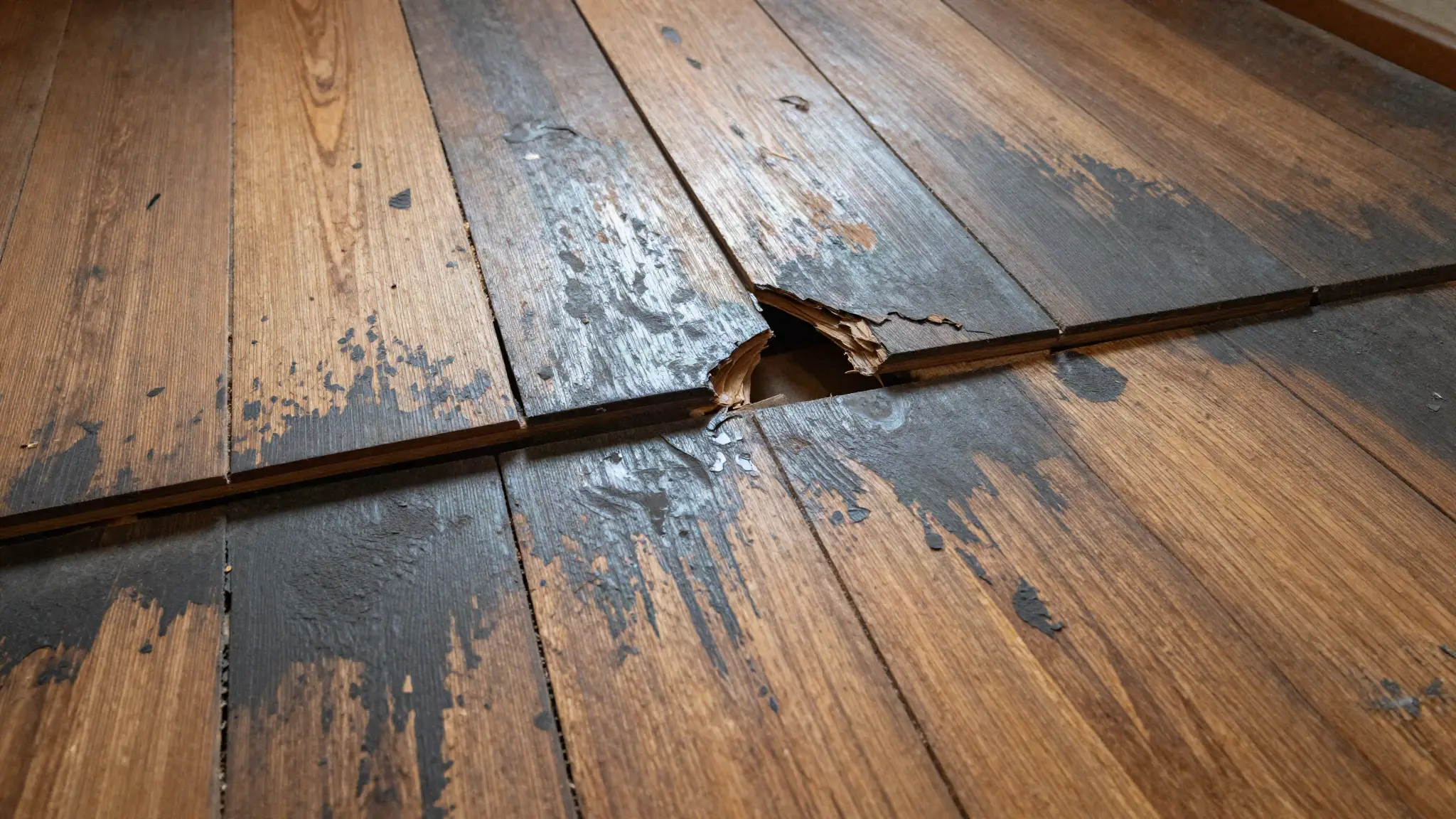
Sanding a hardwood floor turns a measurable amount of solid wood into airborne powder. A single average room can produce several pounds of it, and it is fine enough to stay suspended in the air for hours and travel through a house well beyond the room being worked on.
What you do about that is one of the biggest practical differences between two flooring quotes — and one of the least discussed at the estimate.
"Dustless" is marketing. Dust containment is the real thing
Let us be honest about the word first, because the industry is not. No sanding system captures 100 percent of the dust. Anyone promising a genuinely dustless job is overselling. What good systems do is capture the large majority of it at the source, before it ever becomes airborne.
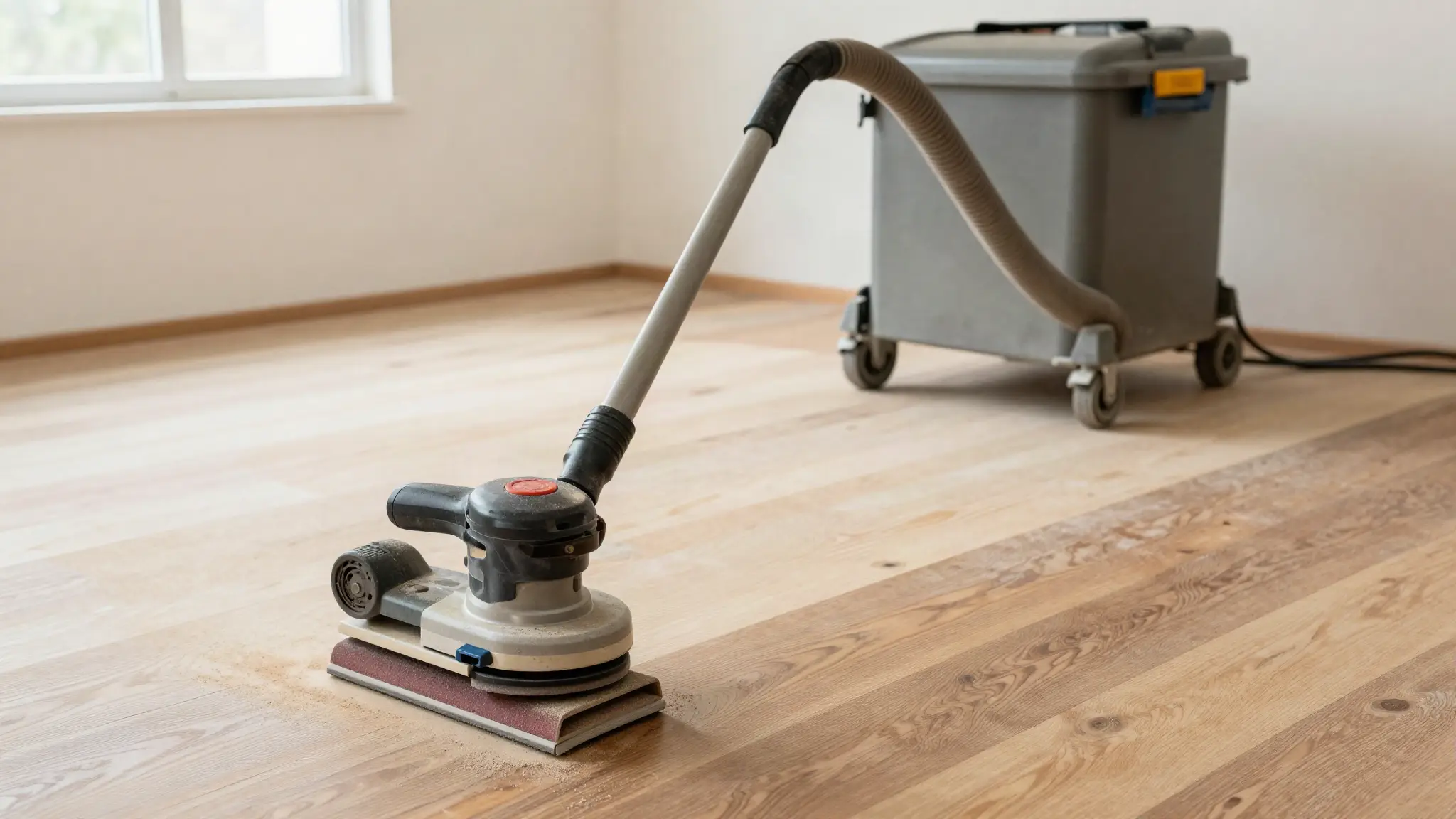
The mechanism is straightforward: the sander connects by hose to a powerful vacuum — often a unit outside the house or in a truck — so the dust goes into a sealed container instead of a bag on the machine or the air in your hallway. Add plastic sheeting at doorways and sealed HVAC returns and you have contained the problem rather than distributed it.
We call it dust-contained rather than dustless because that is what it honestly is. You will still want to wipe surfaces afterwards. What you will not get is fine wood powder on top of the kitchen cabinets for the next month.
What traditional sanding actually costs you
The old approach uses a bag on the sander itself. Bags capture the coarse material and let the fine particles — the ones that travel, settle everywhere, and are worst to breathe — straight through.
The consequences are practical rather than dramatic:
It goes everywhere. Closed doors are not a seal. Dust moves through gaps, along hallways, and especially through the HVAC system, which will then redistribute it for weeks after the job is done.
It lands on everything. Picture frames, the tops of doors, inside cupboards, on curtains. Cleanup is not one afternoon.
It is genuinely worse to breathe. Fine wood dust is a respiratory irritant, and some species are worse than others. This matters more if anyone in the house has asthma or allergies, or if there is a baby.
It can affect the finish itself. Airborne dust that settles onto a wet coat of polyurethane gets sealed into it. That is where a slightly gritty texture in the finished floor comes from.
That last point is the one homeowners rarely hear, and it is the one that shows up in the actual quality of the result rather than just the convenience of the process.
When it matters most
Being straight about this: there are jobs where traditional sanding is a perfectly reasonable choice, and jobs where it is close to unworkable.
It matters most in an occupied house, a home with children or anyone with respiratory issues, a house with forced-air HVAC, an apartment or condo with shared air, a space that has already been painted or has new cabinetry in, and any commercial or tenanted building where other people are using the space.
It matters least in an empty house between owners, a full gut renovation where dust is happening anyway, or a detached room that can be sealed off completely.
If you are refinishing an empty house before moving in, the saving on traditional sanding is real and the downside is small. If you are living there, the equation flips entirely.
What to ask at the estimate
Do not just ask "is it dustless." Everyone says yes. Ask these instead:
What is the vacuum connected to? A shop vac on the machine is not the same as a dedicated containment unit.
Do you seal doorways and HVAC returns? The best vacuum in the world does not help if the return duct is pulling dust into the rest of the house.
What cleanup is included? And what does the room look like when you hand it back.
The answers separate a contractor who runs containment as a system from one who bought a hose.
How we handle it
We run dust-contained sanding as standard on refinishing work rather than as a paid upgrade, because the alternative creates a problem for the homeowner that we would then be asked to solve. It is also what makes our work viable in occupied buildings and tenanted units, which is a large part of our commercial and trade work.
If you are weighing up whether your floor needs a full sand at all, the water-drop test will tell you in ten seconds — a screen and recoat produces far less dust than a full sand, and is often all a dull floor needs. Otherwise, see our sanding & refinishing page or book a free estimate.