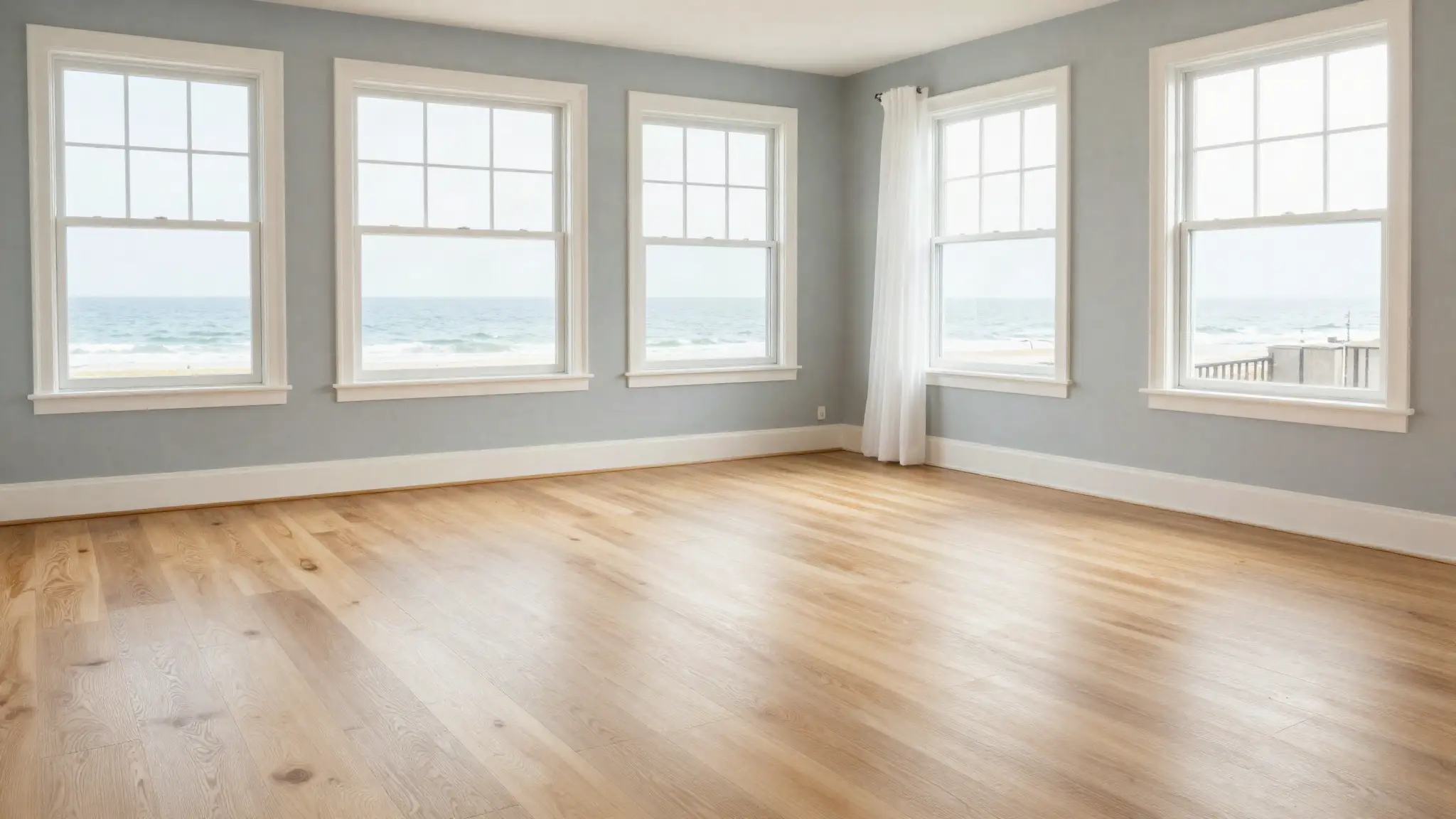
We refinish floors in every season, and there is no month we would tell you to avoid entirely. But humidity swings through the New Jersey year change how a finish cures and how livable the project feels while it is happening, and it is worth planning around if your schedule has any flexibility at all.
Why season affects a refinish more than people expect
Two things move with the season: how fast a finish dries and cures, and how much humidity is in the wood itself before you start. High humidity slows a water-based finish's dry time between coats, which stretches the project timeline. Low humidity in winter can mean a wood floor is at its most contracted right before a job — sand and finish it then, and come summer's humidity the boards swell back and can crowd the finish at the seams if the gaps were sanded too tight in January.
Spring
Genuinely the most requested season, for good reason — moderate humidity, and the timing lines up for people wanting the house presentable for spring and summer entertaining. It also means our schedule books up fastest in spring, so this is the season to book furthest ahead if you have a target date in mind.
Summer
Workable, but shore-area humidity is at its yearly peak, which slows dry time between coats on a full sand-and-refinish and can add a day or two to the timeline versus the same job in a drier month. Water-based finishes handle this better than oil-based, since they are less humidity-sensitive to begin with — see our refinishing cost guide for how finish type factors into a quote.
Fall
Our second-favorite season to recommend, for a practical reason: humidity is moderating down from summer's peak, and getting the floor finished before the holidays means it is fully cured and back in service before you are hosting Thanksgiving on it.
Winter
The season most homeowners assume is off-limits, and it is not — indoor refinishing does not care what is happening outside, and heated homes actually run drier air in winter, which is good for finish cure time. The one real consideration is low humidity making the wood especially contracted right before the job, which is why we do not sand joints unusually tight in the depths of winter — a small margin left for the wood to swell back in spring keeps a winter refinish from crowding at the seams six months later.
Humidity is the real variable, not the calendar
None of the above is really about the season on the calendar — it is about the humidity that season typically brings to a Monmouth or Ocean County home, and homes near the water swing further than the general seasonal pattern suggests. If your home already runs a humidifier in winter and a dehumidifier in summer, as we generally recommend for shore-area hardwood — see our shore humidity post — the seasonal difference matters less, because you are managing the variable that actually drives it.
Booking around the season
If your calendar has flexibility, spring and fall give the smoothest combination of moderate humidity and predictable timelines. If you need it done in summer or winter for reasons outside your control — moving, an event, a listing date — that is entirely workable too, it just means we plan the finish type and cure schedule around the season rather than pretending it does not matter. Book a free in-home assessment and we will give you a realistic timeline for your actual target date, or see our full timeline breakdown for what each stage takes regardless of season.