A salon or barbershop floor takes abuse that almost no other commercial space does: hair clippings that wedge into every seam, hair color and bleach and acetone spilled at the stations, standing water at the sinks, rolling chairs, and staff on their feet all day. There is no single material that handles all of that perfectly — which is why the right answer is usually to split the floor into zones rather than search for one magic surface.
What a salon floor actually has to survive
The list is specific, and it rules out a lot of "nice" flooring fast.
**Hair.** Fine clippings wedge into any joint, seam or grout line and become nearly impossible to fully clean out. That's why seamless or near-seamless surfaces win in a shop, and why low-texture faces beat deeply embossed "wood grain" ones — texture is just another place for hair to hide.
**Chemicals.** Hair color, developer, bleach, disinfectant — and acetone, if you do nails — attack finishes that shrug off normal wear. The standard advice in the trade is to ask the manufacturer for chemical-resistance test data, and to ask specifically about acetone when nails are in the mix.
**Water.** Constant wet at the wash bowls and sinks, which wants a waterproof surface with no exposed edge for water to find.
**Wear and fatigue.** Rolling chairs and constant traffic mean a commercial wear layer, not a residential one; staff standing all day means anti-fatigue matting matters no matter what the floor is.
**Slip.** Wet hair on a smooth floor is genuinely slippery. The wet zones need a checked slip rating, not just a generic "non-slip" label.
The options, honestly compared
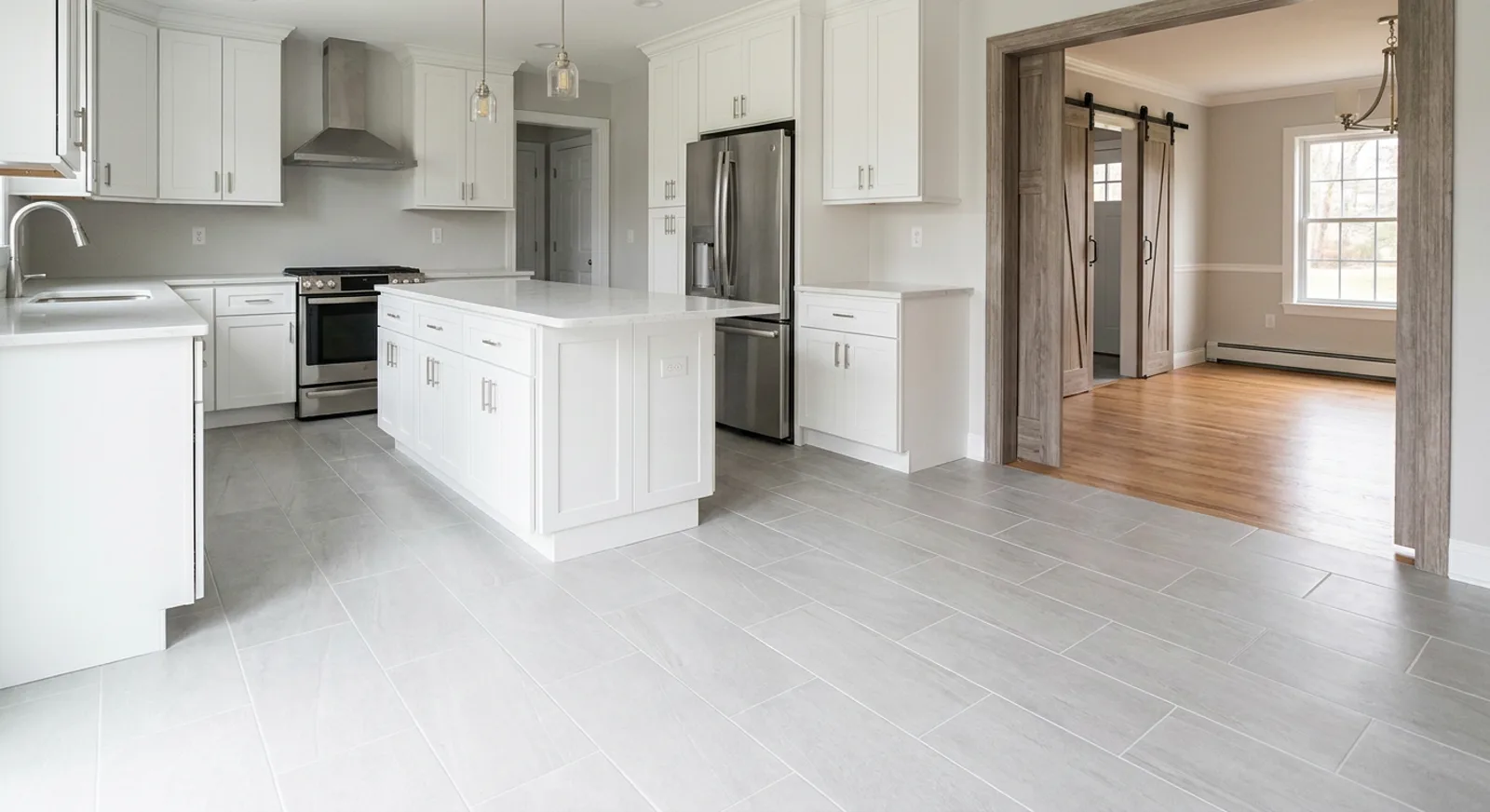
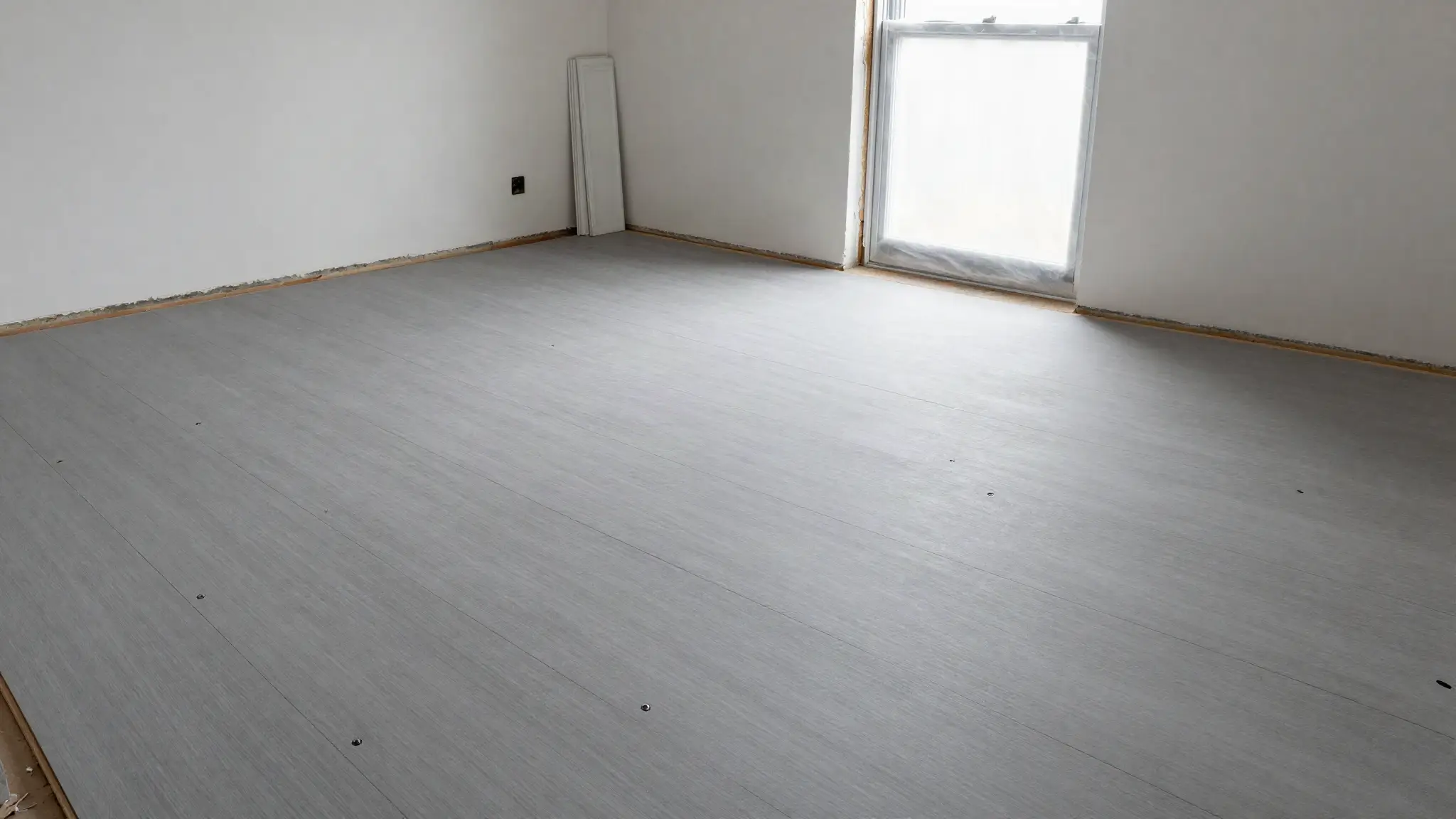
**Commercial LVT (luxury vinyl tile or plank).** The deserved default for most of a salon. It's warm underfoot, quieter than tile, comfortable to stand on, looks convincing in better wood and stone finishes, and — a real advantage — it repairs one plank at a time. Spec a 20-mil or thicker wear layer and a low texture face. The honest limitations: the joints can still catch hair unless the layout and texture are chosen to minimize them, and a thin residential-grade LVT loses its premium feel quickly. This is what we install as glue-down LVT — see our LVT & VCT glue-down page.
**Welded sheet vinyl.** The unglamorous answer that's sometimes exactly right. It's welded into a continuous surface with no joints, so hair has nowhere to hide, and it can be coved up the wall so water finds no edge at the wash stations. That makes it the genuinely correct specification for a wet or color zone. Limitations: it will never be the prettiest floor in the salon, it shows subfloor imperfections, and the seams have to be done by a professional — it's not a DIY material.
**Seamless resin (epoxy / polyaspartic).** The material behind the modern, design-led barbershop look. It gives a joint-free, sealed, chemical-resistant surface that wipes clean and hides clippings instead of collecting them. Limitation: it's a specialty coating trade, it needs a shutdown for slab prep and cure time between coats, and it's hard and cold underfoot — which reinforces why anti-fatigue mats matter.
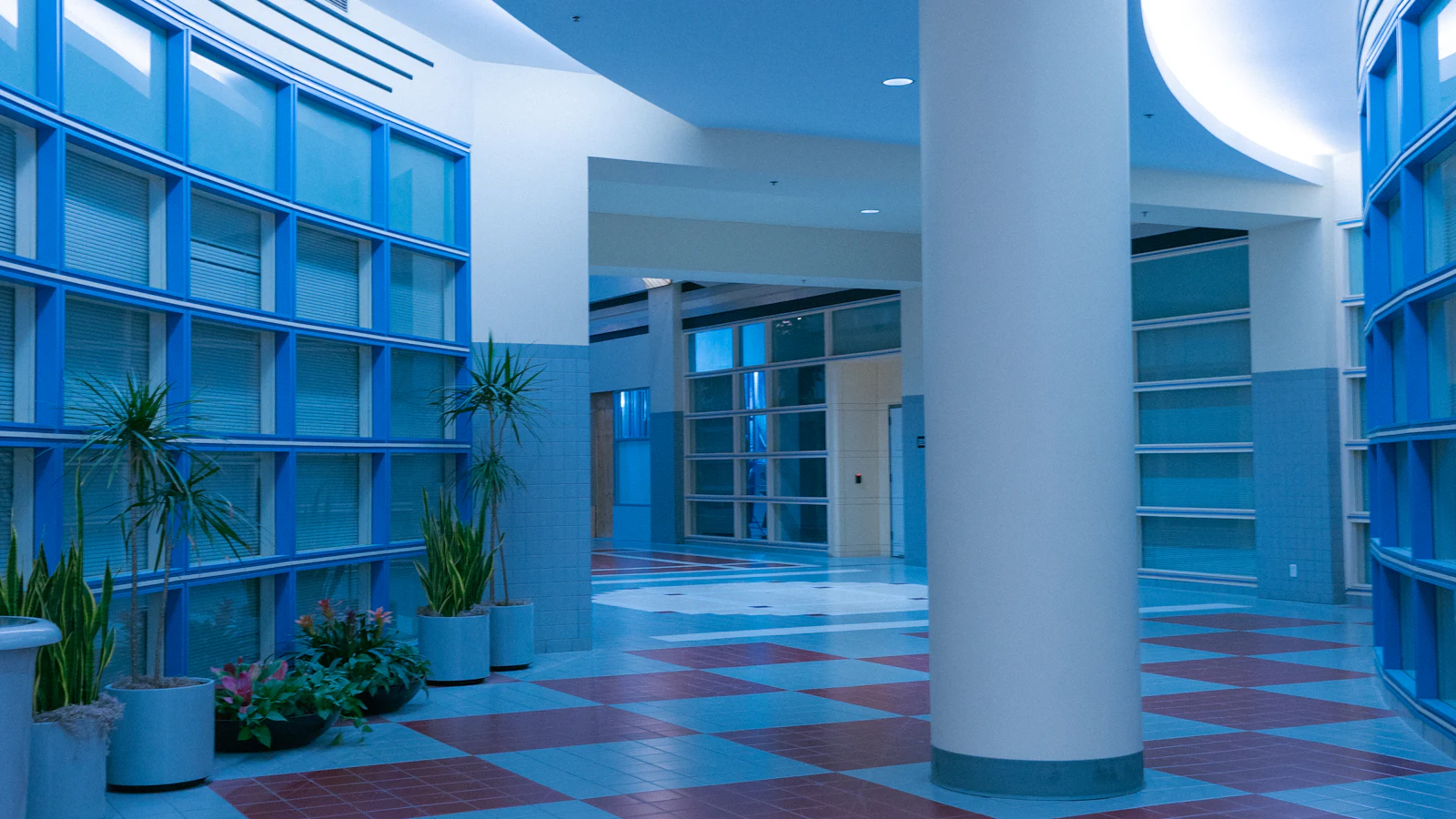
**Porcelain tile.** A genuine option at wash and color stations for toughness and chemical resistance. Limitations: grout lines fail the hair test unless you use a tight joint with epoxy or polymer grout, it's hard on feet, and a dropped clipper can chip a corner.
**What we would not spec:** carpet (traps hair and moisture, impossible to keep clean), plain hardwood (chemicals and humidity wreck it in a salon), and VCT without an existing wax program (seams plus strip-and-wax upkeep). For a fuller look at the material family, our LVT vs VCT vs epoxy post compares them directly.
The Jersey Shore difference
We're based in West Long Branch and work all over Monmouth and Ocean County, so our shop floors live in a humid, salt-air climate. On the Route 35 corridor from Red Bank to Point Pleasant, that means sand and salt get tracked in all year, and humidity does a faster number on a worn or low-grade finish than it does inland. For a barbershop or salon that already fights chemicals and water, moisture resistance isn't a nice-to-have — it's most of the reason hardwood and happy residential laminates don't last in a Shore shop.
There's a second, less obvious NJ cost: the appointment book. Losing chairs for a full week is real lost revenue, which is why we schedule tight, phased work — a chair or station at a time where the layout allows — so you keep as much of the book open as possible. Most single-suite shops run 1–3 days. Our salon & barbershop page breaks down the zones and the scheduling.
The bottom line
Think of the floor as zones, not one surface. Commercial-grade LVT for the main floor, welded sheet vinyl or a sealed system at the wash and color stations, seamless resin if you want the modern look, and good anti-fatigue matting everywhere staff stand — that combination survives a working salon, and it's an honest answer that no single "best" floor can beat. If you're not sure which materials fit your shop's layout and your brand look, that's exactly what a free in-person assessment is for. We'll walk the space, flag the wet and chemical zones, recommend what actually works for each, and give you a straight bid — scheduled around your appointment book, not against it. Send the details through our commercial bid form to get started.
Frequently Asked Questions
What is the best flooring for a barbershop or salon?
A commercial LVT with a thick wear layer is the dependable default for most of the floor because it's waterproof, repairable plank by plank, and easy to clean. The exceptions are the wet and chemical zones, where welded sheet vinyl or a sealed resin system is the better call. Splitting the space usually beats picking one material for everything.
Does LVT really hold up to hair dye and chemicals?
It does — but only if you pick the right grade. You want a commercial 20-mil or thicker wear layer and a manufacturer's published chemical-resistance data, and you should ask specifically about acetone if you do nails, because acetone attacks finishes that shrug off everything else. A residential-grade LVT won't survive a working salon.
Why does hair get stuck in tile grout but not sheet vinyl?
Because hair clippings wedge into any joint, seam or grout line and become nearly impossible to remove. Welded sheet vinyl is heat-welded into one continuous surface with no joints, so there's nowhere for hair to lodge. That's why seamless or near-seamless surfaces win in a shop, and why grout lines are the weak spot of tile.
How long will my salon have to close for a new floor?
Most single-suite shops run about 1 to 3 days depending on square footage and material, and seamless resin can take longer because of slab prep and cure time between coats. If closing entirely isn't an option, a phased, station-by-station install can keep part of the appointment book open.