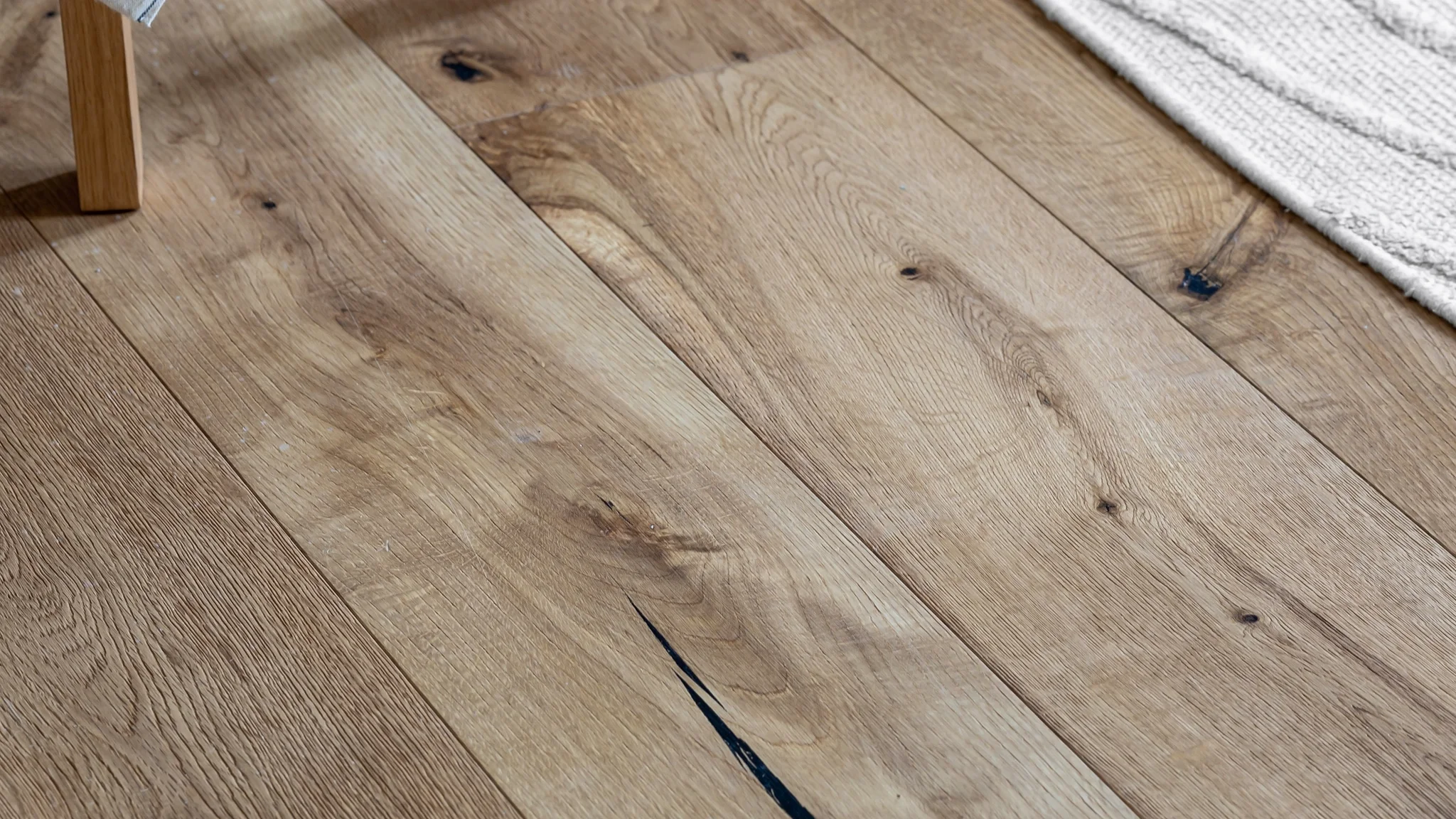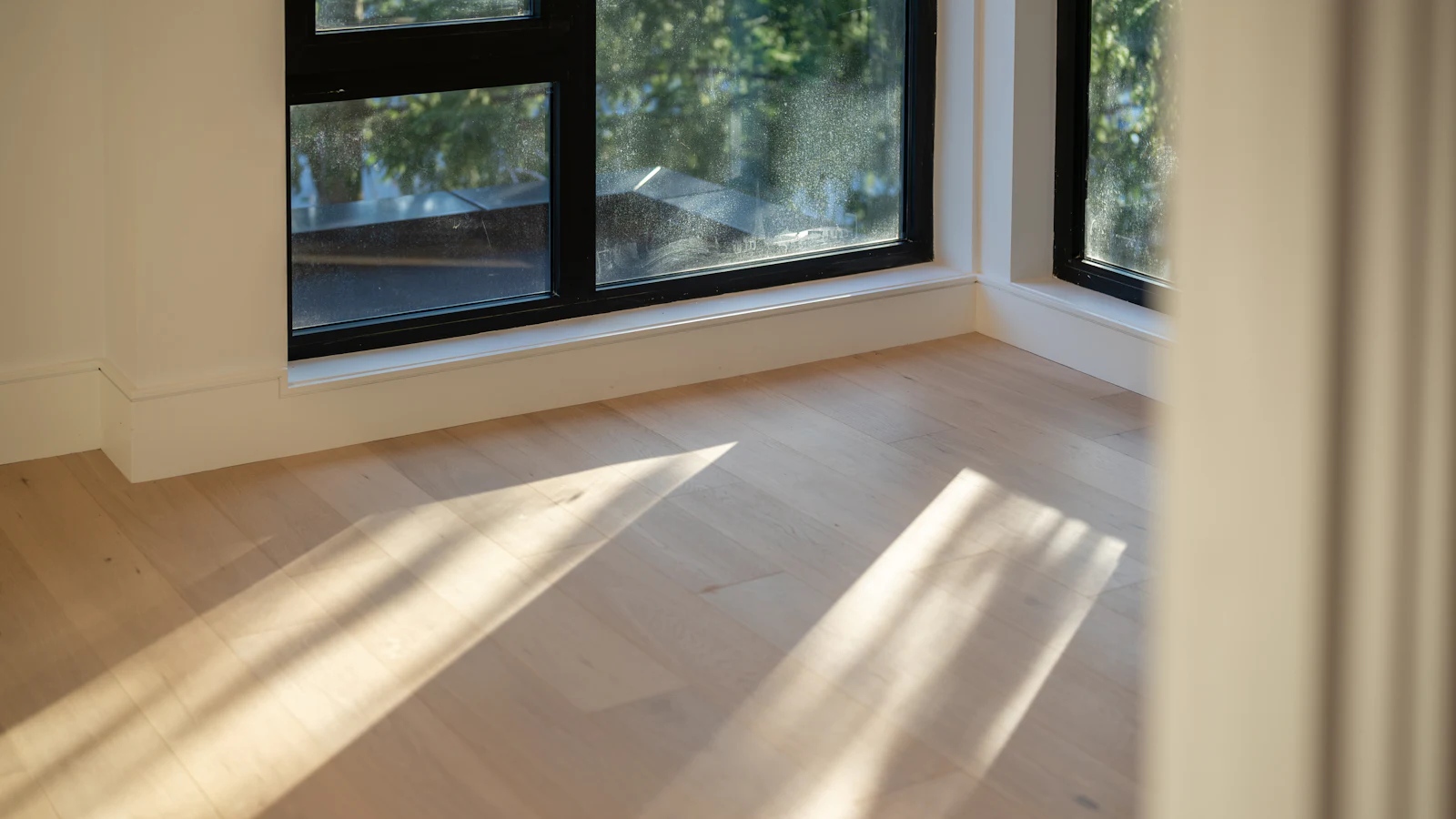
Homeowners usually ask which installation method is best. The more useful question is which methods your floor allows. Solid hardwood, engineered hardwood, a wood subfloor and a concrete slab each rule some methods out, and once you apply those rules most projects have one or two sensible options.
The three methods side by side
| Method | How it attaches | Works with | Main trade-off |
|---|---|---|---|
| Nail-down | Nailed or stapled through the tongue into a wood subfloor | Solid or engineered | Needs a wood subfloor; a nailer does not hold in concrete |
| Glue-down | Bonded to the subfloor with troweled flooring adhesive | Engineered, and many solid products if the manufacturer allows | Solid underfoot and slab-friendly, but unforgiving of poor prep and harder to undo |
| Floating | Not attached; edges glued or click-locked over an underlayment | Engineered only | Fastest to install, but can feel and sound more hollow |
Those rules follow the National Wood Flooring Association's 2025 installation guidelines, which tell installers to follow the flooring manufacturer's instructions wherever they exist. When the two differ, the manufacturer's instructions win.
Nail-down: the standard for solid hardwood
A flooring nailer drives a nail or staple through the tongue of each board into the subfloor, where the board above hides it. It is the default for solid hardwood, and standard-width planks are normally nailed on their own. NWFA allows nailing over most wood subfloors except particleboard, provided the subfloor meets minimum thickness, joist-spacing and flatness requirements.
Two things go wrong with nail-down more than any others. The first is the subfloor: nailing needs wood to bite into, so on a concrete slab it means building a wood subfloor first, as our hardwood-over-concrete guide explains. The second is technique: NWFA warns that compressor pressure set too high for the species can drive a fastener below the nail pocket and split the tongue, which weakens the hold and invites the kind of looseness behind many squeaks (see our squeaky floors post).
Nail-down also gives you the most refinishable floor. A solid board is wood all the way through, so it can be sanded and refinished many times over decades.
Glue-down: the answer for concrete and radiant heat
Flooring adhesive is troweled onto the subfloor and the planks are set into it, so every board is bonded along its whole length. Over a concrete slab it is the standard route for engineered hardwood: NWFA's concrete guidance says solid and engineered floors can go over a slab once it is flat, dry and properly prepared. Over radiant heat it avoids the air gap a floated floor leaves under the boards, which is why it comes up in our radiant heat guide.
It also asks more of the job. NWFA says to follow the adhesive manufacturer's instructions for substrate preparation and trowel selection, to test for moisture regardless of conditions, and to keep foot traffic off for at least 24 hours or as long as the adhesive manufacturer specifies. A floor glued onto a wet or wavy slab is hard to fix afterward, because the fix is taking it up. For what moisture testing involves, see our post on ASTM F2170 testing.
Floating: fastest, but engineered only
A floating floor is not attached to the subfloor at all. The boards connect to each other, with glued tongue-and-groove edges or a click-lock profile, and rest on an underlayment. NWFA is clear about what can be floated: engineered flooring is the only type of wood floor that can be, and solid wood should never be installed this way unless the flooring manufacturer recommends and warrants it, because solid wood is not dimensionally stable enough to handle seasonal change in a floating system.
Floating is popular because it is quick, needs no subfloor adhesive to cure, and is the easiest method to lift and reinstall. It is not a shortcut around subfloor prep. NWFA's flatness tolerance is the same 3/16 inch over 10 feet, a floating floor should not go over ramps or other non-flat surfaces, and the subfloor still has to be moisture tested. The usual trade-off is feel: a floated floor can sound and feel more hollow underfoot than a glued one, and low spots in the subfloor can make it flex.
Glue-assisted nail-down: the hybrid for wide planks
Where a plank is wide, nails alone do less. NWFA says solid and engineered planks wider than 5 inches should be installed glue-assisted when site conditions allow, because wide boards take fewer fasteners per square foot, unless the manufacturer says otherwise. The adhesive adds holding power on top of the fasteners, not in place of them, so the normal nailing schedule still applies. NWFA also stresses that each board has to be kept pressed against the subfloor as it is nailed, or it can lift away and leave vertical movement and hollow noises. The adhesive has to be an elastomeric flooring adhesive compatible with the subfloor, so the floor can still move normally.
Four questions that pick the method
- What is under the floor? A wood subfloor opens up all three methods. A concrete slab rules out nailing unless a wood subfloor is built first, which leaves glue-down or floating for engineered. Radiant heat usually points to glue-down, and NWFA notes that a floated engineered floor over heat needs an underlayment chosen with its R-value in mind.
- Solid or engineered? Solid is nailed, glue-assisted when wide, or glued if the manufacturer allows. Engineered can be nailed, glued or floated. Our engineered versus solid guide covers that choice.
- How wide are the planks? Over 5 inches, plan on adhesive being part of the system.
- What matters most to you? Speed and reversibility point to floating, a solid feel underfoot to glue-down, and a proven, refinishable solid floor to nail-down.
Mistakes that cause squeaks, gaps and callbacks
- Skipping the moisture test. NWFA calls testing compulsory regardless of conditions and says never to install a wood floor over a known moisture condition.
- Floating solid hardwood. NWFA says not to, unless the manufacturer recommends and warrants it.
- Ignoring flatness. The standard for glue-down and floating is 3/16 inch over 10 feet, so high spots get ground down and low spots filled before anything goes on.
- Over-driving fasteners. Compressor pressure that is too high can split tongues.
- Using the wrong adhesive or trowel. NWFA defers to the adhesive manufacturer on both.
What the method does to cost and schedule
The method is one of the things that moves a hardwood quote. In our hardwood cost guide, the low end of the range is typically engineered hardwood floated or glued over a subfloor already in good shape, and the high end is solid, nail-down, wide-plank installation with on-site finishing. Floating is usually the quickest to install, and our installation timeline breaks down the rest.
How we choose
We install all three, nail-down, glue-down and floating, and pick the method from what is under the floor, which is why the free in-home visit includes a subfloor inspection. If you are comparing methods for a specific room, see our hardwood flooring page, or book a free measurement anywhere in Monmouth and Ocean County.
Frequently Asked Questions
Which hardwood installation method is best?
No single method is best; the subfloor and the type of wood decide. Nail-down is standard for solid hardwood over a wood subfloor, glue-down is the usual choice over concrete and radiant heat, and floating is the fastest but works only with engineered hardwood.
Can solid hardwood be floated?
Not under NWFA guidelines, unless the flooring manufacturer specifically recommends and warrants it. Solid wood is not dimensionally stable enough to handle seasonal changes in a floating system. Engineered flooring is the only type of wood floor that can be floated.
Can you nail hardwood to concrete?
Not directly, because a flooring nailer does not hold in concrete. Over a slab, installers glue down or float engineered hardwood, or build a wood subfloor system first, after moisture testing. NWFA says solid and engineered floors can go over concrete when it is flat, dry and properly prepared.
Is glue-down or floating better for engineered hardwood?
Glue-down feels more solid and suits slabs and radiant heat, while floating is faster and easier to lift but can sound and feel more hollow. Both need a flat, moisture-tested subfloor, and the manufacturer's instructions decide which methods are allowed.
How flat does a subfloor need to be for hardwood?
NWFA's standard for glue-down and floating installations is 3/16 inch over 10 feet, or 1/8 inch over 6 feet, unless the flooring maker specifies something tighter. High spots are ground down and low spots filled before installation.
What is a glue-assisted nail-down?
It combines adhesive with nails or staples. NWFA recommends it for solid and engineered planks wider than 5 inches when site conditions allow, because wide boards get fewer fasteners per square foot. The adhesive adds holding power on top of the fasteners rather than replacing them.
Which installation methods do you offer?
We install nail-down, glue-down and floating floors, and choose the method per subfloor after a free in-home measurement and subfloor inspection anywhere in Monmouth and Ocean County.