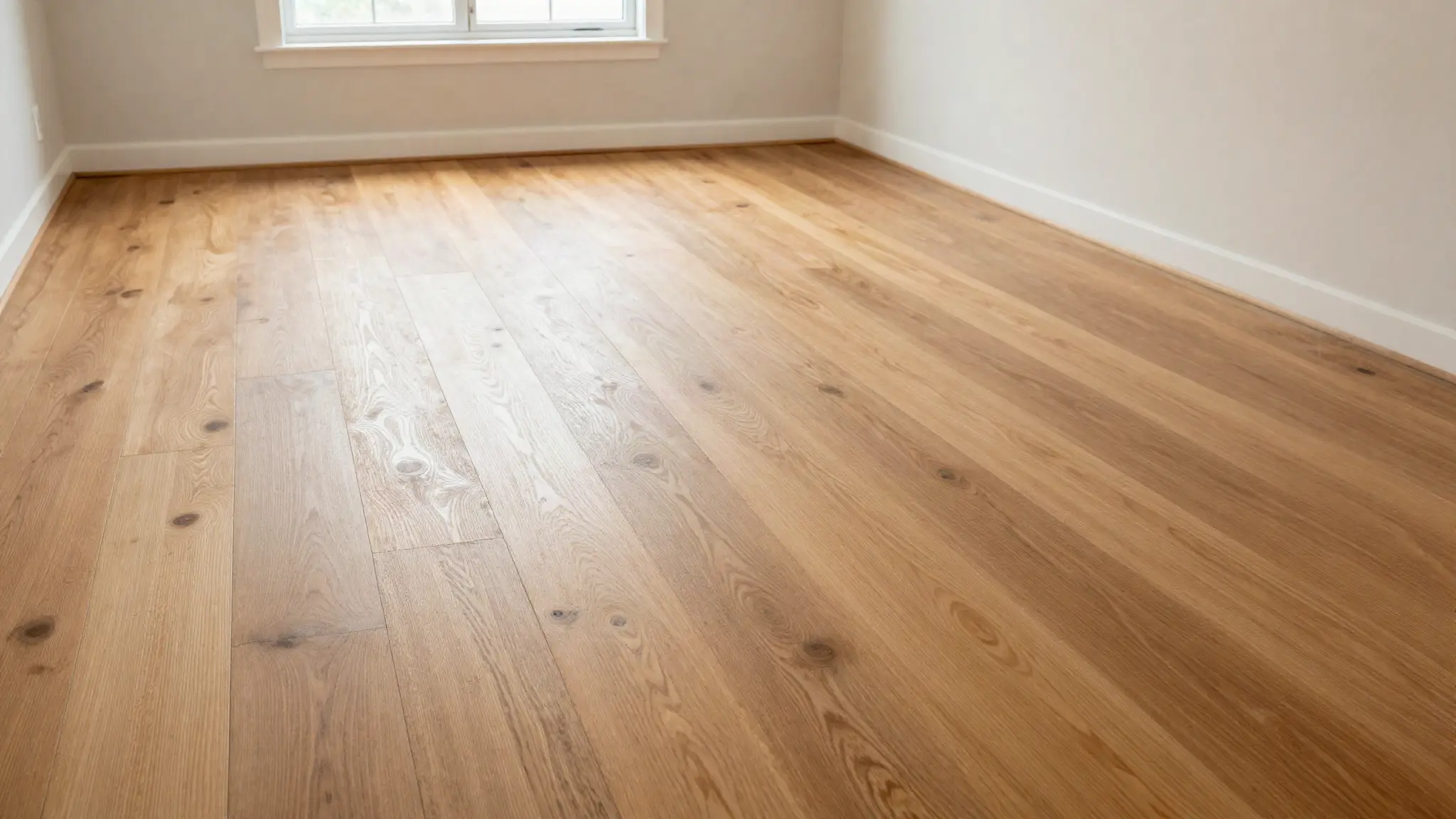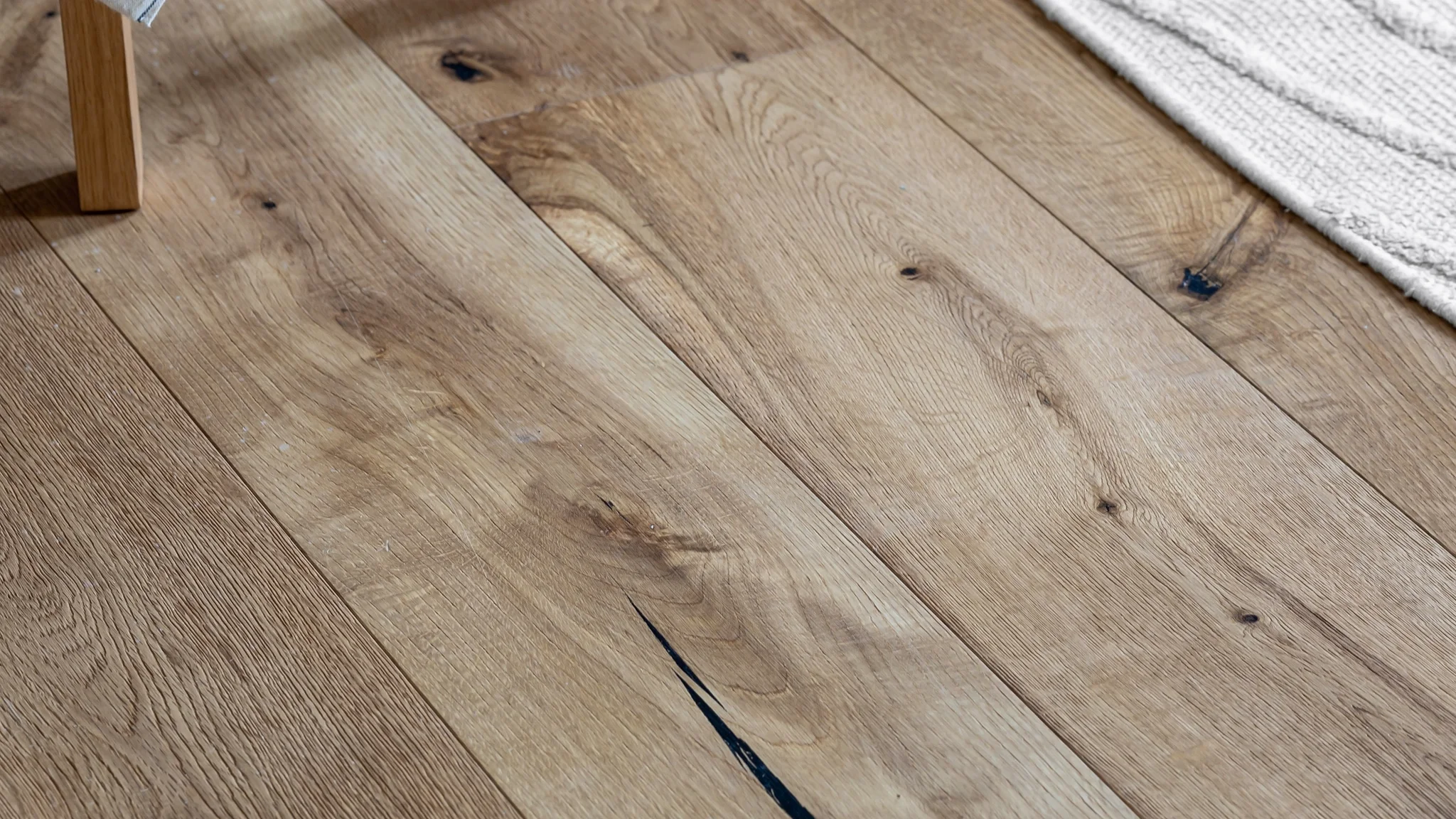
Laminate costs less than hardwood on day one. Over the life of a floor that gap narrows, and in a house you plan to stay in it can reverse entirely. Here are the actual numbers for New Jersey and the reasoning behind them.
First: laminate is not vinyl, and not engineered wood
These three get used interchangeably and they are completely different products.
Laminate is a high-density fibreboard core with a photographic image of wood printed on paper, sealed under a clear melamine wear layer. There is no real wood on the surface. Modern printing makes it convincing, and the wear layer is genuinely hard — laminate resists scratching better than most real hardwood. Pergo is the brand most people mean when they say laminate; it invented the category, and everything below applies to it in exactly the same way, because the construction is the same.
Luxury vinyl plank is plastic all the way through, which is what makes it waterproof rather than merely water-resistant. Our hardwood versus LVP comparison covers that one.
Engineered hardwood is real wood — a genuine hardwood wear layer bonded over a plywood core. It is not a cheaper imitation of solid; it is a different construction with real advantages over concrete and in humidity. See engineered versus solid.
Laminate is the only one of the three with no wood on the surface at all. That single fact drives every difference below.
What each actually costs installed in NJ
Prices here are material plus labour, for a standard installation in Monmouth or Ocean County in 2026.
Laminate: $4 to $8 per square foot installed. Budget product at the bottom, thicker cores with better edge treatment and attached underlayment at the top. It is a floating floor, so labour is lower than nail-down hardwood.
Solid hardwood: $10 to $18 per square foot installed. Species and width move this more than anything else — standard red oak strip sits near the bottom, wide-plank white oak near the top.
Engineered hardwood: $9 to $16 per square foot installed. Driven mainly by wear-layer thickness, which is also what determines whether it can ever be refinished. Our full NJ hardwood cost guide breaks down what moves each number.
So on a 1,000 square foot main floor: roughly $4,000 to $8,000 in laminate, $9,000 to $16,000 in engineered, and $10,000 to $18,000 in solid hardwood. That is a real difference and it is why laminate exists.
Set side by side, the three-way comparison comes down to one thing — what happens at year fifteen. Laminate gets replaced. Engineered gets refinished once or twice if the wear layer is thick enough. Solid gets refinished and keeps going.
The number that changes the comparison
Laminate cannot be refinished. Not once. The surface is a printed image under melamine — sand it and you are sanding through the picture. When laminate wears out, looks dated, or gets damaged, the only option is to tear it out and buy a new floor.
Solid hardwood can be sanded and refinished somewhere between six and ten times across its life. Each refinish costs roughly $3 to $6 per square foot and returns the floor to new.
Run that out over twenty years. Laminate has a realistic service life of ten to twenty years in a family home, so most households replace it once in that window — the original $4 to $8 becomes $8 to $16, plus tear-out. Hardwood over the same twenty years takes one refinish at $3 to $6, so $10 to $18 becomes $13 to $24 — and at the end of it the floor is not twenty years old, it is refinished, and it has another several decades in it.
The gap that looked like 2.5x on day one is closer to 1.5x at year twenty, and the two floors are in very different condition.
Where laminate is genuinely the right call
This is not an argument that laminate is bad. It is the right product in specific situations, and anyone who tells you otherwise is selling.
Rentals and flips. If you are not the one living on it in fifteen years, lifetime cost is not your problem. Laminate looks good, installs fast and takes abuse.
Households where scratching is the main worry. A good laminate wear layer genuinely outperforms hardwood against dog claws and dragged furniture. If your last floor was destroyed by a large dog, that is a real argument.
A tight budget on a large area. Covering the whole house in laminate beats covering half of it in hardwood and leaving the rest on subfloor. Do the whole job.
Basements and over concrete — though here LVP usually beats laminate outright, because laminate has an HDF core and HDF swells when it gets wet. See our NJ basement flooring guide.
Where laminate is the expensive choice
A house you intend to stay in. The replacement cycle is what costs you, and it arrives whether you budgeted for it or not.
Anywhere near the water. This is the Jersey Shore consideration. Laminate core swells irreversibly when water sits on it — a dishwasher leak or a coastal flood means replacement, not repair, because a swollen HDF core does not dry back flat. Hardwood that takes water can often be dried and refinished. Our post on water-damaged hardwood explains that difference.
Resale. Estate agents in this market list real hardwood as a selling feature. Laminate is not a negative, but it is not a line in the listing either.
If you want a floor that gets better. Hardwood develops character. Laminate is at its best on installation day and heads in one direction from there.
The honest summary
Buy laminate when the time horizon is short, the budget is fixed, or scratch resistance genuinely outranks everything else. Buy hardwood when you are staying, when the house is near the water, or when you want the option to change the colour in ten years instead of changing the floor.
If you want the real number for your specific rooms rather than a range, we measure and quote both for free across Monmouth and Ocean County — and we will tell you plainly when laminate is the better spend, even though it is the smaller job. Book a free in-home quote or see our hardwood flooring service.