A squeak is the most common noise complaint we hear about hardwood floors, and the reflex is to assume the worst — a failing subfloor, a structural problem, an expensive fix. Almost always it is none of those things. Here is what actually causes it and what to do about it, in order from cheapest to most involved.
What actually causes the squeak
The sound is friction — one piece of wood rubbing against another, or against a nail that has backed out slightly. It usually means a board has lost some of its tight connection to the subfloor beneath it, often from normal seasonal wood movement rather than anything wrong with the installation. As humidity swings through the year, boards expand and contract by a tiny amount, and over enough cycles that can loosen a fastener just enough to let two surfaces move against each other under weight.
A single squeaky board in an otherwise solid floor is almost always this — a minor, localized loss of tension. It is not a sign the floor is failing.
The screw-and-shim fix from above
If you cannot get underneath the floor, the standard fix is a trim-head screw driven at an angle through the finished floor and subfloor into the joist below, then countersunk slightly and filled with a matching putty. Done carefully, the repair is barely visible and it pulls the board back down tight against the subfloor for good — not a temporary fix, a real one.
The part that takes a little care is finding the joist. Joists typically run 16 inches on center, and a stud finder rated for joists (or a few test holes in an inconspicuous spot) locates them reliably enough. Driving the screw between joists into subfloor alone will not hold.
Fixing it from below, if you have the access
If the squeak is over an accessible basement or crawlspace, this is genuinely the better repair, because it does not touch the finished floor at all. A helper walks the floor above while you watch from below to find exactly where the movement is happening, then thin shims get tapped into any visible gap between the subfloor and the joist, or a screw goes up through the subfloor into the board above without ever breaking the finished surface.
This is the fix we reach for whenever the framing below is open, because there is zero risk to the finish and it is often a five-minute job per squeak once you have found the spot.
Talcum powder or graphite — the fix that buys time
Working powdered graphite or talcum powder into the seam between two boards reduces the friction that is causing the noise, and it genuinely works — for a while. It is not a repair, it is a way to quiet a squeak on a weekend when a proper fix will have to wait, and it wears off within weeks to months depending on foot traffic.
When a squeak is telling you something bigger
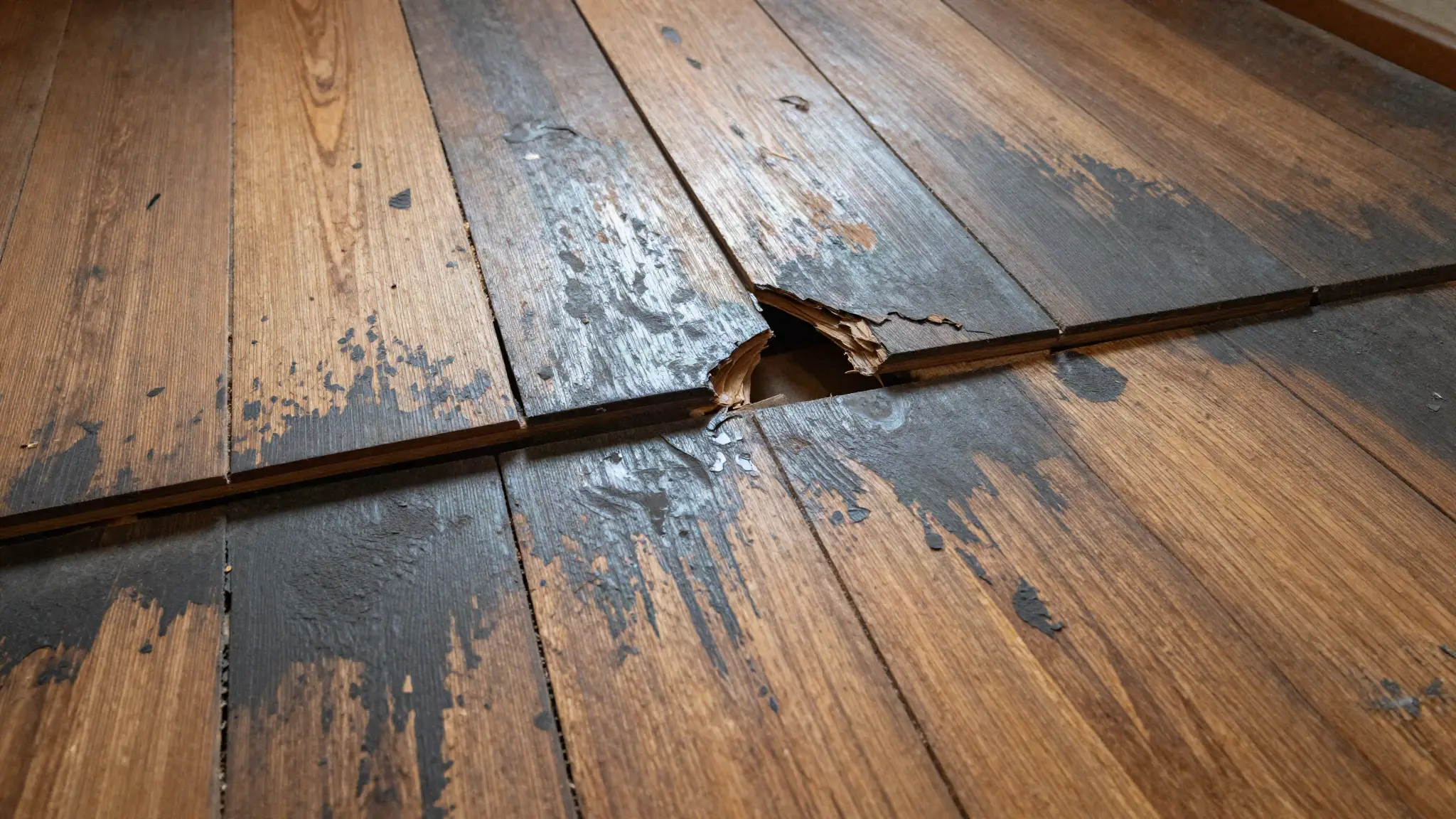
One or two squeaky boards is normal wear. Widespread squeaking across most of a room, especially paired with any noticeable bounce or give underfoot when you walk across it, points toward something beyond a loose board — undersized or aging joists, a subfloor that has taken on moisture at some point, or structural settling. If that sounds like your floor, it is worth a real look rather than another round of screws, and our post on water-damaged hardwood covers what moisture specifically does to a subfloor over time.
What we do about it
On a service call for squeaks, we walk the affected area, check what access we have from below, and fix what we can reach the right way rather than the fastest way. If the pattern points to something structural, we will tell you plainly rather than screw down a symptom and let you find out later. See our hardwood flooring page for installation work, or book a free assessment anywhere in Monmouth and Ocean County.