Hiring the wrong flooring contractor does more damage than hiring the wrong floor. A bad install ruins the planks. A bad contractor drags the dispute for months.
Most of the questions homeowners forget to ask are the ones a NJ-specific check on the contractor would have caught in ten minutes. The HIC number, the insurance, the references and the moisture test are not paperwork. They are the safety net.
The NJ Division of Consumer Affairs runs the Home Improvement Contractor (HIC) registration under the Contractors' Registration Act (N.J.S.A. 56:8-136 et seq.). Every NJ flooring contractor who takes money for residential work has to be on that registry.
The HIC registration number starts with 13VH and has to be displayed on contracts, advertisements, business documents, and commercial vehicles. The word LICENSE is not to be used in any of those places, by rule.
The first question is the easiest: ask for the HIC number. If the contractor cannot produce one in writing, that is the entire answer.
The second question is where the HIC number can be verified. The DCA runs an online lookup at njconsumeraffairs.gov/hic and at newjersey.mylicense.com/verification. Type the company name and check that the registration is Active, not expired, suspended, or revoked.
If you search by HIC number, the lookup also surfaces any complaints or disciplinary history. The number of complaints is less important than the pattern. The same issue repeated across multiple jobs is the warning sign.
The third question is insurance. NJ requires 500,000 dollars per occurrence of general liability and either workers' compensation or a valid exemption. Ask for the Certificate of Insurance directly from the insurer, not a photocopy from the contractor.
Call the insurance company using the phone number on the certificate (not a number the contractor gives you). Confirm the policy is still active and that the limits match what the contractor represented.
Since 2025, NJ also requires a compliance surety bond of 10,000, 25,000, or 50,000 dollars based on contract values. Ask whether the bond is in place and which tier the contractor falls into.
The fourth question is references. Three to five recent jobs in your area, with actual addresses you can drive by or customers you can call. Google reviews are useful for tone, less useful for technical quality.
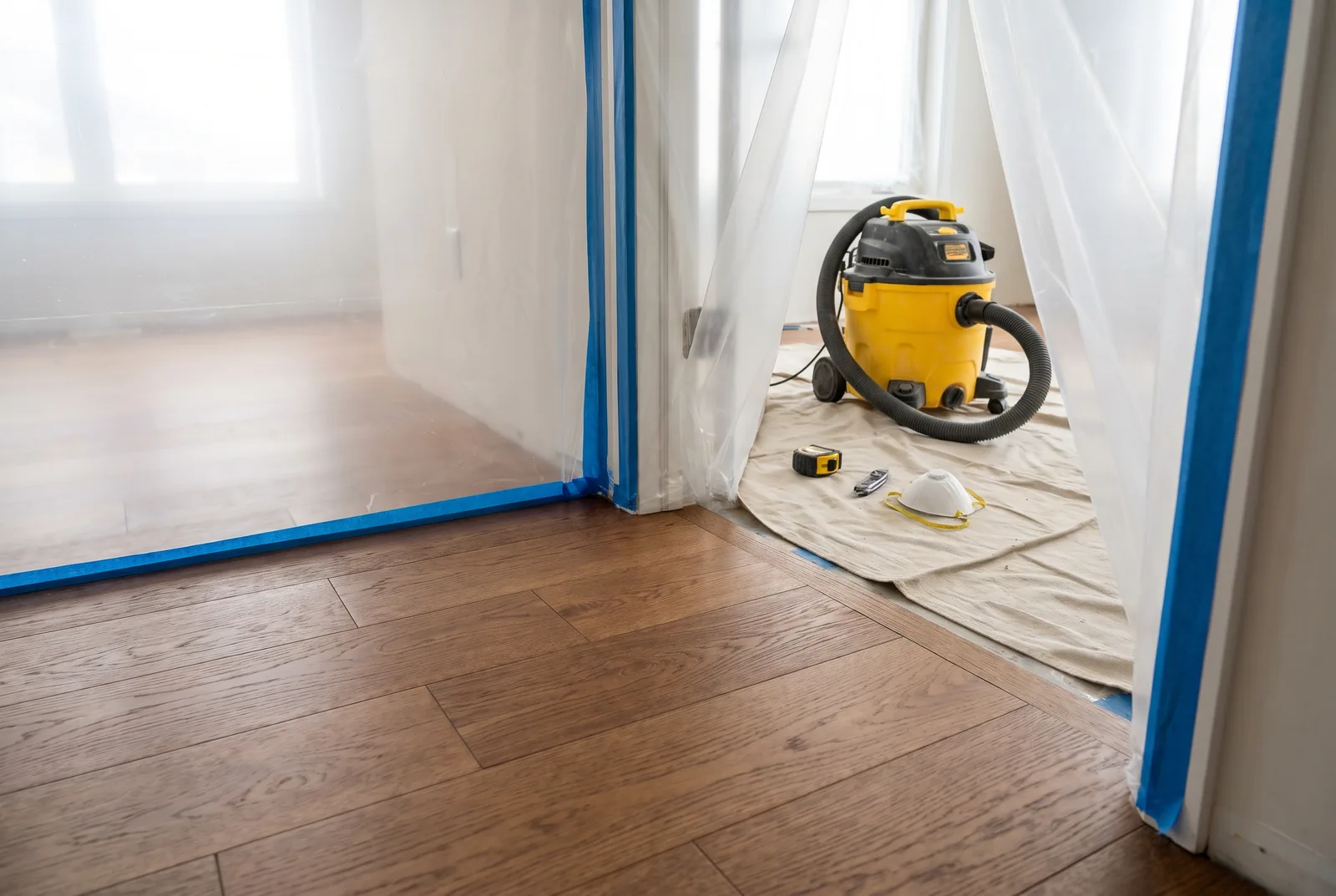
If you can visit a job in progress, the clean site tells you how your home will be treated. A protected floor, masked doorways, a vacuum running at the saw, and a dumpster on site are not extras. They are the baseline.
The fifth question is subfloor prep. The NWFA tolerance is 3/16 inch in 10 feet for glue-down and floating floors, and 1/4 inch in 10 feet for nail-down with longer fasteners.
If the contractor says we will see when we get there, that is the wrong answer. The right answer is a specific tolerance, a specific measuring method, and a specific fix. Sand high spots and fill low spots with leveling compound at 3,000 psi.
The sixth question is moisture testing. For slabs, the standard test is ASTM F2170 (in-situ RH probe), with a maximum acceptable reading of 75 percent. For wood subfloors, a pin or pinless meter is used, with a maximum of 12 percent moisture content.
A 3/32 inch gap on a wide plank floor shows up two years later as cupping. The contractor blames the wood, the humidity, or the finish. The moisture test before install is the only record that holds up.
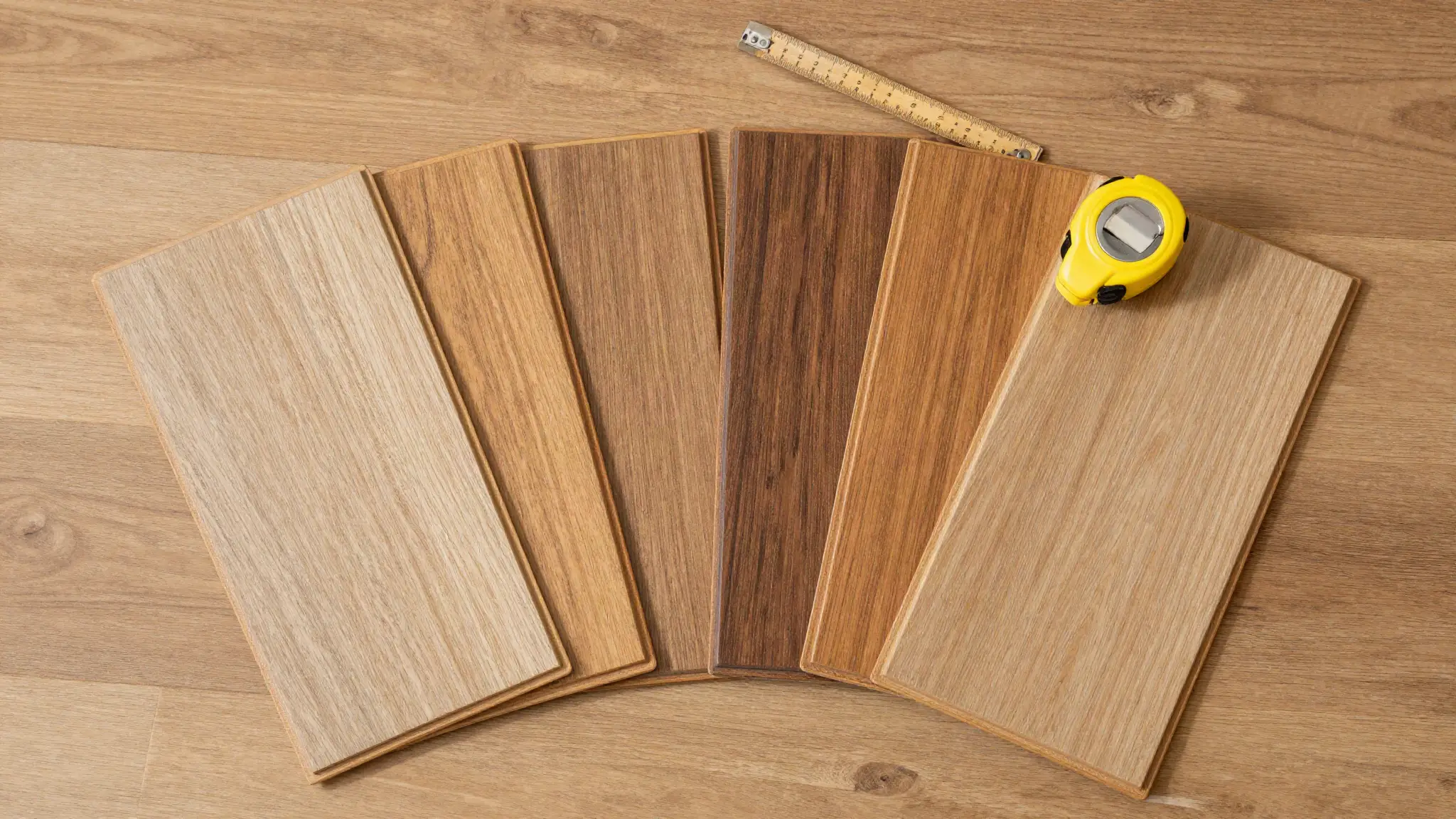
The seventh question is the finish system. Brand of sealer, brand of finish, water-based or oil-based, satin or matte sheen, number of coats. Two coats of poly over a water-popped stain is not the same as three coats of water-based over a sealer.
If the answer is we use whatever is on the truck, ask for the specific products in writing on the estimate. The cure time, the odor, and the long-term maintenance are all determined by the products.
The eighth question is who actually does the work. The owner, employees, or subcontractors. Subcontractors are not always a problem, but the contractor should know the names and answer for the result.
The ninth question is timeline. The start date, the duration, what happens if the contractor runs over. NJ rules say nothing specifically about timeline. The contract should still spell it out.
A written schedule with a penalty for delay (or at least a meaningful conversation about the cause of any delay) is what separates a professional from someone who starts and disappears.
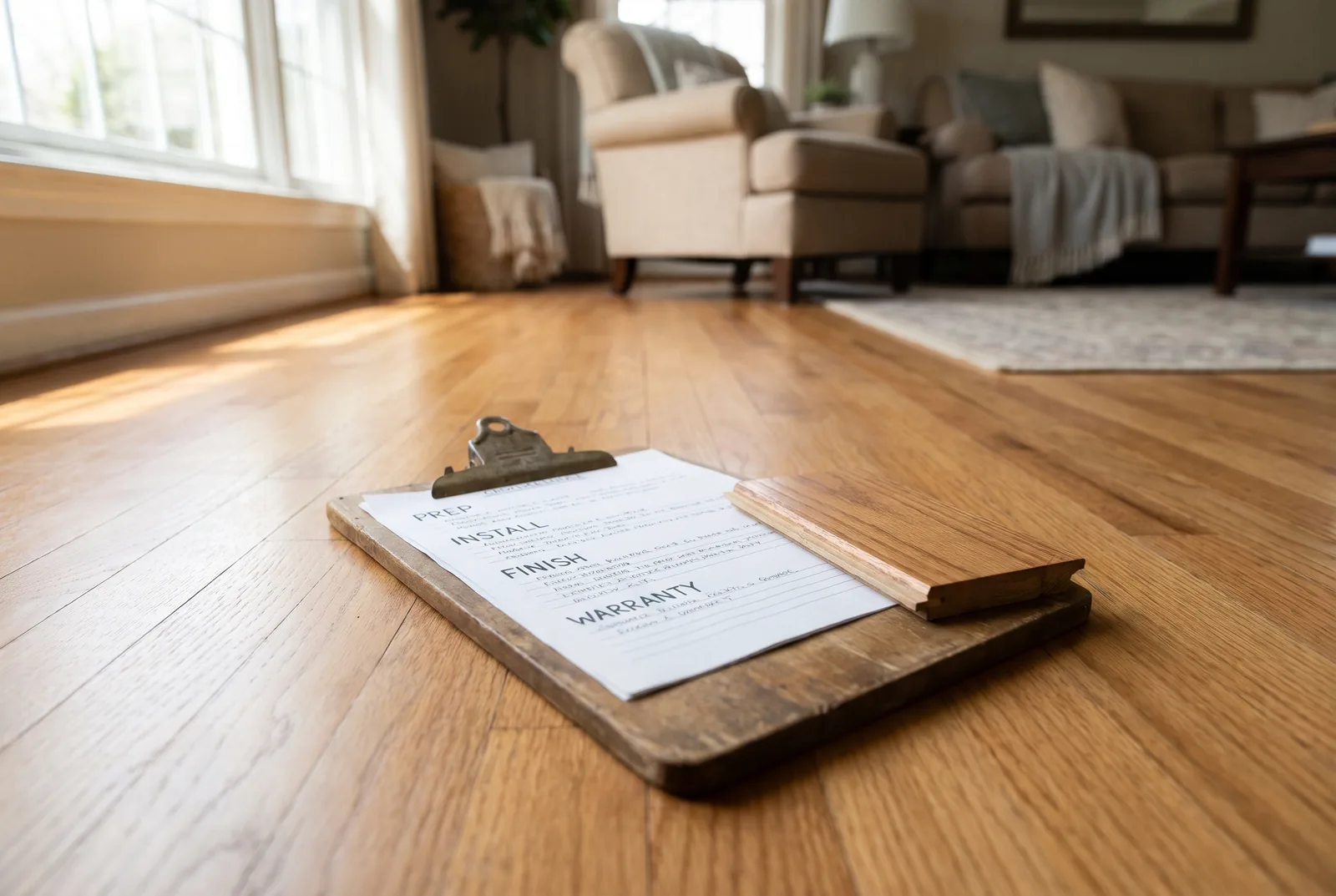
The tenth question is warranty. The product warranty from the manufacturer is one piece. The labor warranty from the contractor is the other. The right answer for labor is at least one year on the installation itself.
Get the labor warranty in writing on the contract. Verbal promises mean nothing when something fails in month 14.
The eleventh question is dust and containment. Plastic at doorways, a vacuum attached to the sander, vent covers taped over, HVAC turned off during sanding. If the contractor shrugs, the dust will be in every room of the house.
The twelfth question is cleanup and disposal. Hauling away the old flooring, the dumpster, the daily cleanup of the work area. None of this should be extra if it is in the estimate. All of it should be extra if it is not.
Beyond the twelve, NJ-specific warnings matter. Walk away if the contractor shows up unsolicited, demands cash only, asks for more than a third of the total up front, or pressures you to sign the same day.
Final payment cannot be demanded before the work is complete. That is NJ law. A reasonable deposit is ten to thirty percent, with the balance due when the job is done.
The contract itself has to be in writing for any project over 500 dollars and has to include legal name, address, HIC number, insurance details, start and completion dates, scope by brand and model, total price with payment schedule, and the DCA toll-free 1-800-242-5846.
The scope of work should specify brand and model, not generic terms. New white oak floor is not a scope. Three-inch select grade white oak from a specific manufacturer, installed nail-down with a specific subfloor prep, is a scope.
If the contractor will not put the brand and model in writing, that is also an answer. The brand is what determines whether the manufacturer warranty applies.
Change orders are the place where most of the disputes start. A written change order, signed by both sides before the work happens, is the rule. Verbal agreements about extras are not enforceable in NJ.
Take photos of everything. The subfloor before the underlayment, the underlayment before the planks, the planks during install. The contractor will not, and the photos are the only record of what was done.
If the contractor asks you to sign a document that says you will cover costs if the contractor does not pay a supplier or a subcontractor, do not sign it. That is on the DCA fraud tip sheet.
If something feels off, it usually is. A contractor who is in a hurry to sign, who quotes only in cash, who has no business address, or who cannot produce the HIC number on request is not the right contractor.
The right contractor answers all twelve questions without hesitation, gives you the documents you ask for, and tells you what they do not do as clearly as what they do.
For older homes built before 1978, the EPA Renovation, Repair and Painting (RRP) rule requires lead-safe work practices for any renovation that disturbs painted surfaces. A flooring contractor who tears out baseboards or cuts into walls in those homes has to be RRP-certified.
Ask for the RRP certificate if your house was built before 1978. The contractor's firm, not just the individual, has to be certified for the work to be in compliance.
The NJ Department of Health keeps a list of RRP-certified firms. Search there too, the same way you searched the DCA for the HIC number.
For homes built before 1980, the vinyl floor tile or the sheet vinyl may contain asbestos. A NJ-licensed contractor who cuts or sands those materials without testing is breaking the law. Ask whether the contractor tests before disturbing old vinyl.
The summary is short. Twelve questions, four documents (HIC, insurance, bond, references), one scope written by brand and model, and the rule that final payment comes after the work is done.
If you want a free in-home estimate from a NJ-registered contractor who answers all twelve of these questions, the next step is a 30-minute walk-through. We measure the rooms, check the subfloor, talk through species and finish, and write down the scope.
Call (732) 889-6029 or send the form on the /estimate/ page and we will set a time that fits your schedule.
Frequently Asked Questions
Does my NJ flooring contractor need an HIC number?
Yes. Under the Contractors' Registration Act (N.J.S.A. 56:8-136 et seq.), any home improvement contractor working on a NJ residence must register with the Division of Consumer Affairs and display the HIC registration number on contracts, advertisements, business documents, and commercial vehicles. The number starts with 13VH and shows up at the DCA HIC search at njconsumeraffairs.gov/hic. A contractor who cannot produce that number on request is not registered.
What insurance should the contractor carry, and how do I verify it?
NJ requires 500,000 dollars per occurrence of general liability insurance and either workers' compensation or a valid exemption certificate. Ask for the Certificate of Insurance directly from the insurer (not a photocopy), confirm the policy is still active, and check that your name and project address are listed as additional insured. A new compliance surety bond of 10,000, 25,000, or 50,000 dollars based on contract values is also required since 2025.
What floor-specific questions should I ask before signing?
Ask how the contractor will assess the subfloor (NWFA tolerance is 3/16 inch in 10 feet for glue-down, 1/4 inch for nail-down), whether they will moisture-test the slab or wood subfloor (ASTM F2170 for slabs, pin meter for plywood), what finish system they recommend for the room, how they protect adjacent rooms from dust, and whether the labor warranty is at least one year. The right answer names specific products and procedures, not we will see when we get there.
What should the written contract include in NJ?
Under NJ law, any home improvement contract over 500 dollars must be in writing. It must include the contractor's legal name, address, HIC number, insurance company and phone, start and completion dates, scope of work with brand and model, total price with payment schedule, and signatures. The DCA toll-free number 1-800-242-5846 must appear. Final payment cannot be demanded before work is complete.
Sources & Further Reading
- NJ Division of Consumer Affairs, HIC registration verification portal: search by business name or 13VH number, view status and complaint history
- NJ Division of Consumer Affairs, Office of Consumer Protection: Home Improvement Contractor registration overview and links to applications and verification
- NJ DCA, Residential Home Improvement Contractor Compliance Checklist: HIC display rules, written contract requirements for projects over 500 dollars, mandatory insurance disclosures
- NJ Division of Consumer Affairs, Avoiding Fraud Tip Sheet: contractor selection guidance, written contract requirement, fair payment terms, solicitation warnings
- NJ Division of Consumer Affairs, Nail It consumer education: verify contractor registration at newjersey.mylicense.com, watch for cash-only and high-pressure tactics
- NWFA Installation Guidelines (2025): subfloor flatness tolerance 3/16 inch in 10 feet for glue-down, moisture testing requirements, jobsite conditions
- NWFA main site: industry standards for hardwood flooring installation, sand and finish guidelines, species-specific recommendations