Almost nobody publishes this number, which is exactly why it is worth publishing. Stair refinishing is quoted per tread rather than per square foot, and without a reference point it is very hard to tell whether a quote is fair.
How much does stair refinishing cost per tread?
In Monmouth and Ocean County in 2026, refinishing an existing hardwood staircase runs roughly $60 to $120 per tread for the tread alone, and $100 to $175 per step where treads and risers are both being done.
A standard flight of 13 to 15 steps therefore lands somewhere around $1,300 to $2,600 for a full refinish including risers. Add a landing, a curved flight or a full railing system and it goes up from there.
Why stairs cost more per square foot than floors
A tread is about 3 square feet. At the top of that range you are paying something like $40 per square foot, against $3 to $6 for a flat floor. That looks absurd until you watch the work.
Almost none of it can be done by machine. A big drum sander is what makes floor refinishing efficient, and it has no use on a staircase. Treads are sanded with small orbital sanders and by hand, the nosings are shaped by hand, and the inside corners where tread meets riser meets skirt board are done with a scraper.
Then there is the containment. A staircase is usually in the middle of the house and connects the floor you are living on to the floor you sleep on, so it cannot simply be sealed off for a week. Our dust-contained sanding matters more here than anywhere else in the house.
And it is slow work in an awkward position. A crew that sands 800 square feet of floor in a day will spend that same day on a single flight of stairs.
What a per-tread price should include
Sanding the tread to bare wood, hand-detailing the nosing and the corners, staining if the stairs are being colour-matched to a floor, and typically three coats of finish on the walking surface — stairs take more wear per square foot than any floor in the house and should not be finished as though they do not.
It should also include the drying and cure schedule, which on stairs is a real constraint rather than a detail. You cannot use them while they cure, and that means planning around a day or two of no upstairs access, or finishing in halves.
What is usually extra
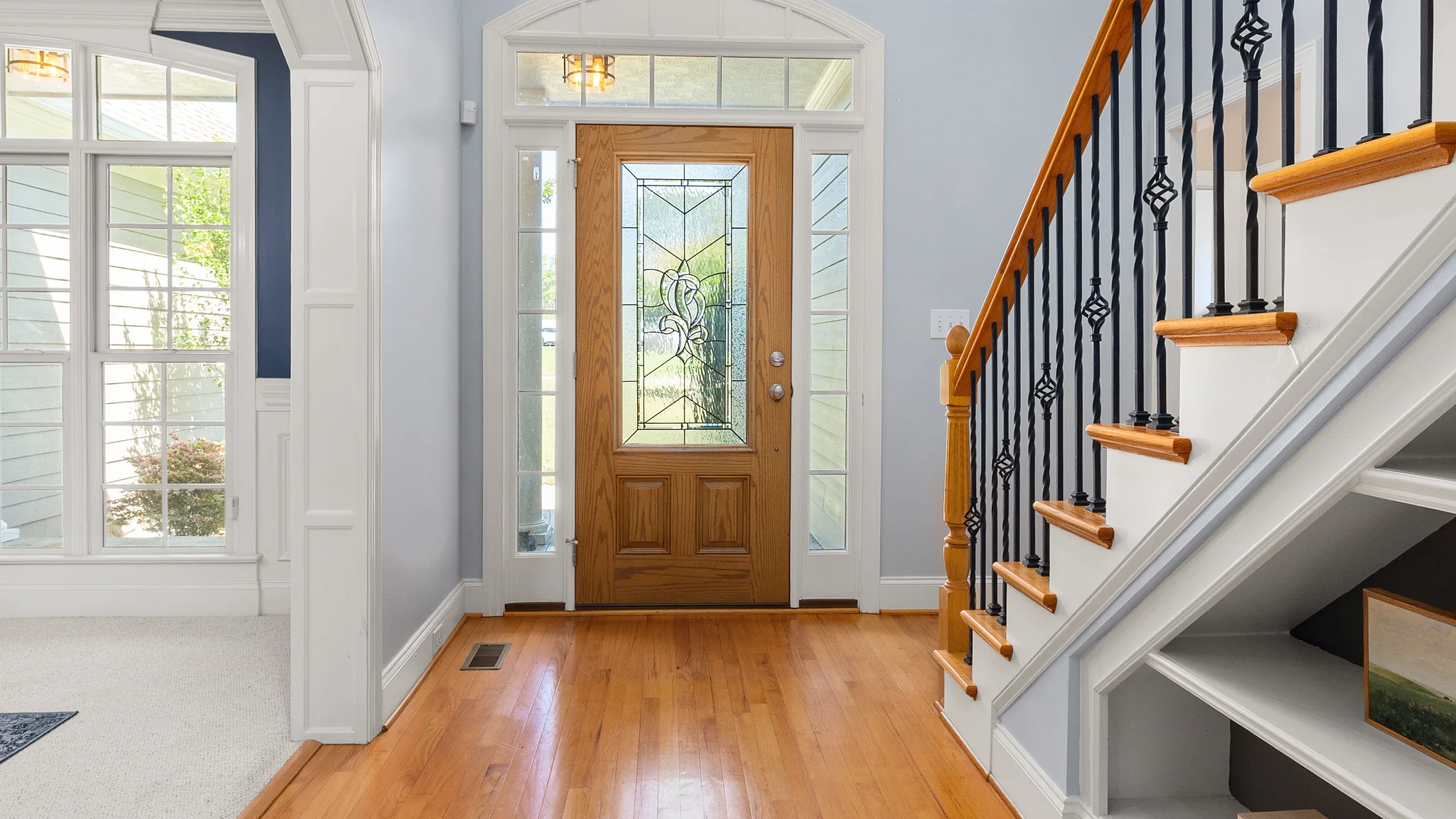
Risers — the vertical face. Often painted white rather than stained, which is a different trade operation.
Skirt boards and stringers — the angled trim against the wall.
Handrail — sanding and refinishing a rail is fiddly hand work and is usually quoted separately.
Balusters — the spindles. If they are being stripped and repainted this is often the single largest line item, because there are dozens of them and every one is done by hand.
Carpet removal — including pulling hundreds of staples and tack strips, and filling the nail holes. Budget $10 to $25 per tread for this on its own.
What moves the price within the range
Stairs that have been under carpet for twenty years are usually in better shape than exposed ones, but arrive full of staples. Damaged or split nosings need repair or replacement before finishing. Open-sided staircases with a return nosing on the exposed end take longer than a closed flight between two walls. Curved or winder treads are the most expensive of all — each one is a different shape.
Species matters too. Oak sands predictably. Pine is soft and burns, and old pine treads that have been walked on for decades often need more filling.
Red flags in a stair quote
A price given over the phone without anyone seeing the staircase. A quote that does not state whether risers are included — that single ambiguity is the most common cause of a disputed stair invoice. Two coats of finish on treads. And no mention at all of how the house will be accessed while the stairs cure.
Getting a real number
Stairs vary more than floors do, so a quote worth trusting comes from someone who has counted your treads and looked at your nosings. We do that for free anywhere in Monmouth and Ocean County, and the quote states treads, risers, rail and balusters as separate lines so you can see what you are actually buying.
See our stairs & handrail service, check the New Jersey stair and handrail code guide if you are altering rather than refinishing, or book a free quote.