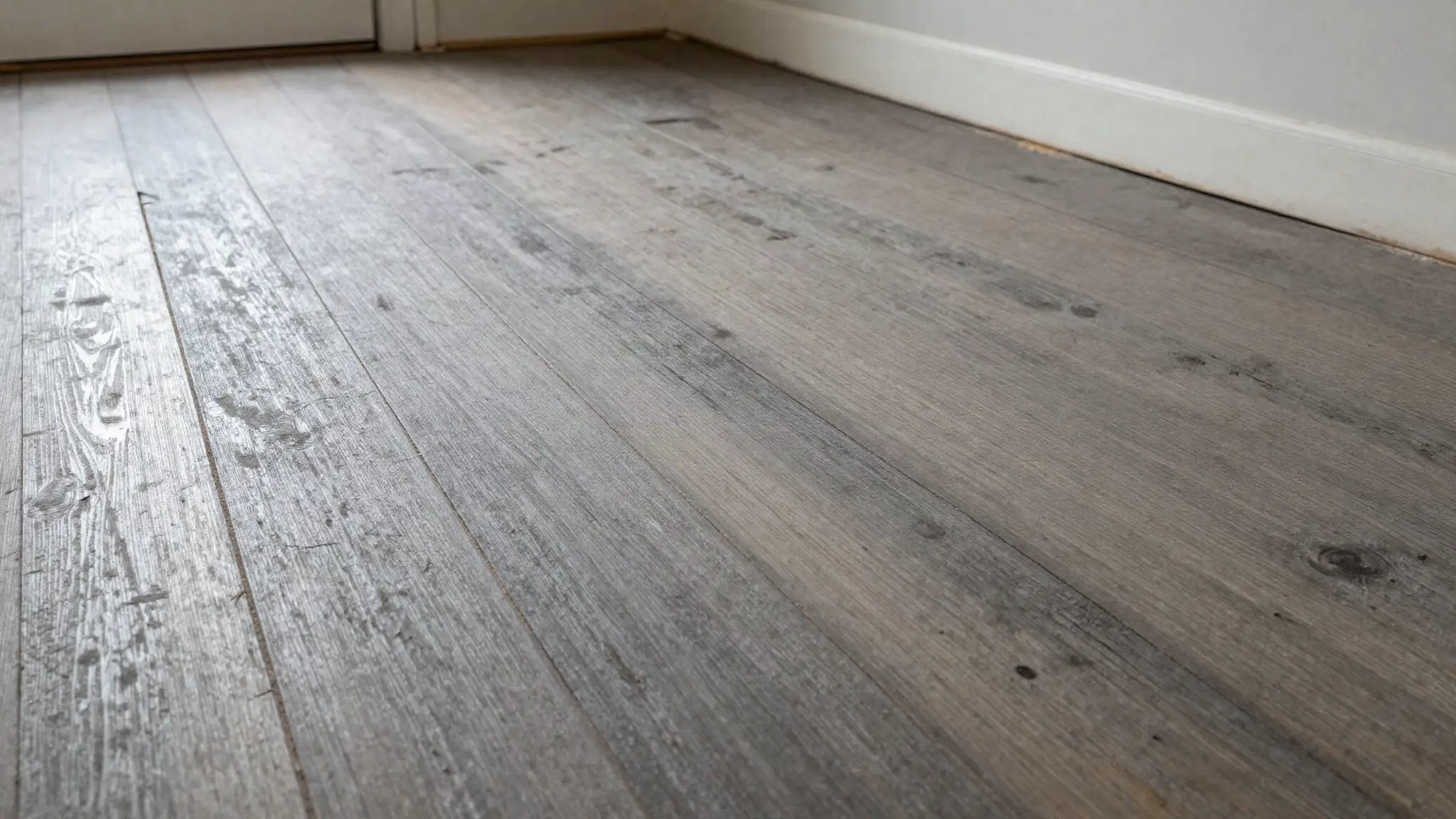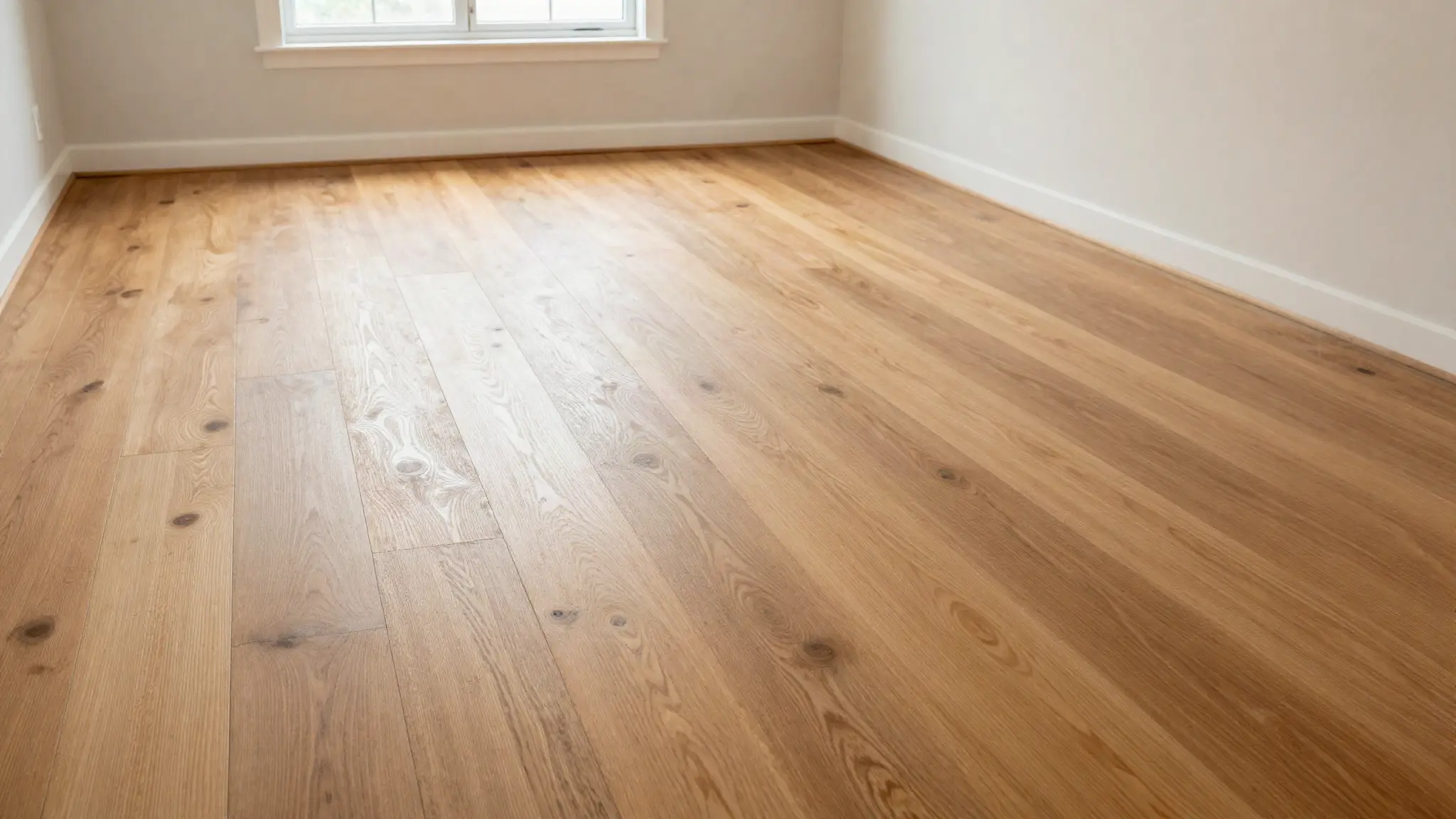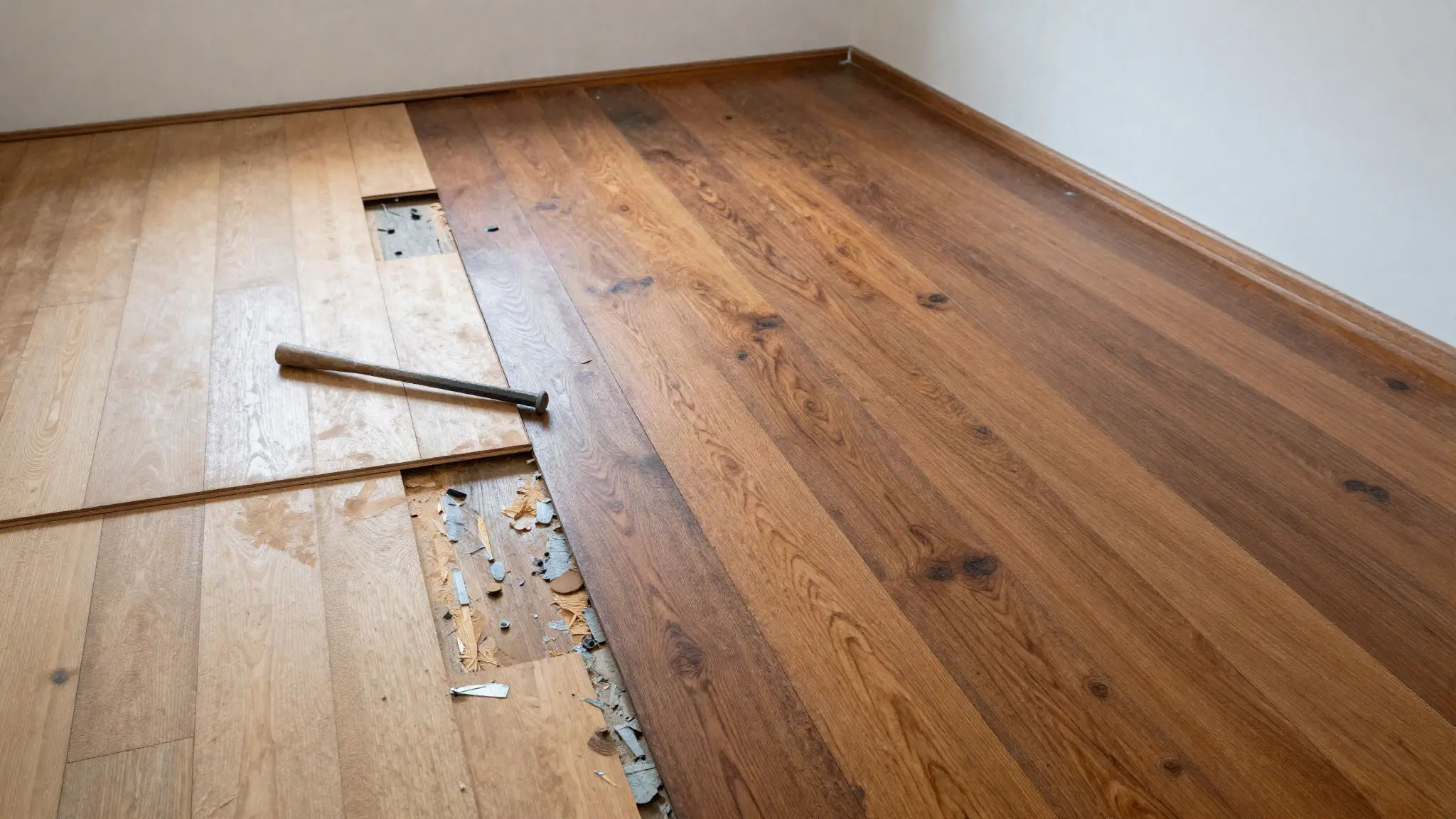
Most hardwood floors that look "done" aren't — they need a refinish, not a replacement, and we've written about how to tell the difference. But sometimes replacement really is the right call. Here's how to know you're in that smaller group.
1. The wood itself is damaged, not just the finish
Refinishing only works on wood that's structurally sound. Deep gouges that go through the stain into raw wood, boards that are cracked or split, or wood that's soft and spongy to the touch (usually from long-term water exposure) can't be sanded back to good — the damage goes deeper than a finish layer.
2. The boards have already been sanded down too thin
Solid hardwood can be refinished multiple times, but not infinitely. Each sanding removes a small layer of wood, and after enough refinishes over enough decades, there isn't enough wood left above the tongue-and-groove joint to sand again without risking damage. A contractor can check this during an in-home assessment — it's not something you can tell just by looking.
3. Water damage has reached the subfloor, not just the surface
Cupping or warping that doesn't flatten out once the humidity that caused it corrects itself often means moisture reached the subfloor, not just the wood surface. Refinishing a floor sitting on a compromised subfloor just buys a few years before the same problem returns — the subfloor needs to be addressed first, which usually means the flooring above it needs to come up.
4. Gaps and unevenness are structural, not seasonal
Small seasonal gaps that open and close with the year are normal wood movement — see our full breakdown of refinishing signs for that distinction. But gaps that are wide, uneven room to room, or paired with a floor that feels unlevel underfoot usually point to structural settling or subfloor failure that a refinish won't fix.
5. The layout doesn't fit how you actually live anymore
This one has nothing to do with damage. If you're combining rooms, changing a floor plan, or the existing plank width and direction just doesn't fit an addition or renovation, replacement is sometimes the more honest answer even if the old floor is technically salvageable — refinishing a floor you're about to reconfigure is money spent twice.
When replacement is actually cheaper than another refinish
A full refinish costs real money, and if a floor is close to the end of its refinishable life, spending on a refinish that only buys a few more years can cost more over time than replacing it once with a floor built to last. We'll give you an honest read on which side of that line your floor is actually on — book a free in-home assessment and we'll tell you straight, the same way we'd want to be told for our own home.