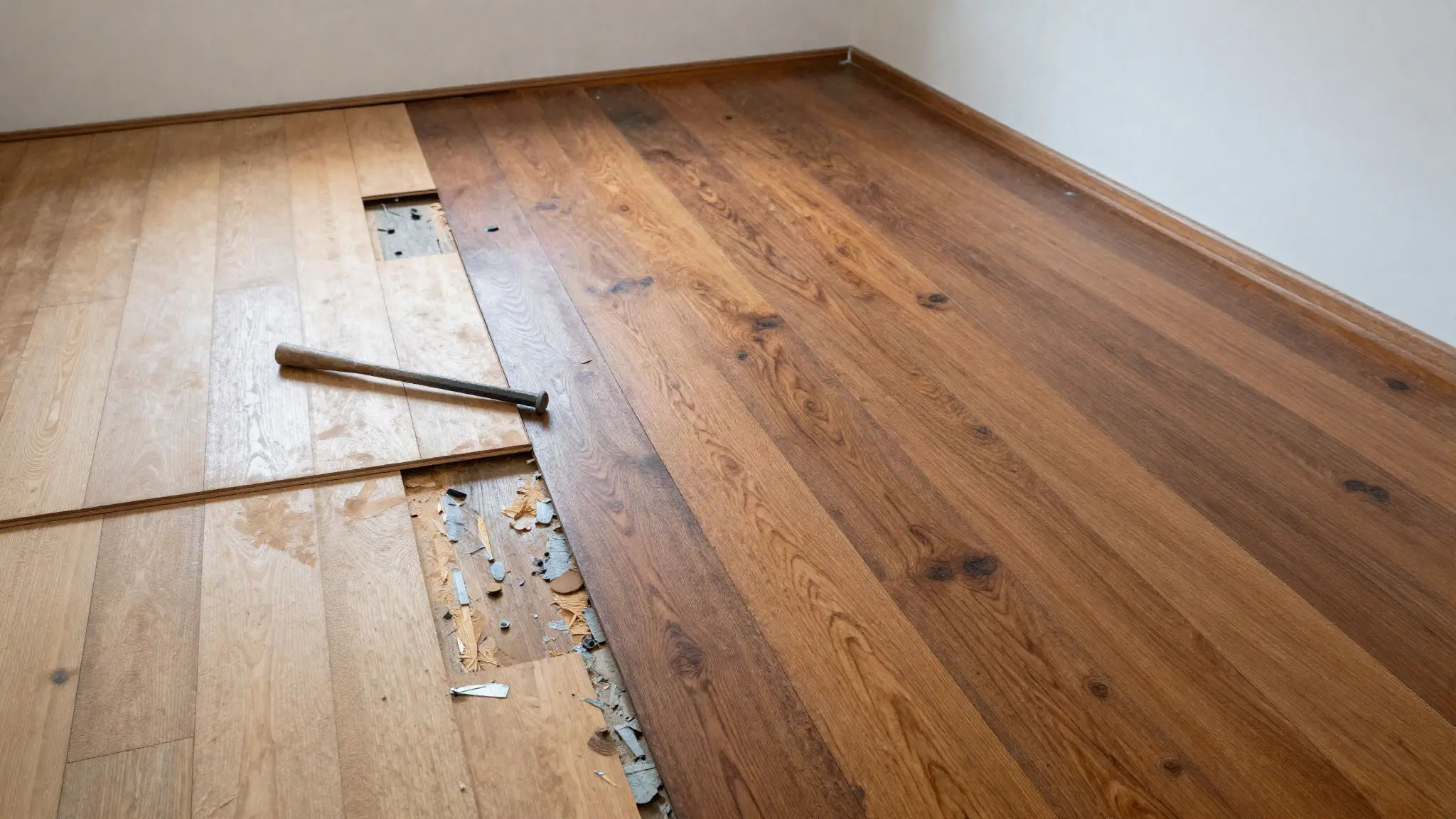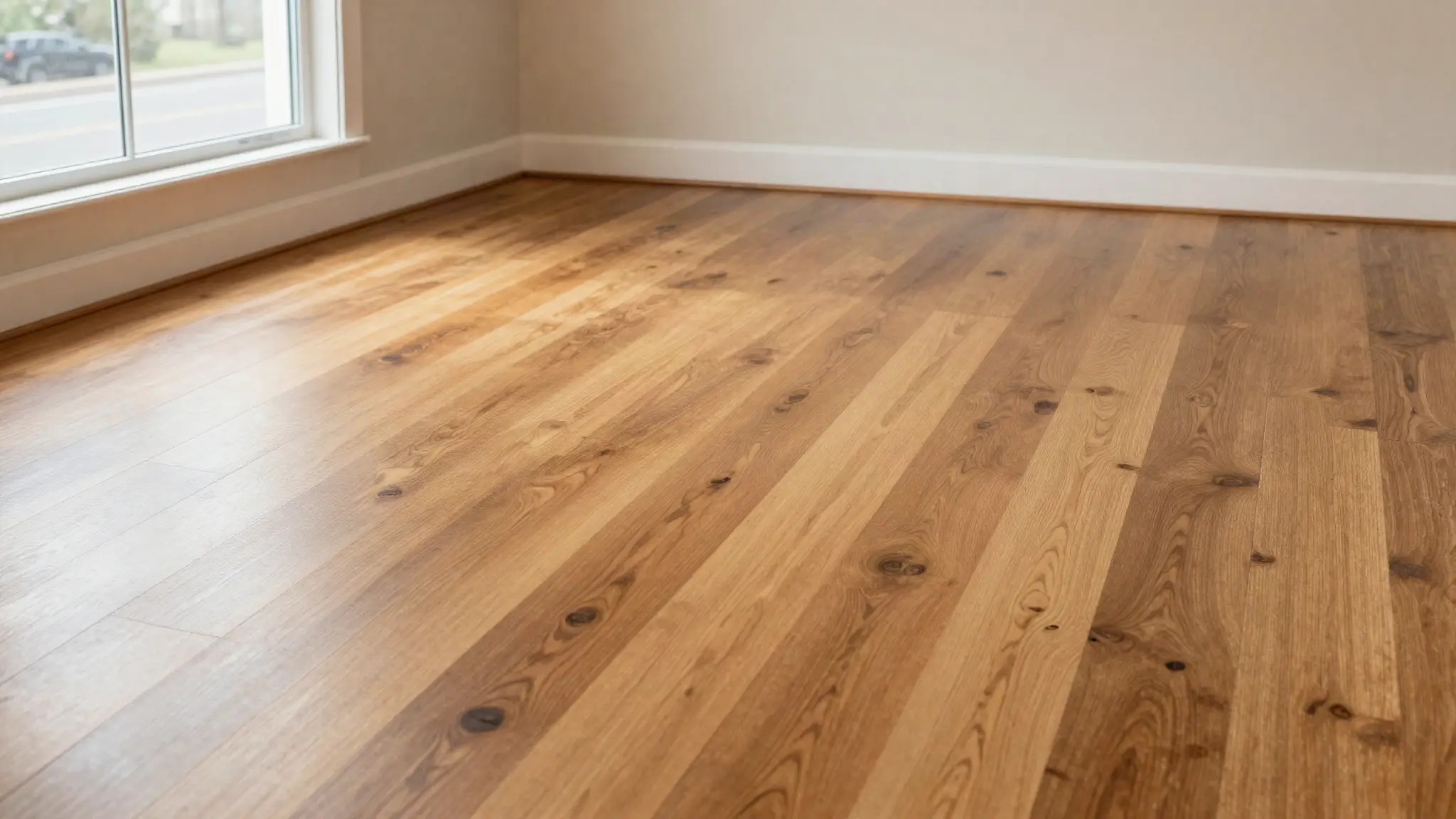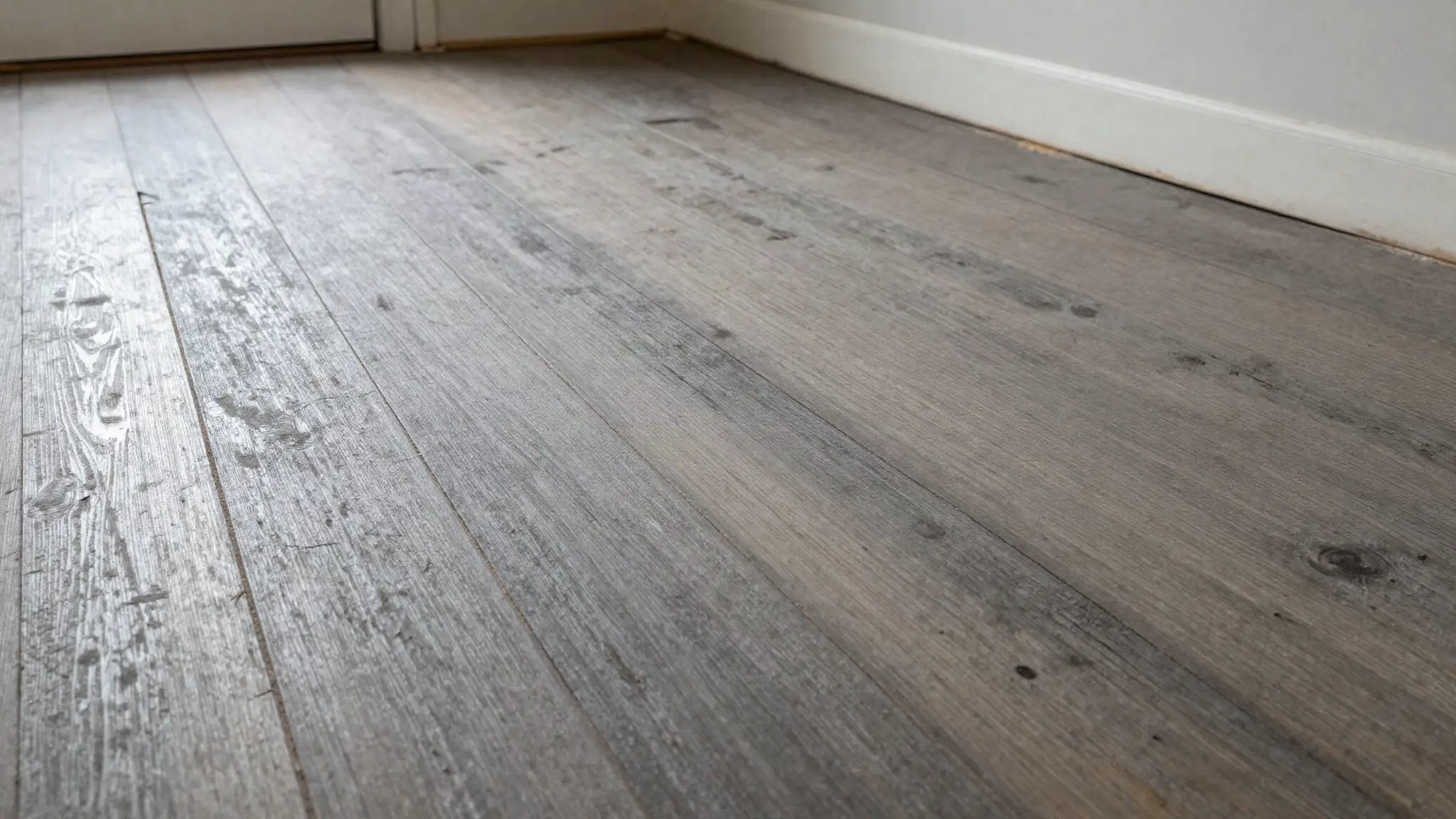
We walk into a lot of homes where the owner is convinced their hardwood needs to be torn out — and in maybe 1 out of 10 cases, that's actually true. Most of the time, what looks like "the floor is done" is really just a finish that's worn through, which a sand-and-refinish fixes completely.
1. The finish looks dull or gray, but the wood itself is intact
Run your fingernail lightly across the surface. If you can't catch a gouge in the wood itself — just see dullness or minor surface scratching — that's a finish problem, not a wood problem. Refinishing solves it.
2. Scratches don't go deeper than the topcoat
Light scratches from pet nails or moving furniture usually only cut through the polyurethane topcoat, not the wood grain underneath. A full sand-down removes them entirely.
3. The color no longer matches your décor
This is one homeowners don't expect: refinishing isn't just about wear, it's also how we change stain color entirely — going from an old orange-toned oak to a modern matte or greige finish, without replacing a single board.
4. Gaps between boards are minor and seasonal
Small seasonal gaps that open in dry winter months and close up in humid summer are normal wood movement, not damage. If gaps stay open year-round and are wide, that can point to a moisture or subfloor issue worth a closer look.
5. You're testing the water on hardwood, but not ready for a full replacement
If the floor has cosmetic wear but structurally sound boards, refinishing gets you 80–90% of the "brand new floor" feeling at a fraction of full replacement cost — and it's reversible in the sense that a full replacement is always still an option down the line.
If you're not sure which category your floor falls into, that's exactly what our free in-home assessment is for — we'll tell you honestly if a refinish will do the job. And if your floor doesn't fall into any of the five signs above, it's worth reading the flip side of this post: 5 signs it's time to replace, not refinish.