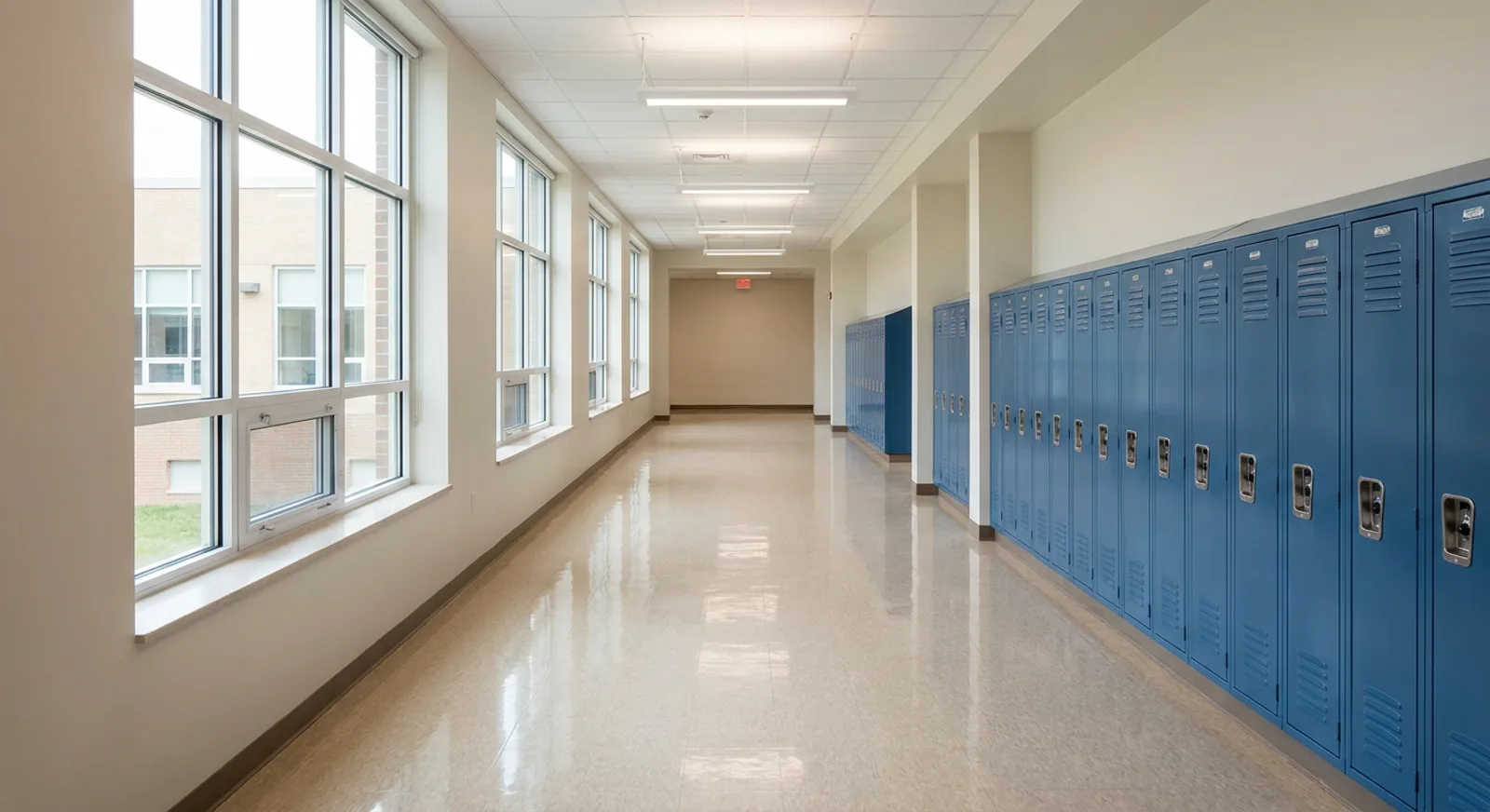
I got a call last month from a facilities director in Ocean County. She needed to replace the corridor flooring in a 1960s elementary school and wanted to know what she was actually buying when she read the bids. The question she asked me was simple. What does a good bid look like and what does the law say about who can do the work. I told her I do not install school floors but I know the code well enough to tell her what to watch for. This is what I walked her through.
Three Rule Sets That Govern School Flooring in New Jersey
The NJDOE Office of School Facilities under N.J.A.C. 6A:26-1.2 decides whether your project is a capital project that needs a project application or routine maintenance funded out of the district's annual budget. That is the first rule set.
The Prevailing Wage Act decides who is allowed to bid and what paperwork the district must collect from every contractor and subcontractor on site. That is the second rule set. The 2010 ADA Standards decide what the finished floor is allowed to look like and how transitions between materials have to be handled. That is the third rule set. A contractor who does not know all three is guessing.
What the Code Says About Classroom Floors
N.J.A.C. 6A:26-6.3(b)4 says concrete floors in all instructional areas except shops shall be covered with resilient flooring. 6A:26-6.4(b)5 says each room shall have resilient floor covering. 6A:26-8.1(d)2i(10) says carpet or asbestos-free resilient flooring satisfies the requirement.
Bare sealed concrete is not a substitute in a classroom. I have seen bids that propose polished concrete in a corridor because it looks good and the district thinks it will save money. The code does not allow it in an instructional area. A contractor who proposes it does not know the code.
Prevailing Wage and Public Works Registration
Any public works contract valued at $2,000 or more triggers prevailing wage in New Jersey. That threshold is a legal threshold, not a statement about what the work should cost. Every contractor and subcontractor needs a Public Works Contractor Registration Certificate from NJDOL before they bid.
The wage determination gets posted on site. Weekly certified payrolls go to the district. A bid that does not mention the PWCRA certificate or the certified payroll requirement is missing the paperwork that keeps the district out of trouble. Ask for the certificate number before you sign anything.
ADA Standards for Floor Surfaces and Transitions
ADA 302.1 says the floor has to be stable, firm, and slip resistant. 302.2 says carpet pile height is 1/2 inch max and securely attached. 303 caps changes in level at 1/4 inch vertical. A beveled transition from 1/4 to 1/2 inch needs a 1:2 slope max. Anything above 1/2 inch needs a ramp.
I see transitions detailed wrong all the time. A contractor proposes a reducer strip that is too steep or a carpet edge that is not attached. The building inspector catches it after the floor is down and the district pays twice. A good bid details every transition against ADA 303 before anyone orders material.
The Four Honest Answers for a Classroom Floor
VCT is the cheapest to buy. It needs a strip-and-wax program for life. Over twenty years it is usually the most expensive to own. Glue-down LVT at 20-mil wear layer or thicker does not need waxing. It usually wins on lifecycle cost but it dents if you spec a thin wear layer.
Carpet tile is comfortable and quiet in classrooms. It is not the right choice at the entry where tracked water and grit come in. Sheet vinyl works in wet rooms like locker rooms and janitor closets. It is hard to repair in the middle of a floor. Commercial porcelain tile lasts the longest. It is cold underfoot and takes more labor to install. A maple gym floor needs a full sand-and-refinish or a screen-and-recoat every few years.
The Shore Problem with Slab Moisture
Salt air and humidity in Monmouth and Ocean County. Postwar school buildings from the 1950s and 1960s with slab-on-grade corridors. Moisture migrates up through the slab and wicks into the edges of the flooring. The finish fails from underneath where nobody looks.
VCT seams open with that movement. LVT with a proper moisture-rated pad holds better. A moisture test before anyone prices the job is not optional. I have walked buildings where the existing floor is failing at the perimeter and the district does not know why. The answer is always moisture. A bid that does not mention a moisture test is guessing about the prep.
Indoor Air Quality and Low-VOC Adhesives
FloorScore and CDPH 01350 are the two certifications that matter. TVOC under 0.5 mg/m3. Carpet adhesives and some VCT adhesives off-gas. Low-VOC or no-VOC adhesive spec matters more in a school than in a house because the room gets used all day by kids.
Ask for the product data sheet, not just a brand name. I have seen bids that name a product line but do not name the adhesive. The contractor installs whatever adhesive he has on the truck. The district finds out six months later when the IAQ test fails. A good bid names the adhesive and the TVOC number.
Rolling Load and Chair Caster Resistance
ASTM F970-22 covers rolling load resistance. Chairs, carts, the gym equipment. ASTM F2753 covers chair caster. Thin LVT in a school corridor dents in a year. The district replaces it and the contractor is gone.
A bid that does not name the wear layer thickness or the ASTM rating is not giving you enough information to compare products. I tell people to ask for 20-mil wear layer minimum in a corridor. 12-mil is fine in a classroom where the load is lighter. Anything thinner than that is a residential product in a commercial building.
How to Read a Bid for School Flooring
Three things to look for. The scope, the paperwork, and the references. The scope names the product and wear layer or DCOF. It names the finish. It names the prep including whether the slab gets a moisture test before the bid and who pays if it fails. It details transitions against ADA 303. It gives a schedule in calendar dates with cure time named.
The paperwork section lists the PWCRA certificate for every contractor and named subcontractor. It says the wage determination will be posted on site. It says weekly certified payrolls go to the district. The references section lists NJ schools or comparable public work projects in the last three years with a contact who picks up. If any of those three pieces is missing the bid is incomplete.
What to Ask For Before You Sign Anything
A walk-through before anyone prices it. Measurement of the wing or gym separately so you know what you are comparing when one bid is lower than another. A look at the slab and the existing transitions. An honest answer on which scope the building actually needs, including when the simpler scope is the right one.
I am not a general contractor. I am not an engineer. I am not the district's project manager. But I know how a floor goes down and what a bad install looks like. I know NJ code well enough to tell when a bid is missing something. The facilities director I talked to last month asked me what I would ask for if I were in her chair. I told her I would ask for the three things above and I would not sign anything until I got them.
Jersey Concept Flooring Does Residential and Light Commercial Work in Monmouth and Ocean County
I install hardwood, LVP, tile, and stairs in homes and light commercial spaces across Monmouth and Ocean County. I also take commercial flooring scope as a subcontractor in offices, retail, salons, gyms, and multifamily common areas. I do not install school floors but I know what a good floor looks like and I know the code. If you need flooring work in Long Branch, Manasquan, Freehold, Toms River, Brick, Red Bank, Sea Girt, Point Pleasant, Asbury Park, or Holmdel, call me at 732-440-8364 or email andriel@jerseyconceptflooring.com. I will walk the space with you and tell you what it needs.
Sources: https://www.nj.gov/education/facilities/projectapplication/docs/Guidelines_%20When%20a%20project%20application%20is%20required.pdf https://www.nj.gov/dca/codes/publications/pdf_bulletins/b_00-3.pdf https://www.nj.gov/labor/wageandhour/prevailing-rates/public-works/ https://www.nj.gov/labor/lwdhome/press/2026/20260407_school_construction.shtml https://www.ada.gov/law-and-regs/design-standards/2010-stds/ https://store.astm.org/f0970-22.html https://www.epa.gov/iaq-schools/controlling-pollutants-and-sources-indoor-air-quality-design-tools-schools https://jerseyconceptflooring.com/blog/lvt-vs-vct-vs-epoxy-commercial-flooring/ https://jerseyconceptflooring.com/blog/nj-sports-floor-sanding-recoating/ https://jerseyconceptflooring.com/blog/flooring-for-jersey-shore-humidity/
Frequently Asked Questions
What's the difference between a project application and routine maintenance under N.J.A.C. 6A:26?
Routine maintenance is repair or replacement that doesn't change the building's function or systems. A project application kicks in when you're altering spaces, adding square footage, or doing work that affects life safety systems. If your flooring job involves subfloor work, asbestos abatement, or changes to accessibility, it's likely a project application requiring DOE approval before you start.
Why does Prevailing Wage matter for school flooring jobs?
Any public works contract over $2,000 in New Jersey triggers Prevailing Wage requirements under state law. Your contractor needs a valid PWCRA certificate and must pay workers the county-specific prevailing rates. If a bid seems unusually low, they might not be factoring in prevailing wage compliance, which puts your district at risk for labor violations and project delays.
What should I look for in the scope section of a flooring bid?
A solid scope spells out substrate prep, moisture testing protocols if you're on a slab near the Shore, transition details for ADA compliance, and product specs including FloorScore or CDPH certifications for indoor air quality. It should also reference ASTM F970 rolling load ratings if you've got equipment traffic, and confirm the contractor won't leave bare concrete in occupied classrooms per 6A:26 standards.
How do I verify a contractor can handle education flooring requirements?
Ask for references from other New Jersey school districts and confirm they understand the paperwork trail. A qualified contractor will discuss moisture mitigation documentation, IAQ test results showing TVOC levels under 0.5 mg/m3, ADA transition compliance, and how they coordinate with your facilities team to minimize classroom downtime during installation.
Sources & Further Reading
- NJDOE - When a school facilities project application is required
- NJ DCA Bulletin 00-3 (N.J.A.C. 6A:26 school facilities)
- NJDOL - Prevailing Wage rates for public works
- NJDOL - School construction and prevailing wage (April 2026)
- 2010 ADA Standards for Accessible Design
- ASTM F970-22 - Wear layer resistance
- EPA - IAQ Tools for Schools