Water and hardwood is a race against time. The difference between a floor that dries out and gets refinished and one that has to come up is very often decided in the first day or two — before anyone has called a contractor.
This matters more here than in most places. Homes near the bay and the ocean already run humid, and Shore basements and ground floors take on water from storms, tidal flooding and burst pipes with some regularity.
The first 48 hours
Stop the water. Obvious, but a floor cannot begin drying while the source is active.
Get the standing water off fast. Wet vacuum, mops, whatever moves volume. Every hour the water sits, more of it moves into the wood and into the subfloor beneath.
Lift what is on top of it. Rugs hold water against the boards and are one of the most common reasons a floor that would have survived did not. Move furniture, especially anything with metal feet that will stain.
Then dry the air, not just the floor. This is the step people skip. Fans moving air across the surface plus a dehumidifier pulling moisture out of the room. Both, running for days — not hours. A floor that looks dry on top can be holding a lot of water underneath.
Do not apply heat. The instinct to blast it with a heater dries the surface faster than the core, and that differential is what splits and warps boards.
Photograph everything before you touch it. If there is any chance of an insurance claim, the documentation you want is the wet floor, not the dried one.
Cupping and crowning: reading what the floor is telling you
Cupping is when the edges of each board rise higher than the centre, giving the floor a subtle washboard feel underfoot. It means the underside of the boards is wetter than the top — moisture is coming from below, from the subfloor or a crawlspace, and the wood is swelling where it is wettest.
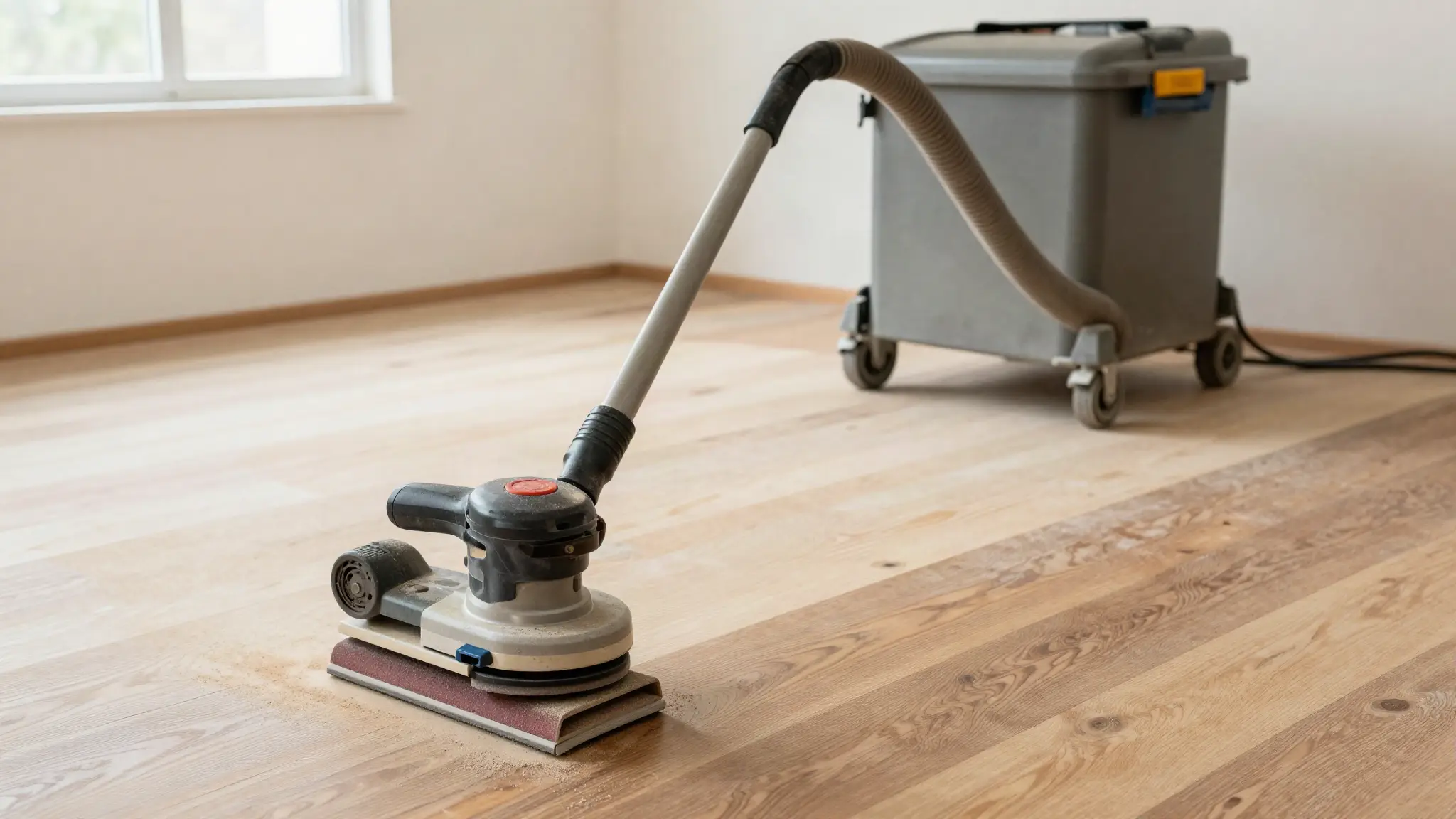
Crowning is the opposite: the centre of each board sits higher than the edges. It often appears when a cupped floor is sanded flat before it has fully dried. The wood then finishes drying, shrinks back, and now the profile is inverted — and the floor has lost thickness that cannot be recovered.
That is the single most expensive mistake in water-damaged floors, and it is made by rushing. A cupped floor must be fully dry before anyone sands it. Depending on how much water and how long it sat, that can be weeks, not days. Any contractor willing to sand a floor that is still visibly cupped a few days after a flood is about to cost you the floor.
What can be saved and what cannot
Usually saveable: surface staining and discolouration, mild cupping that relaxes as the floor dries, a dull or blotched finish, water that sat for hours rather than days.
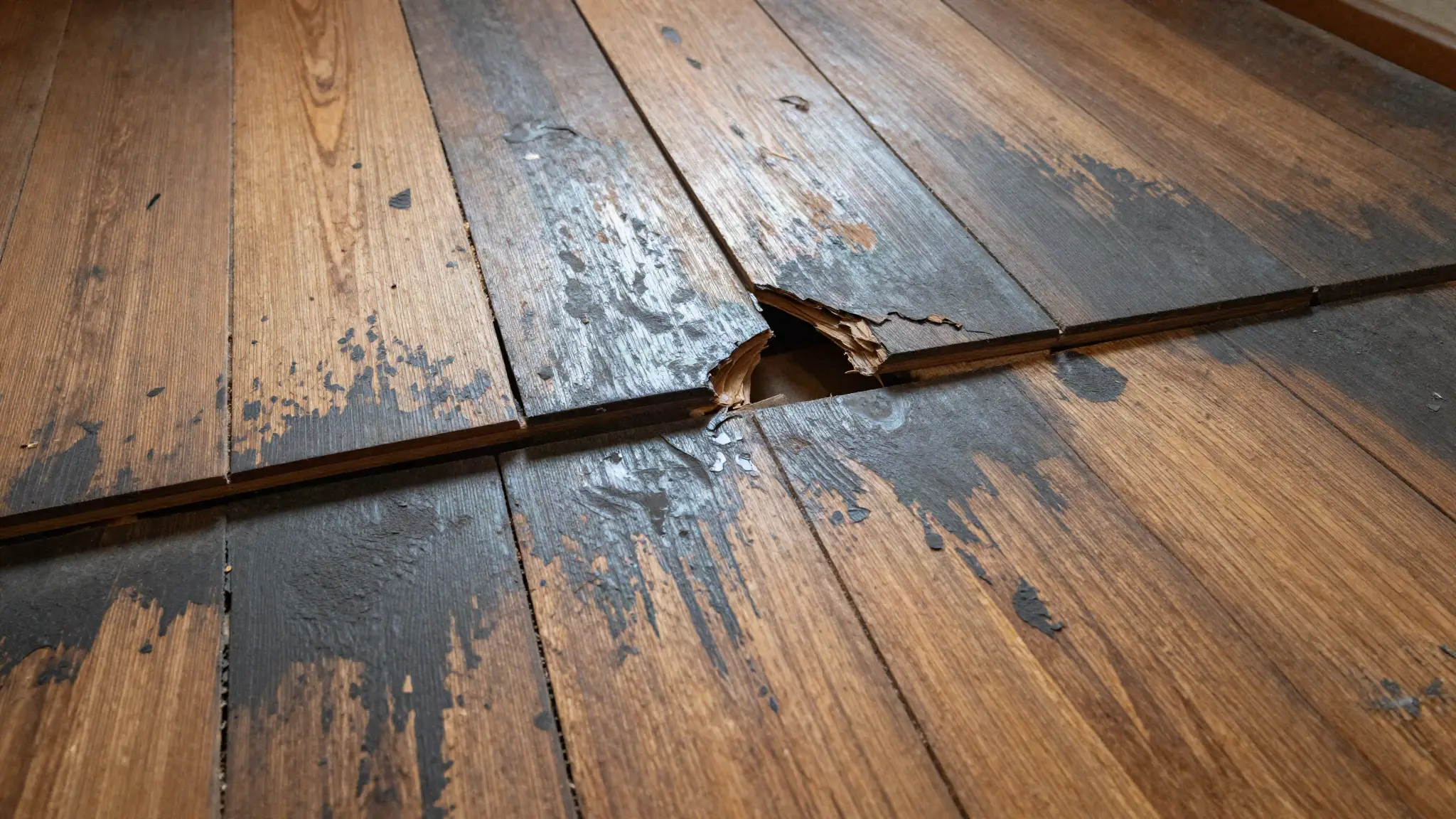
Usually not: boards that have buckled and lifted away from the subfloor, water that has been sitting long enough for the subfloor to delaminate, visible mould growth beneath the boards, and floors that have already been sanded to the end of their usable thickness.
The grey area: sewage or flood water carrying contaminants is a health question rather than a woodworking one, and the answer is often replacement regardless of how the wood looks. Same for water that has soaked into insulation or wall cavities.
Engineered hardwood is less forgiving than solid here. The wear layer is thin, so the sanding that rescues a solid floor may not be available, and the plywood core can delaminate in ways that do not recover.
Do not rush the repair
The order that saves floors is: stop the water, remove it, dry the structure properly, wait, measure the moisture, then decide. Every step skipped moves the job from refinishing to replacement.
A moisture meter reading of the boards and the subfloor is what tells you the floor is actually ready — not how it looks. Any contractor working on a water-damaged floor should be taking those readings and should be willing to tell you the floor is not ready yet, even when you want it finished for a deadline.
Getting an honest assessment
If your floor has taken on water, the useful thing early on is someone telling you which category you are in — dry it and refinish, partial board replacement, or full replacement — so you are not spending money in the wrong direction or waiting on a floor that was never coming back.
We cover Monmouth and Ocean County and the assessment is free. We will tell you plainly if the floor needs more drying time before anyone touches it, and we would rather say that than sand a floor that is going to crown afterwards. See our sanding & refinishing page, read about when replacement is the right call, or book a free assessment.