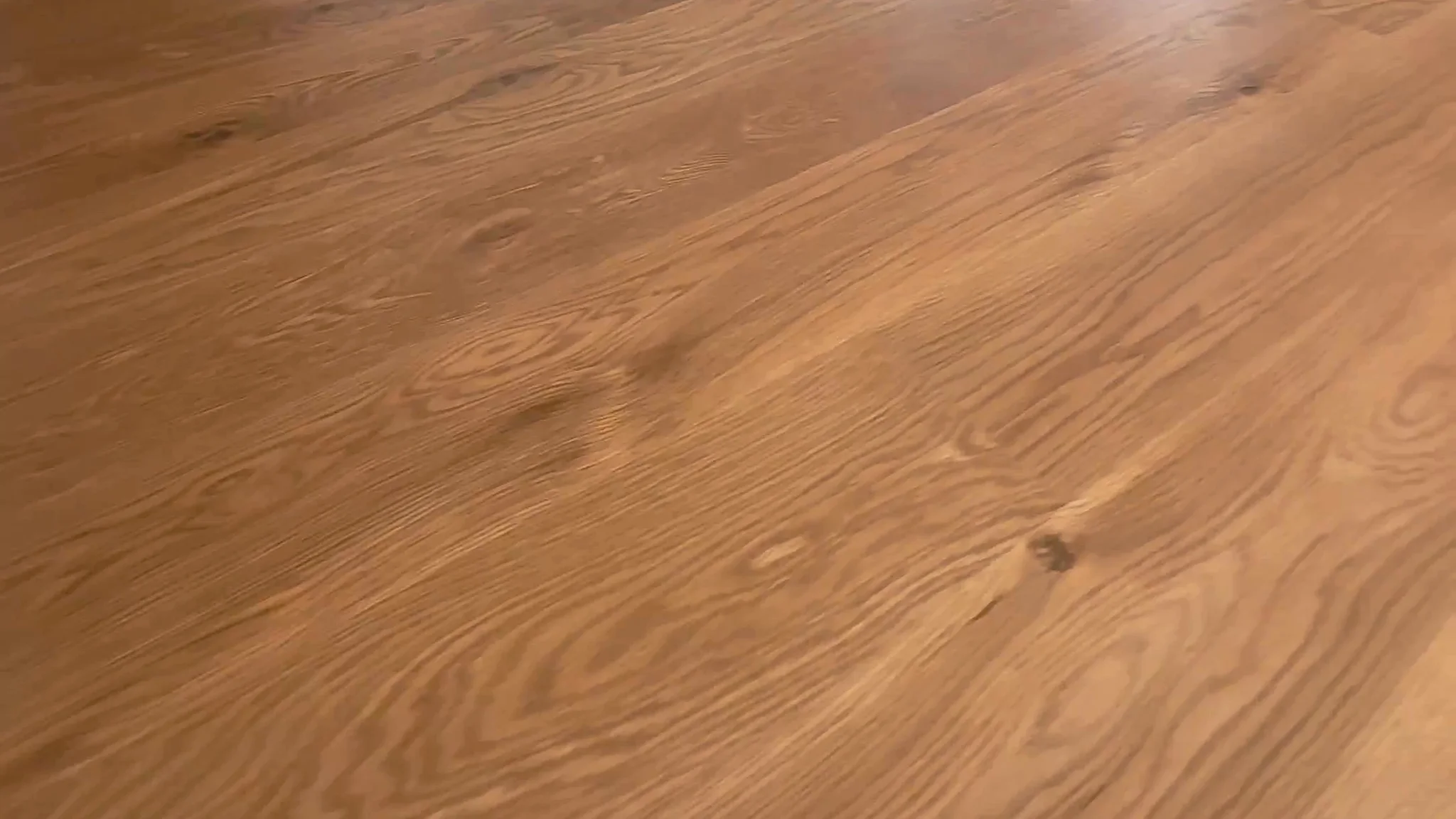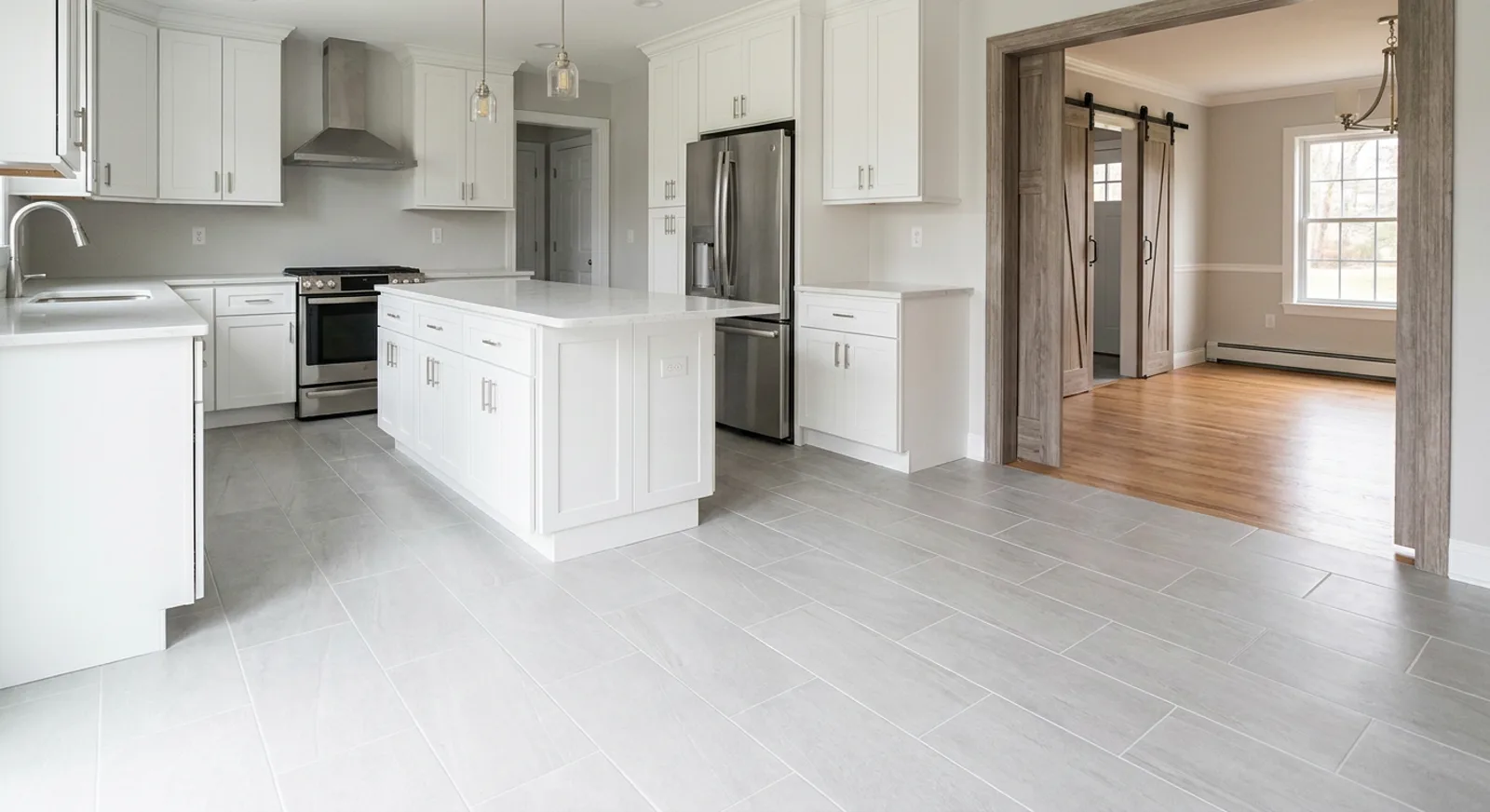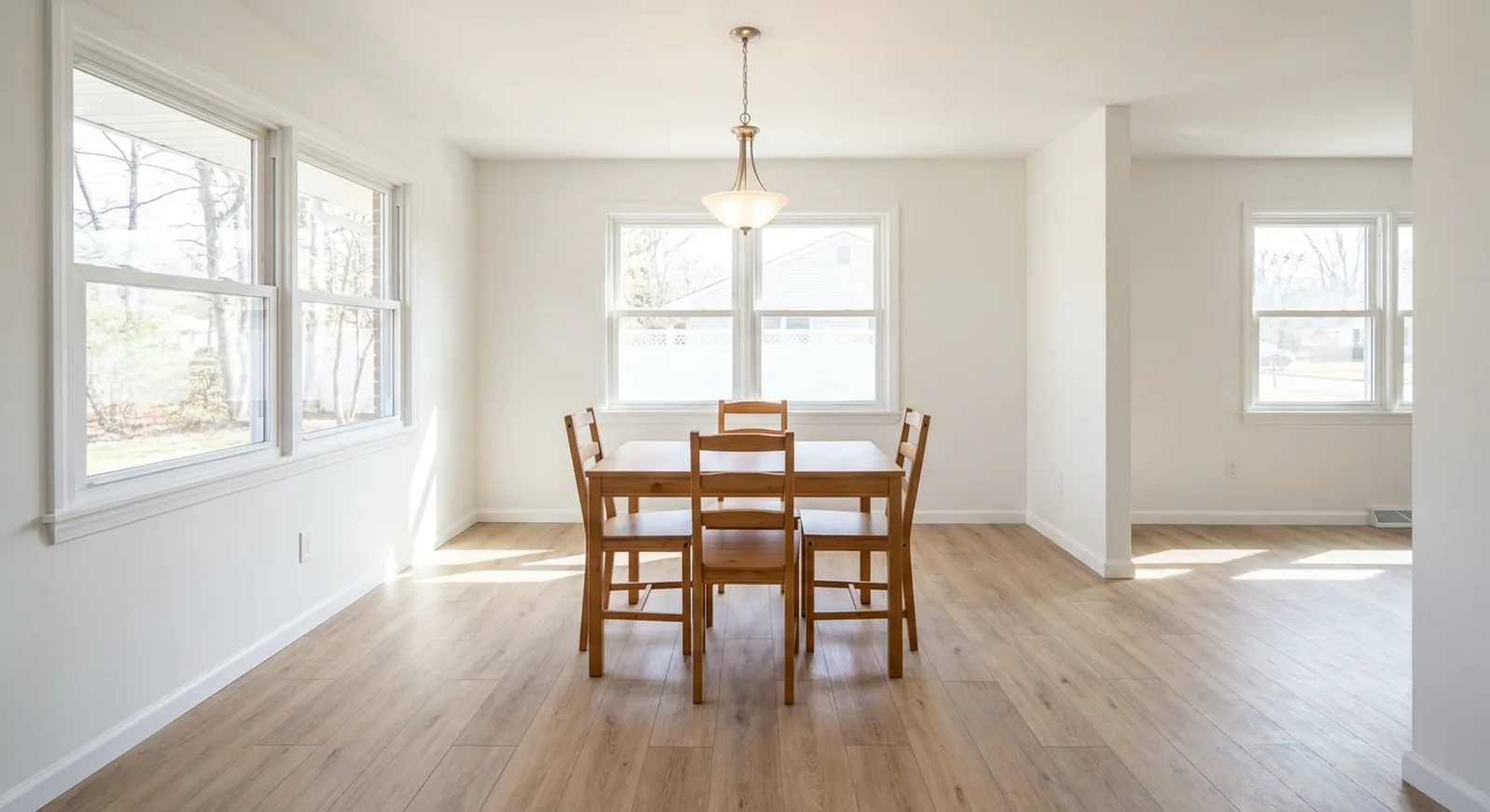
If you are standing in a gutted 1960s ranch in Brick with the subfloor exposed and you need to pick a floor that sells the house without blowing the budget, the first question is what the house will sell for. Most flips in Monmouth and Ocean County sell under $500,000. Call it 70 percent of the market. For that band the spec is LVP in the main living areas and porcelain tile in every full bathroom. The other 30 percent, the houses that will list over $500,000, engineered hardwood in the main living areas makes sense if the comps show hardwood. Picking the wrong spec for the price band means either going over budget or underselling what buyers expect.
The 70/30 Rule in Monmouth and Ocean County
The majority of flips in this area are postwar ranches from the 1950s and 1960s. Most of them land in the $300,000 to $500,000 range after rehab. For that price point, buyers expect LVP in the living room, kitchen, and bedrooms, and tile in the bathrooms. They do not expect hardwood and they do not pay extra for it. If you are flipping a house that will list over $500,000, check the comps. If the comps show hardwood, engineered hardwood in the main living areas is the right call. If the comps show LVP, stick with LVP. The floor has to match what the neighborhood supports.
LVP Wear Layer Matters More Than Brand
Wear layer is the number that matters. 6-mil LVP looks the same as 12-mil on the showroom floor until someone drops a can of tomato sauce on it. 6-mil wears through in five to seven years. 12-mil holds for fifteen to twenty. For a flip, 12-mil minimum, 20-mil if the comps support it. Under 8-mil is a false economy. The buyer sees it in the listing photos and the inspector they hire calls it out. The LVP I specify for flips runs 12-mil to 20-mil. The material cost difference between 6-mil and 12-mil is a dollar or two per square foot, which on a 1,000 square foot house is $1,000 to $2,000. The resale difference is more than that.
LVP Does Not Belong in a Full Bathroom
LVP in a full bathroom works for two or three years, then condensation around the toilet wicks under the edges and the floor lifts. Porcelain wins every time in a full bath, floor and tub surround. 12 by 24 format for the modern look. The material difference between LVP and porcelain is a few hundred dollars on a 60 square foot bathroom. It is the first place a buyer's inspector looks. If you skip tile in the bathroom, the buyer asks for a credit or walks away.
Subfloor Leveling in Postwar Ranches
Most flips in Monmouth and Ocean County are postwar ranches with plank subfloor. Often there are gaps between the planks. If you put LVP over that without leveling, the floor moves when you walk on it, the seams separate, and the buyer's inspector sees it in the first week. Subfloor leveling on a 1,000 square foot flip runs $1,200 to $2,500 and adds a day to the schedule. Skipping it saves money up front and costs more at closing. The dip shows in the listing photos.
Stairs and Handrail Code in NJ
Original 1960s railing fails NJ code on baluster spacing. FHA buyers cannot finance a house with a flagged railing. Replacing treads and railing runs $1,500 to $3,500 per flight in NJ. Refacing the railing if the wood is solid runs $800 to $1,500 per flight. If you skip it, the buyer asks for a credit or walks away. The inspector flags it before the closing. Most flips in this area have one or two flights of stairs. Budget for it up front.
What Flooring Costs on a Flip in NJ
Here is what the floor costs on a typical flip in Monmouth or Ocean County. These are the rates I use for material and labor combined, or labor only if you already bought the floor.
| Scope | Square Footage | Rate per Sq Ft | Total |
|---|---|---|---|
| LVP installed (material + labor) | 1,200 sq ft | $4.00 to $9.00 | $4,800 to $10,800 |
| Porcelain tile in 2 bathrooms | 120 sq ft | $8.00 to $18.00 | $960 to $2,160 |
| Engineered hardwood installed | 1,200 sq ft | $5.50 to $14.00 | $6,600 to $16,800 |
| Subfloor leveling | 1,000 sq ft | varies | $1,200 to $2,500 |
What Flippers Get Wrong
The most common mistake is buying 6-mil LVP because it is cheaper per square foot. The second most common mistake is skipping subfloor leveling and the dip shows in the listing photos. The third is putting LVP in a full bathroom. Refinishing original hardwood with no budget contingency is another one. If the boards are thin, sanding exposes nails. Not checking whether the existing stair railing passes code is the last one. The inspector flags it before the closing and the buyer asks for a credit.
What to Ask For Before You Price It
Walk the house before anyone prices it. Look at the slab and the existing transitions. Measure the bathrooms separately. Ask for an honest answer on which scope the house actually needs, including when the simpler scope is the right one. If the house will sell under $500,000, LVP in the main areas and tile in the bathrooms is the right spec. If the house will sell over $500,000 and the comps show hardwood, engineered hardwood in the main areas makes sense. The floor has to match what the neighborhood supports. I install floors in Monmouth and Ocean County. If you are flipping a house and you need someone to walk it and tell you which scope it needs, call me at Jersey Concept Flooring.
Sources https://www.nj.gov/law/nis/irc/ https://www.njconsumeraffairs.gov/ https://tcnatile.com/ansi-a3263/ https://jakenfinancegroup.com/blog/best-flooring-real-estate-investors-rehab-guide-2026/ https://www.builddirect.com/blogs/expert-advice-on-flooring/the-best-flooring-for-flipping-houses Internal links: /blog/luxury-vinyl-plank-cost-nj/ /blog/subfloor-leveling-cost-nj/
Frequently Asked Questions
What flooring should I use in a flip under $500,000 ARV?
LVP with at least a 12-mil wear layer in living spaces and porcelain tile in bathrooms. Buyers expect durable, low-maintenance floors at this price point. LVT fails in full baths because standing water seeps through seams and destroys the adhesive. Porcelain tile handles moisture without callbacks. Budget $4.00 to $9.00 per square foot installed for LVP.
Do I need to replace stair treads and railings in my flip?
If your railing height or baluster spacing fails NJ code, yes. FHA appraisers flag non-compliant stairs and kill financing for your buyer. Replacing treads and railing runs $1,500 to $3,500 per flight. Refacing existing compliant railings costs $800 to $1,500 per flight. I check code before you waste money on cosmetic fixes that do not solve the real problem.
How long does flooring installation take on a flip?
Three to five days for installation on a typical 1,200 square foot flip. Add 48 hours before you can walk on LVP. Total timeline from contract to move-in ready is six to ten weeks because subfloor prep on postwar houses with plank subfloors takes time. Leveling a 1,000 square foot subfloor runs $1,200 to $2,500.
What should I look for in a flooring contractor's bid?
Does the bid include subfloor prep, material specs like wear layer thickness, disposal, and a timeline? Ask if they pull permits for structural work and carry general liability insurance. Check references from other investors, not homeowners. Shore humidity requires acclimation time. A low bid without scope details means change orders later when they find your plank subfloor is not flat.