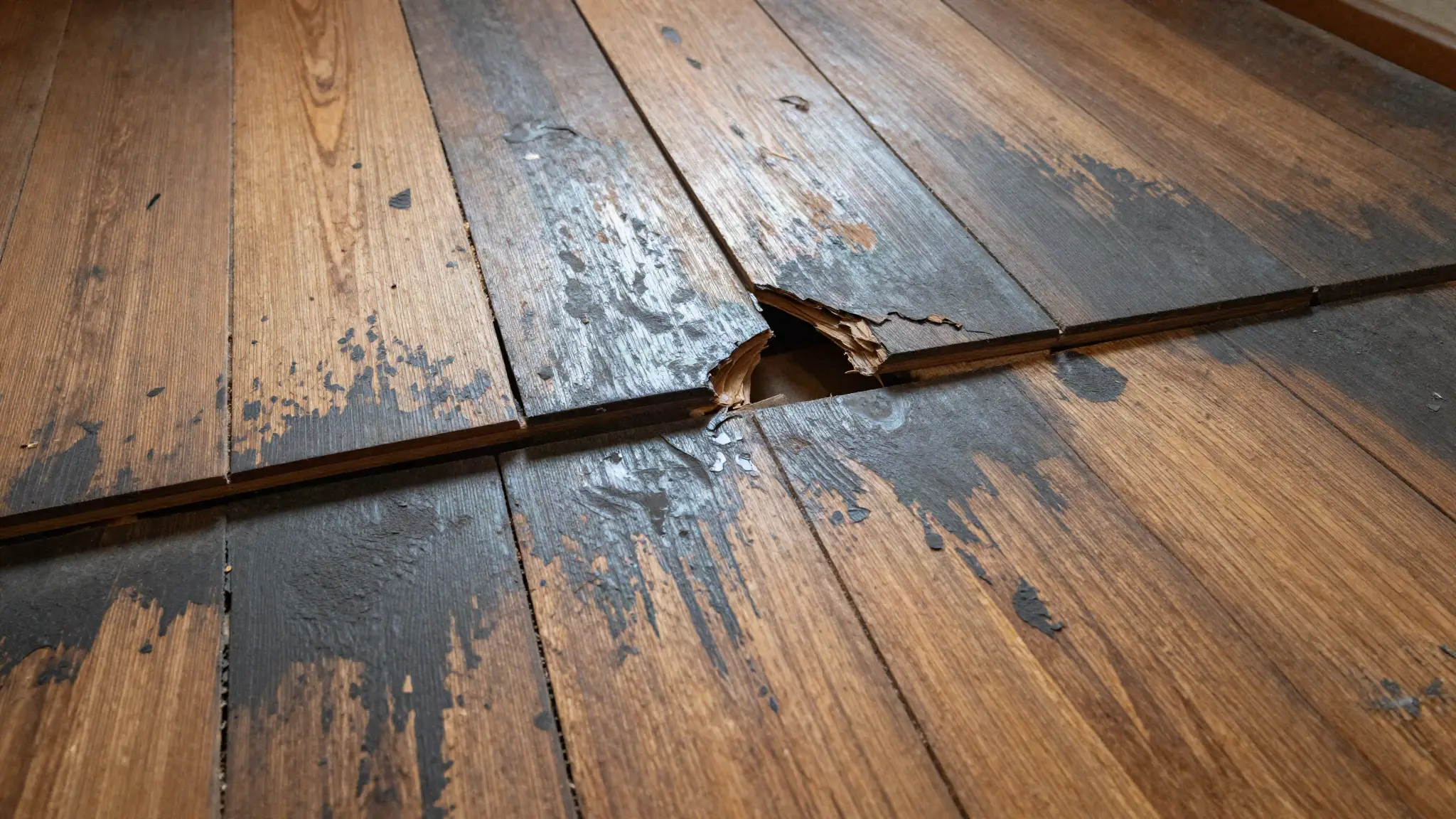
Black marks on hardwood are almost always pet urine, and they are the stain homeowners most often assume is permanent. Sometimes it is. Often it is not. The difference is how deep it went and how long it sat.
Why urine turns hardwood black
It is a chemical reaction, not dirt. Urine is alkaline and it draws the tannins in the wood to the surface. It also reacts with iron — from nails, from the water, from the wood itself — producing iron tannate, which is black. That is the same reaction that makes oak turn dark when wet steel sits on it.
This matters practically: the stain is not sitting on top of the finish, it is in the wood fibre. Cleaning products do nothing to it, because there is nothing on the surface to clean.
Oak, which is most of what is on New Jersey floors, is high in tannin and stains more readily than maple or pine.
Surface stain or deep stain
The practical test is depth. A stain that has only greyed the finish and the top fraction of a millimetre will lighten noticeably when you rub the spot with fine sandpaper. A stain that goes black all the way through will not change at all.
Time is the main variable. A puddle caught the same day usually never reaches the wood. A repeat spot behind a door that went unnoticed for months has almost certainly reached the subfloor.
What actually removes them
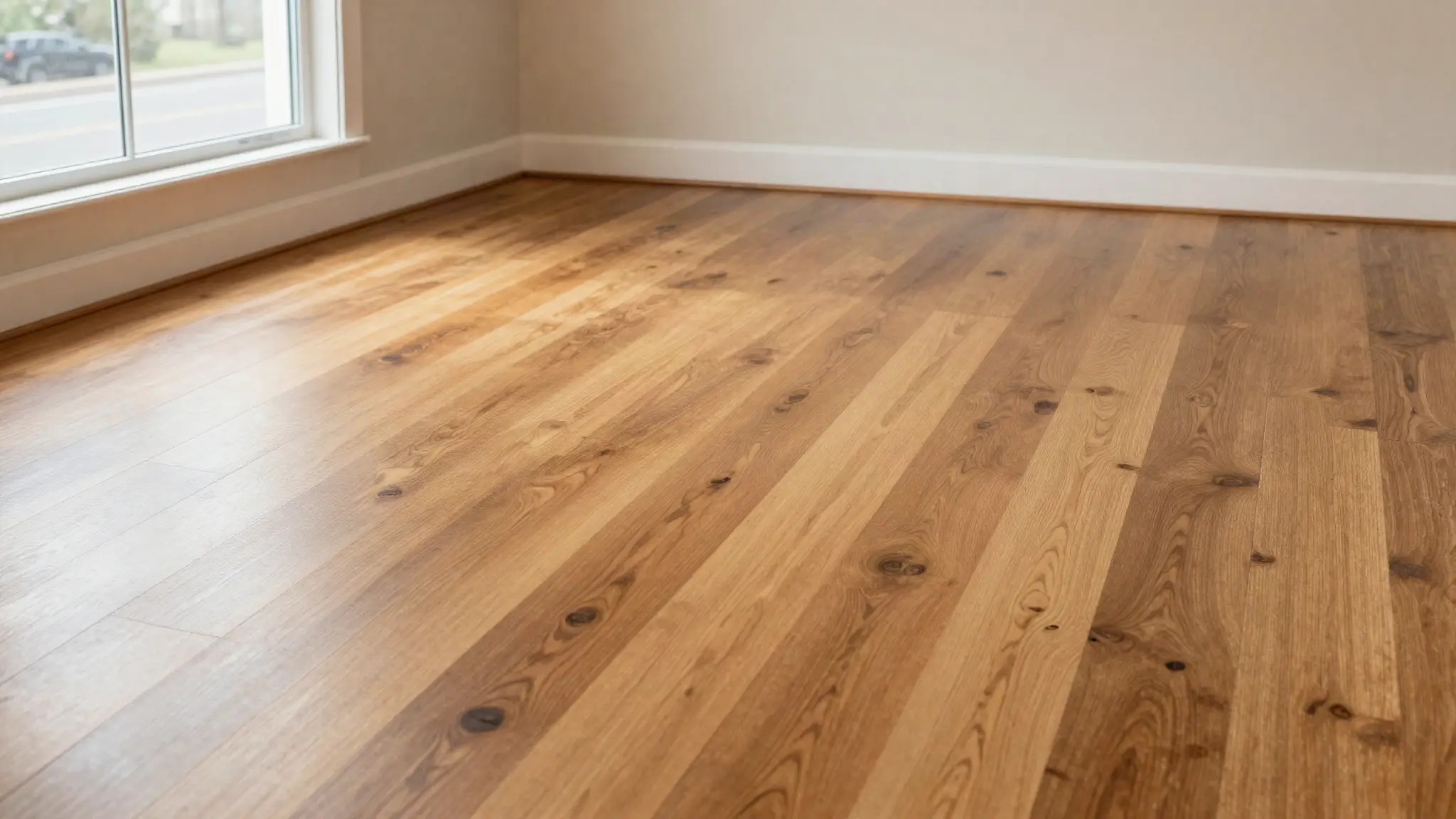
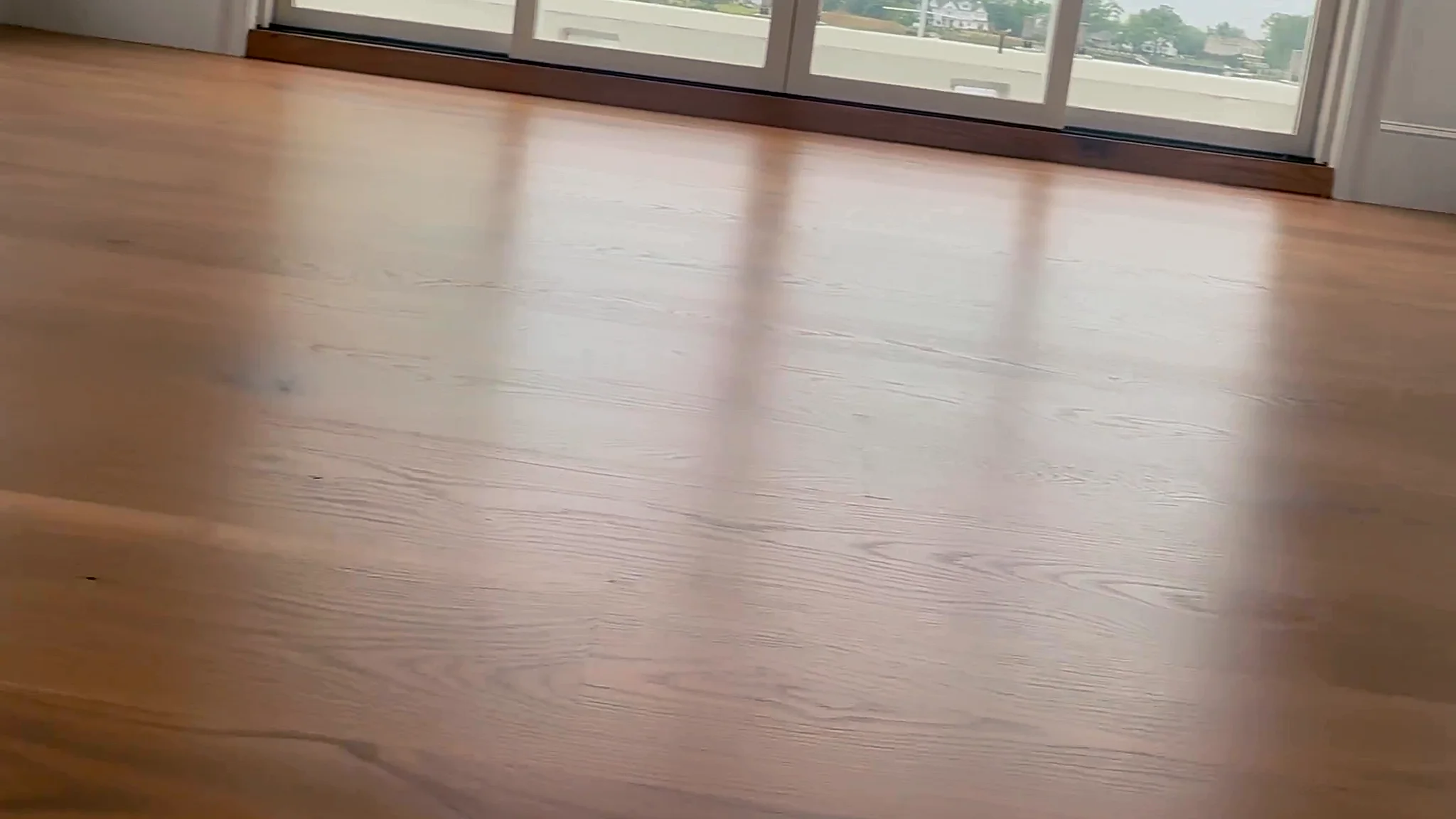
Sanding takes out anything within the top millimetre or so, which covers a surprising number of stains. This is the part that happens anyway during a normal sand and refinish, so if the floor was due for refinishing you may find the marks simply disappear.
Oxalic acid is the trade answer for what survives the sanding. It is a wood bleach that reverses the iron-tannin reaction specifically, and it works on stains that sanding cannot reach. The area is treated, neutralised, allowed to dry fully, then sanded lightly and refinished.
It has real limits. Bleaching lightens the wood, and a heavily treated area can end up lighter than the boards around it — trading a black spot for a pale one. On a floor that is getting a darker stain afterwards this evens out. On a natural or light finish it can stay visible.
Household bleach and hydrogen peroxide are what most people try first. They lighten the surface a little, raise the grain, and often leave the area looking worse than it started. They do not reach the iron tannate.
The smell is usually not coming from the floor
This is the part that catches people out. A floor gets sanded, refinished, looks perfect — and on the first humid day the smell comes back.
Urine that reached the boards has generally reached the gaps between them and soaked into the subfloor underneath. Sanding the surface does nothing to that. Humidity reactivates it, which is why it returns in summer and in shore-area homes especially.
The fix is to lift the affected boards, treat or replace the subfloor beneath, seal it with a proper stain-and-odour blocking primer, then lay new boards. It is more work than refinishing, and skipping it is the reason some floors get refinished twice for the same problem.
When replacing boards is the right answer
Board replacement makes sense when the staining is black through the full thickness, when the boards are cupped or soft from repeated saturation, when the smell persists, or when the affected area is small enough that replacement is cheaper than treating.
On solid hardwood this works well — individual boards can be cut out and woven in, and once the whole floor is sanded and finished together the repair disappears. On engineered flooring it is harder, because the thin wear layer limits how much can be sanded to blend the new boards in.
Preventing the next one
Finish choice matters more than people expect. A surface finish such as an oil-modified or waterborne polyurethane forms a film over the wood and buys you time — a puddle sits on top rather than soaking in. Penetrating oil and hardwax finishes look beautiful but absorb faster, which is worth knowing before choosing one for a house with animals.
Beyond that it is unglamorous and it works: get to accidents quickly, check behind doors and under furniture where a repeat spot can go unseen for months, and use a mat under water bowls. Most of the black stains we sand out started as something nobody saw for a season.
If you are choosing flooring for a household with pets in the first place, our guide to the best flooring for pets covers which materials hold up.
Getting it looked at
Whether a stain comes out is genuinely hard to judge from a photo, and we would rather look at it than guess. The assessment is free across Monmouth and Ocean County, and if the honest answer is that the boards need replacing we will say so rather than sand it and hope.
Book a free assessment or see our sanding & refinishing service.