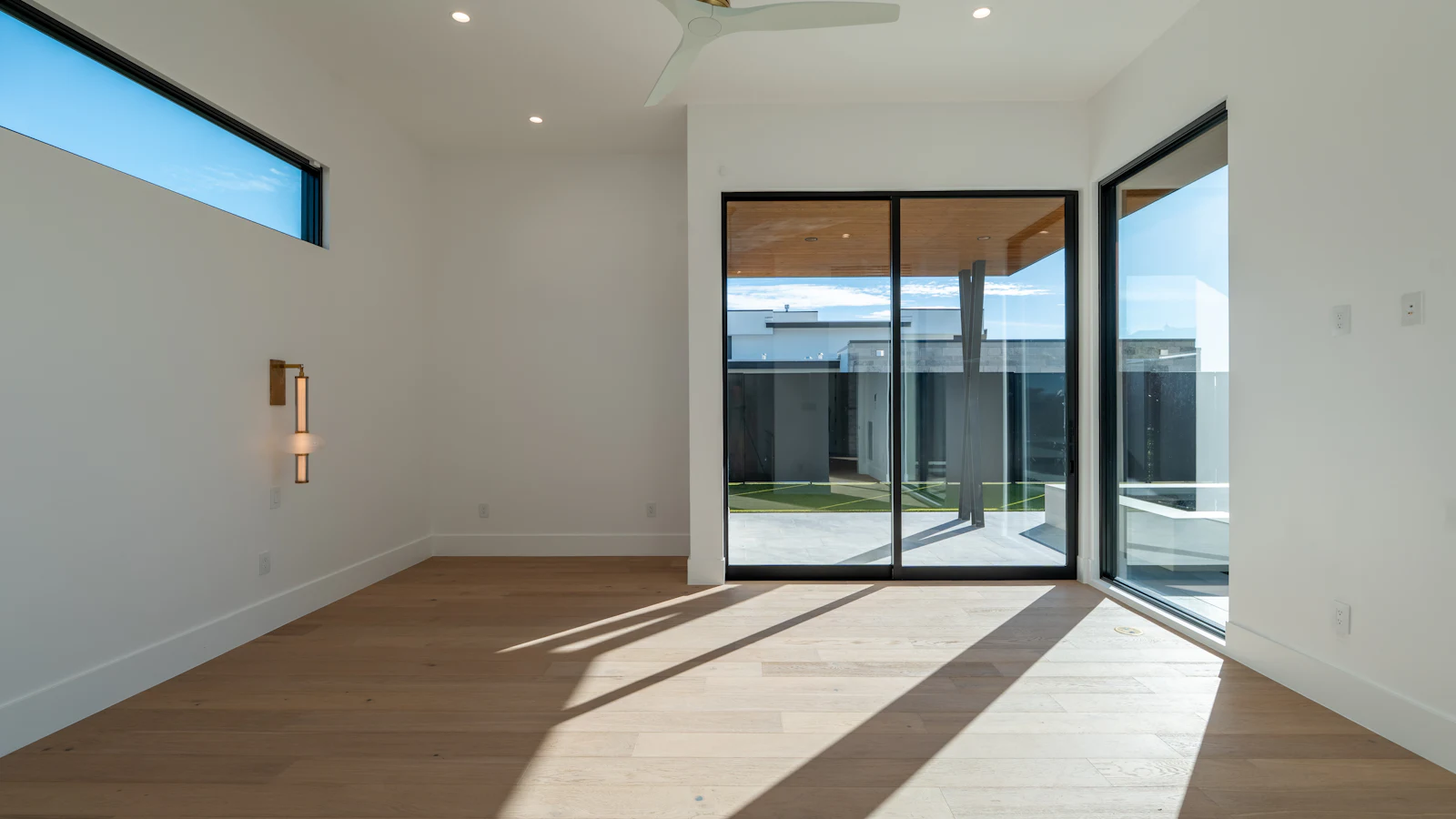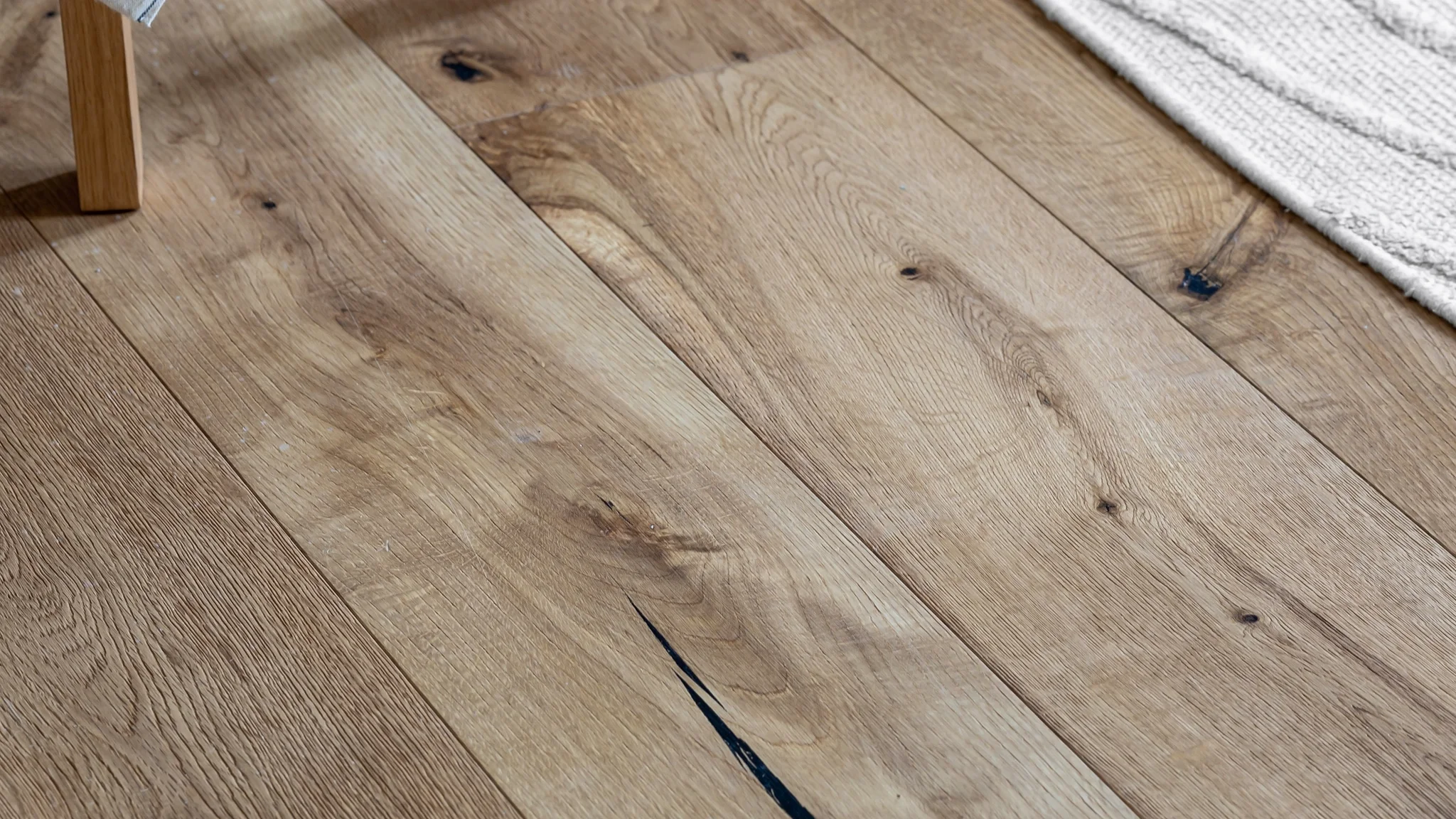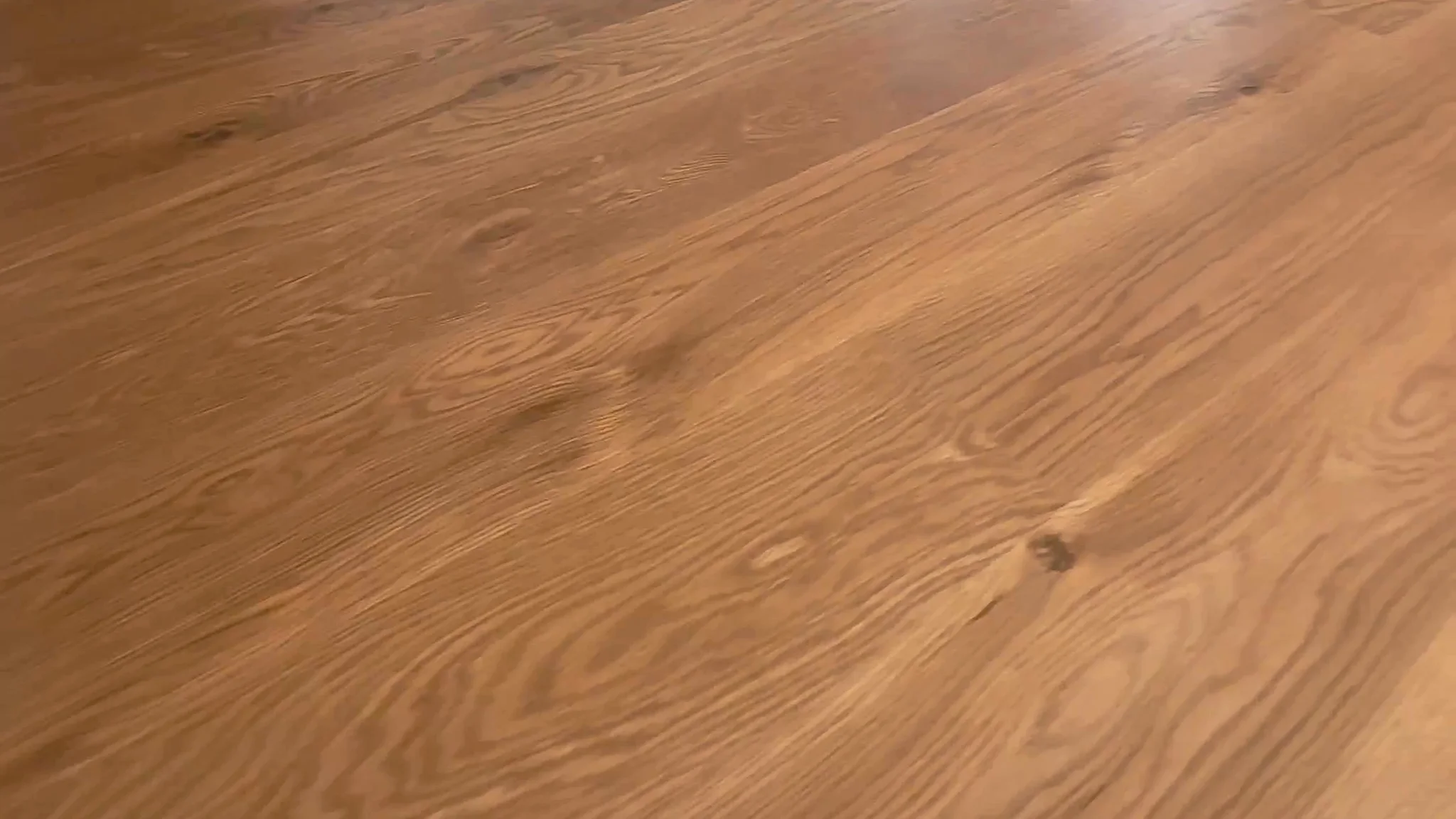
This is one of the more expensive questions in flooring to get wrong. Sand an engineered floor that cannot take it and you do not get a worn floor back — you get a ruined one, with the plywood core showing through in the traffic paths. There is no undo.
The short answer is yes, sometimes. Whether yours is in that group comes down to a single measurement.
The wear layer is the whole answer
Engineered hardwood is a thin layer of real wood bonded on top of a plywood or HDF core. That top layer — the wear layer — is the only part a sander can touch. Everything below it is structural, and once you are into it the floor is finished.
A full sand-and-refinish removes roughly 0.8mm to 1mm of wood. That is the number to hold in your head while you read the rest.
Under 2mm: do not sand it. There is not enough material to survive a pass and still have a wear layer left. Most budget engineered flooring and nearly all click-lock floating floors sit here, often at 0.6mm to 1.5mm.
2mm to 3mm: one careful sand, by someone who knows they only get one. This is the range where the contractor matters more than anything else.
3mm to 4mm: two sands, realistically. Comfortable territory.
4mm to 6mm: two to three sands. At the top of this range engineered behaves much like solid hardwood, and in some ways better — the plywood core is more dimensionally stable than solid wood, which is exactly why it is used in basements and over concrete.
How to measure yours without guessing
You do not need the original paperwork. You need to see the edge of a board.
Pull a floor vent. The easiest method in most homes. Lift the register and the cut edge of the flooring is right there. The wear layer is visible as a distinct top band above the plywood layers — the layer lines below it are unmistakable once you know to look.
Check a threshold or doorway transition. Where the floor meets tile or carpet there is usually an exposed edge under the transition strip.
Look at a stair nosing if the floor continues onto stairs.
Find a leftover board. Builders and previous owners often leave a few in a garage or crawlspace. A cut end tells you everything.
If none of that is available, the manufacturer’s spec sheet will list it — and if the floor is unidentified, that is itself an answer. Nobody should be sanding a floor of unknown construction.
The micro-bevel problem nobody mentions
Most engineered flooring ships with a small chamfer along each board edge — a micro-bevel, put there to hide tiny height differences between boards. It is part of the look.
Sanding flattens it. The floor comes out smooth and continuous, with no bevel lines, which some people prefer and others find surprising. That is fine as an aesthetic choice, but it should be a choice, not a discovery made after the work is done.
It also eats wear layer unevenly. Flattening the bevels removes more material at the board edges than in the middle, which effectively costs you more than the 0.8mm average. On a 2mm floor that difference is not academic.
Screen and recoat: what most of these floors actually need
A screen and recoat abrades only the finish and lays a fresh coat over it. It never reaches the wood, so the wear layer is untouched and it can be repeated indefinitely.
If your engineered floor looks dull, hazy or scuffed but the wood underneath is intact, this is almost certainly the right job — and it runs a fraction of the cost of a full sand. The water-drop test tells you in about ten seconds which of the two you need.
A recoat will not fix deep scratches, dents, or stains that have reached the wood. It fixes worn finish, which is what most floors actually have.
When the wear layer is too thin
If the number comes back under 2mm and the floor genuinely needs more than a recoat, the honest options are a recoat that buys a few more years, replacing the worst boards, or replacing the floor. Nobody enjoys hearing the third one, but it beats paying for a sand that destroys the floor first.
Getting a straight answer
The measurement takes a minute and any competent contractor will do it before quoting. If someone quotes a sand-and-refinish on engineered flooring without looking at an exposed edge, that is the moment to get another quote.
We measure the wear layer on every engineered floor before we price anything, and we will tell you if a recoat is the better spend even though it is the smaller job. See our sanding & refinishing page, read the engineered versus solid comparison, or book a free assessment anywhere in Monmouth and Ocean County.