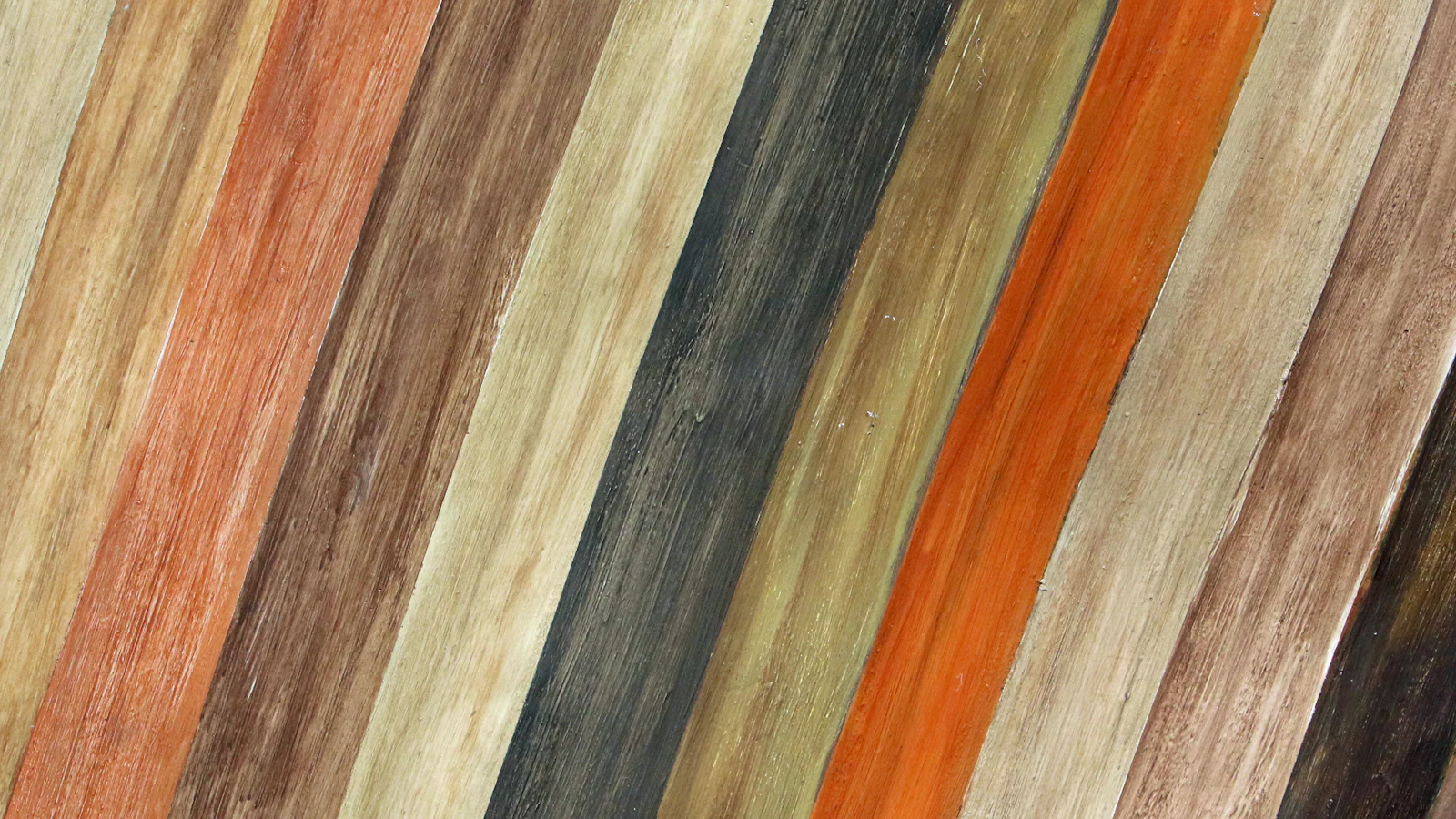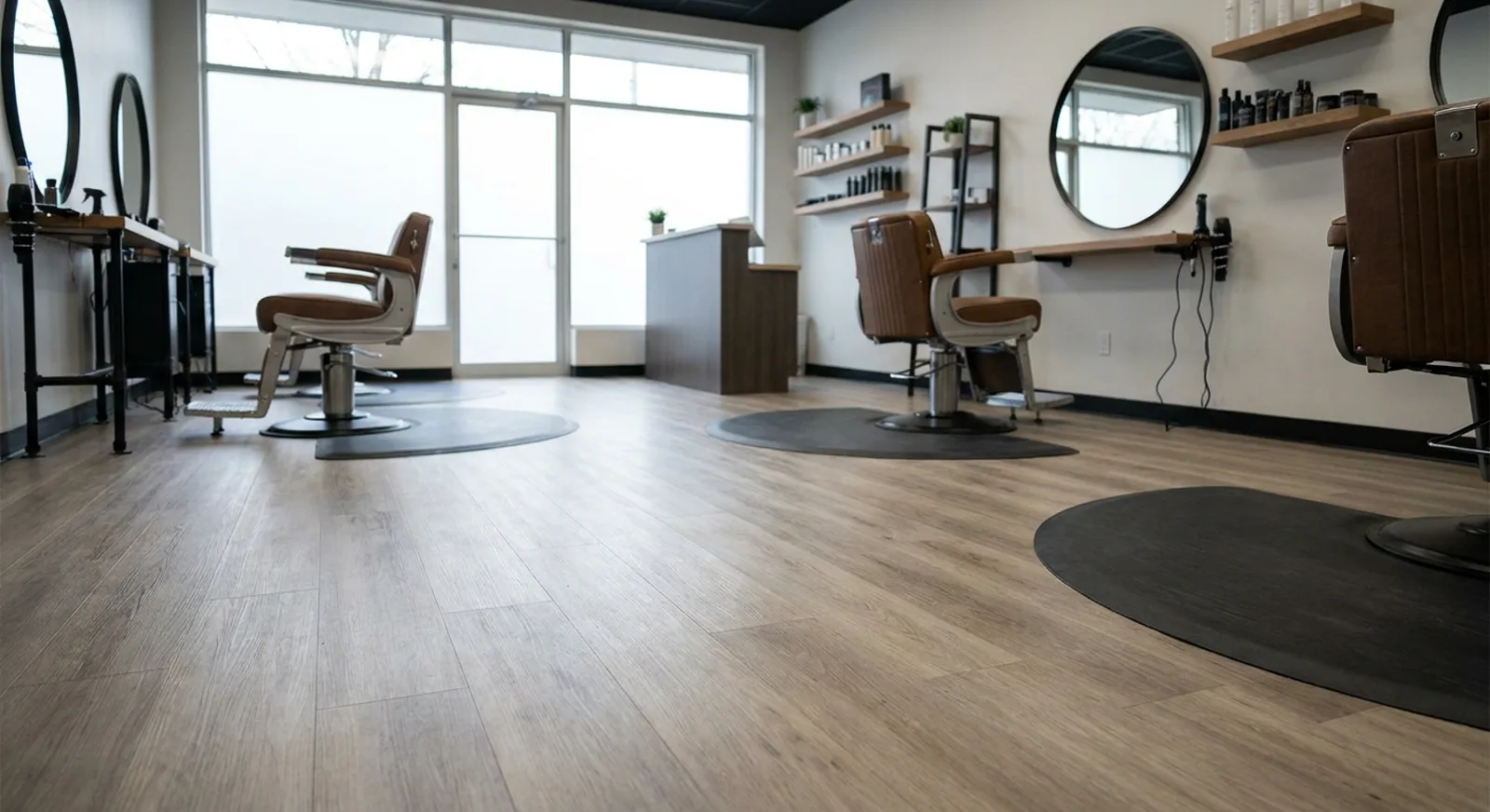
Bona builds its water-based product line as a two-step system: a sealer that sets the color of the wood, and a finish that takes the wear.
Both are waterborne, both dry fast and both go on with low odor. Knowing what each sealer and each finish does is what separates a floor that looks right from one that looks like a guess.
If you have already read the water-based versus oil-based comparison, this is the next layer down. That post answers which family you want. This one answers which Bona product inside that family.
There are five Bona waterborne sealers, each one a different starting color.
The sealer is the first coat on the bare wood and it is the coat that decides the final tone more than the finish ever does.
Bona NordicSeal is the lightest of the line. It carries twice the white pigment of NaturalSeal and gives a Scandinavian whitewashed look without the bleach or stain.
The wood reads as freshly cut and pale, which is why NordicSeal is the go-to on maple, ash and the pale side of white oak.
Bona NaturalSeal uses a small amount of white pigment to keep the wood looking like raw, just-sanded lumber.
It is the choice for a floor that wants to look as close to unfinished as possible while still sealing the grain and giving the next coat something to bite into.
Bona ClearSeal is the truly clear sealer in the line. It minimizes grain raise and tannin pull and builds a fast-drying base for the finish.
ClearSeal lets the color of the wood or the stain do all the work. ClearSeal is the right call when the stain is doing the coloring, not the sealer.
Bona IntenseSeal is the wet-look sealer. It deepens the natural pigmentation of the species, brings out the grain contrast, and reads as a vibrant, just-wetted floor.
On walnut and cherry IntenseSeal makes the color pop. On maple it can go too dark, which is why the data sheet calls for a test board first.
Bona AmberSeal is the warm one. It is a poly-tone sealer that gives the look of an oil-modified finish without the yellowing.
The AmberSeal data sheet calls out that it does not get yellower or darker with age, which is the whole point of choosing it over an oil-based sealer.
All five sealers share the same drying window. The Bona data sheet lists two to three hours between coats.
That window is the reason water-based systems let a finisher put down two coats in a day instead of one.
All five are GREENGUARD certified for indoor air quality. The data sheet for NaturalSeal and AmberSeal lists 250 g/L of VOC.
The sealer is the layer closest to the room air while it cures, so the VOC number is the one that matters during application.
The five sealers are compatible with every Bona waterborne finish. The choice is about the look you want, not about whether the sealer and finish will bond.
Mixing brands is where the chemistry stops working. Staying inside the Bona system is where it works every time.
Two sealers does not always mean the same two. The standard on a stained floor is one coat of sealer over the stain, then two coats of finish.
The standard on an unstained floor is two coats of sealer, then two coats of finish. The Bona technical documents lay both out and leave the choice to the finisher.
The finishes are where the durability lives. Bona sells three families here, and the choice is more about traffic than color.
Bona Mega is the original one-component waterborne finish. The data sheet describes it as a self-crosslinking polyurethane modified with natural vegetable oils.
One can, no hardener, easy to apply. The cure is slower than Traffic HD, and the line is aimed at residential floors with normal traffic.
Bona Mega ONE is the updated version. The data sheet lists 500 to 600 square feet of coverage per gallon, two to three hours between coats and seven days to full cure.
Mega ONE is the right call for most family homes and most refinishing jobs.
Bona Traffic HD is the commercial-grade, two-component finish. The hardener is mixed in at about eight percent by volume and the pot life is four hours at twenty degrees Celsius.
The floor takes light use in six hours, full use in twelve hours and full cure at three days for normal traffic.
Bona Traffic HD comes in four sheens: Commercial Extra Matte, Commercial Satin, Commercial Semi-Gloss and Commercial Gloss.
Sheen does not change durability, it changes how the wood reads under light. Extra Matte hides scratches better than Gloss.
Bona Traffic HD RAW is the version that keeps the untreated look. It is the same two-component durability, with a finish that lets the wood read as if it had nothing on it.
The trade-off is the same as every matte finish: scratches show less because there is less sheen to break.
Bona Traffic HD Anti-Slip is the same Traffic HD formula with a slip-resistance additive. The data sheet targets DIN 18032:2.
DIN 18032:2 is the European sports-floor friction standard. The Anti-Slip version is the right call for ramps, stair treads and any floor where slip is the first concern.
Bona Sport is the line that targets EN 14904:2006, the indoor sports surface standard. It is the right call for gymnasiums and dance floors.
On a sports floor, the friction number is the one that gets tested, not the color.
All Bona waterborne finishes dry clear and stay clear. The data sheets all say non-yellowing.
That is the difference between a water-based finish and an oil-based one: the color of the wood on day one is the color of the wood for the next decade.
The data sheets are specific about conditions. Application is between eighteen and twenty-five degrees Celsius and forty to sixty percent relative humidity.
Below that range, drying stretches. Above that range, the pot life shrinks and the finish goes on too thick.
The application rate for Traffic HD is eight to ten square meters per liter per coat, which matches the Mega data sheets.
A gallon covers about five hundred to six hundred square feet per coat on a smooth floor, less on a heavily textured one.
Bona Retarder is the additive that slows the drying of any waterborne finish. Up to four percent by volume buys more open time on a hot day or a wide floor.
More than four percent and the cure window stretches past the data sheet numbers.
The roller is a Bona Roller, not a generic one. The data sheets are specific about this, and the reason is fiber shed.
A generic roller can leave lint in the finish that does not sand out.
Two coats of sealer and two coats of finish is the default system. Three coats of finish is for the floors that take the worst of it.
A kitchen with a family of four, a stair landing, a dog that runs hard. These are the rooms that ask for the third coat.
Each coat gets a screen-and-recoat, not a full resand. The point of the screen is to give the next coat something to bite into.
A full resand between coats removes the thickness the sealer and finish are there to provide.
Bona waterborne finishes are compatible with both water-based and oil-based stains. The order is the same in either case.
Sand to bare wood, stain if you are staining, sealer, screen, finish, screen, finish. The data sheet is specific about waiting for the stain to dry.
Water-popping is a step that some species want and some do not. On maple and birch, water-popping before stain opens the grain for a more even color.
On oak and ash, water-popping can raise the grain too much and read as a rough surface under the finish.
Storage is more important than people think. The Traffic HD data sheet lists storage between five and twenty-five degrees Celsius and a one-year shelf life in unopened container.
A can that sat in a cold truck overnight and then in a hot garage is not the same product the data sheet describes.
Shelf life in the can is not the same as pot life on the floor. Traffic HD hardener is mixed in just before application.
Once mixed, the working time is four hours at twenty degrees Celsius, shorter if the room is warmer.
Whatever is left in the bucket when the day is done goes in the trash, not back in the can.
Bona waterborne finishes meet GREENGUARD and GREENGUARD Gold standards for indoor air quality.
The Gold standard is the stricter one, with lower chemical emission limits across more than three hundred VOCs. Traffic HD carries Gold on the technical data sheet.
The Bona system carries CARB Phase 2 compliance for formaldehyde emissions. This is the California standard that New Jersey adopted for composite wood products.
It matters when the floor is going over an engineered subfloor or a manufactured underlayment, not just for the finish itself.
Recoat versus resand is a question the data sheets help answer. A floor with surface scratches and no wear through the sealer is a screen-and-recoat job, not a resand.
A floor with finish worn through to bare wood needs a resand back to clean lumber before the sealer and finish system goes on again.
A screen-and-recoat is faster and cheaper than a full resand, and it adds a fresh coat of protection without removing build.
The catch is that the floor has to be cleaned well first, because the screen pushes dirt into the next coat if the surface is not properly prepped.
Radiant heat is a special case. The NWFA installation guidelines note that not all species are equal over radiant heat.
Waterborne finishes cure to a flexible film that handles thermal cycling better than brittle oil-based films, but the data sheet still calls for steady heat.
There is one case where the Bona waterborne line is not the answer, and it is the case the oil-based comparison post covers: a warm amber that only oil-based gives.
Water-based finishes do not amber, which is the feature most people want and the one a few people do not.
Inside the Bona waterborne system, the choice comes down to two questions: how light or warm do you want the wood, and how much traffic will the floor take.
The sealer answers the first question. The finish answers the second.
On a stained floor, the sealer is doing less color work and more build work. ClearSeal is the standard pick in that case.
On an unstained floor, the sealer is doing all the color work and the choice matters more.
The data sheet lists sheen measured at sixty degrees. Commercial Extra Matte reads as eleven percent, Matte around twenty, Satin around forty, Gloss close to ninety.
The lower the number, the less light bounces off the floor.
Sheen choice is partly aesthetic and partly practical. A matte finish hides the small scratches that show in direct light.
A gloss finish pops the grain and the figure of the wood but turns every micro-scratch into a bright line. Most NJ homes with kids and dogs end up matte or satin.
Coverage on the data sheet assumes a smooth, sanded floor. A floor that still has chatter marks will take more sealer and less coverage per gallon.
The honest move is to budget the sealer at five hundred square feet per gallon on a residential refinish, not six hundred.
A test board is worth the time. The Bona application guide calls for a sample board of the actual species, sanded the same way the floor will be sanded.
The test board is sealed with the candidate sealer, finished with the candidate finish, and read in the actual room light before the full floor is started.
A test board catches the failure modes that show up only on the species in the room.
NordicSeal that looks great on a white oak sample can read too pale on a red oak sample. AmberSeal that looks warm on a maple sample can read muddy on a walnut sample.
The hour spent on the test board saves the day spent refinishing.
If you want to know which sealer and which finish fit the wood you picked and the room you live in, the easiest next step is a free in-home look at the boards.
We bring Bona sample boards, set them next to your species and your stain, and write down the system we would use.
Call (732) 889-6029 or send the form on the /estimate/ page and we will set a time to come by.
Frequently Asked Questions
Which Bona sealer gives the lightest, most natural color?
NordicSeal is the lightest in the line. It carries twice the white pigment of NaturalSeal, gives a Scandinavian whitewashed look without bleach or stain, and reads as freshly cut and pale. NaturalSeal is the next lightest, with just a small amount of white pigment for a clean raw-wood look. If you want a true Scandinavian white, ask for NordicSeal by name.
Is Bona Mega ONE durable enough for a busy family?
For most family homes, yes. The Mega ONE data sheet lists 500 to 600 square feet of coverage per gallon, two to three hours between coats, twenty-four hours to seventy percent cure and seven days to full cure. Traffic HD is the upgrade for kitchens, stairs and any floor that takes the worst of it. The honest call for a busy family is Mega ONE in the living areas and Traffic HD on the stairs.
What is the difference between Bona Mega and Bona Traffic HD?
Mega is a one-component finish with no hardener. Traffic HD is a two-component finish with a hardener mixed in at eight percent by volume, a four-hour pot life at twenty degrees Celsius and a three-day full cure. The hardener is what gives Traffic HD its commercial-grade durability. Mega is the right call for normal residential floors; Traffic HD is the right call for commercial traffic, kitchens and stairs.
How long does Bona water-based finish take to cure before rugs go down?
Seven days for full cure on Mega and Mega ONE. Three days for full traffic on Traffic HD, but seven days before area rugs go down. The data sheets are specific: furniture can go back at twenty-four hours, rubber-backed mats wait the full cure. A rug laid too early can mark the finish even when the floor feels dry to the touch.
Sources & Further Reading
- Bona, Professional Finishes overview: waterborne sealer and finish product line, application and sheen options
- Bona, Sealer and Finish Guide: waterborne sealer coloration range and finish durability tiers
- Bona, Hardwood Floor Sealer Solutions: NordicSeal, NaturalSeal, ClearSeal, IntenseSeal, AmberSeal characteristics
- Bona, Top Picks for Professionals: Traffic HD two-component specs, sheen options, GREENGUARD Gold certification
- Bona Traffic HD technical data: two-component polyurethane, mixing ratio, pot life, drying and cure times
- Bona Traffic HD data sheet (UK distribution): solids, VOC, sheen, application rate and storage conditions
- Bona Mega technical data sheet: ingredients, solids, density, VOC, coverage, drying and full cure times