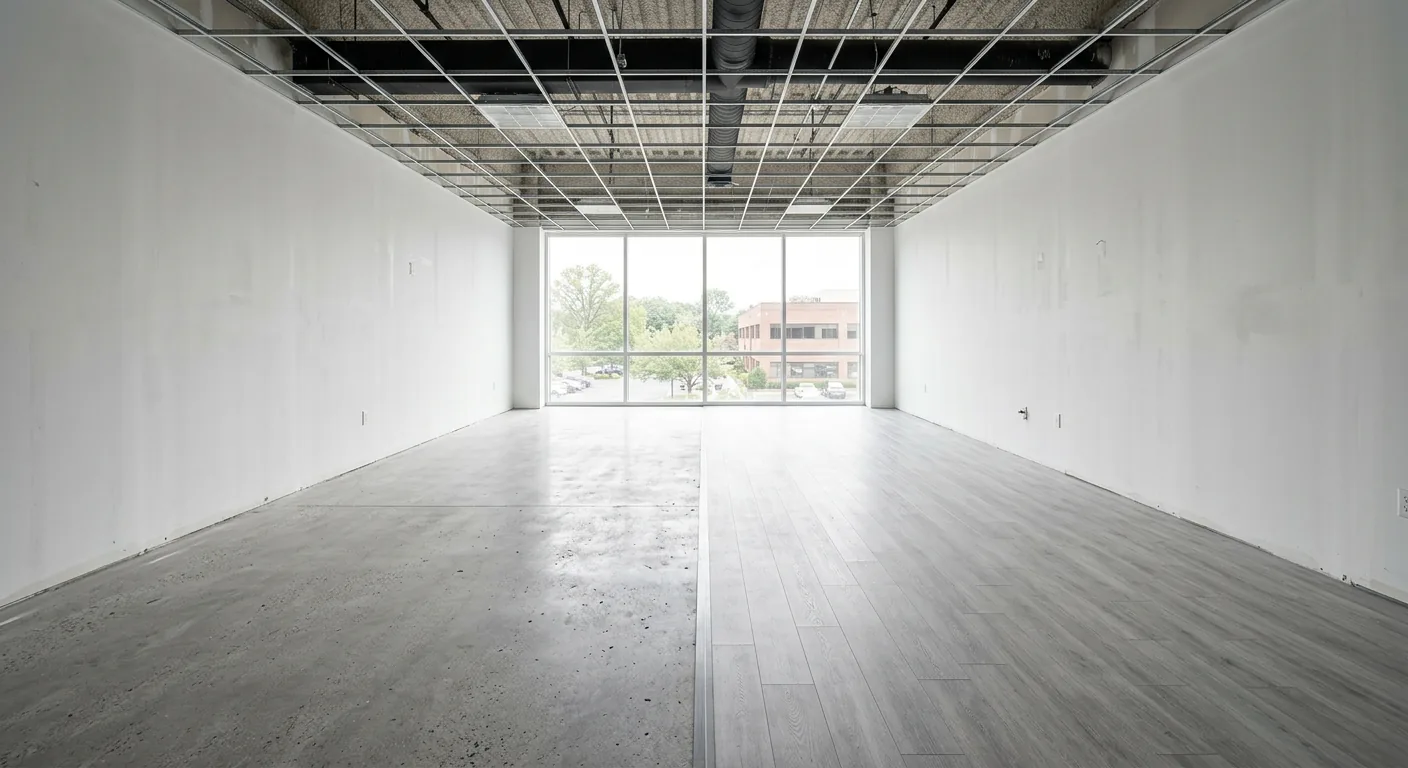
The space is handed to you as a white box: bare slab, painted walls, nothing installed and nothing decided. From Monmouth County to Ocean County, that is what a tenant fit-out looks like before the flooring line gets scheduled.
Why a fit-out floor is different from a home floor
In a house, the floor is the job. In a tenant improvement, the floor is one line on a schedule someone else is holding, and that schedule belongs to the general contractor and the building.
Your hours get shaped by trades that do not report to you. Honestly, the part people miss is the order. Flooring that goes in before the other trades finish gets covered, scratched and walked on, and that is a sequencing problem, not workmanship.
I price fit-out work by the phase, not by the room count. A white box and a two-floor buildout get very different sequences, and the phase is what tells you where the floor lands.
The slab decides more than the product
A white-box delivery gives you a concrete slab with no floor on it, so the slab itself is the first thing I check. Moisture in concrete gets tested per ASTM F2170, the standard test for relative humidity in a floor slab using in-situ probes.
Most manufacturers want that test done before the floor goes down, not after. Levelness comes next. A low spot under a door swing or along a wall is normal in an older building, and the fix needs to cure before anything gets set.
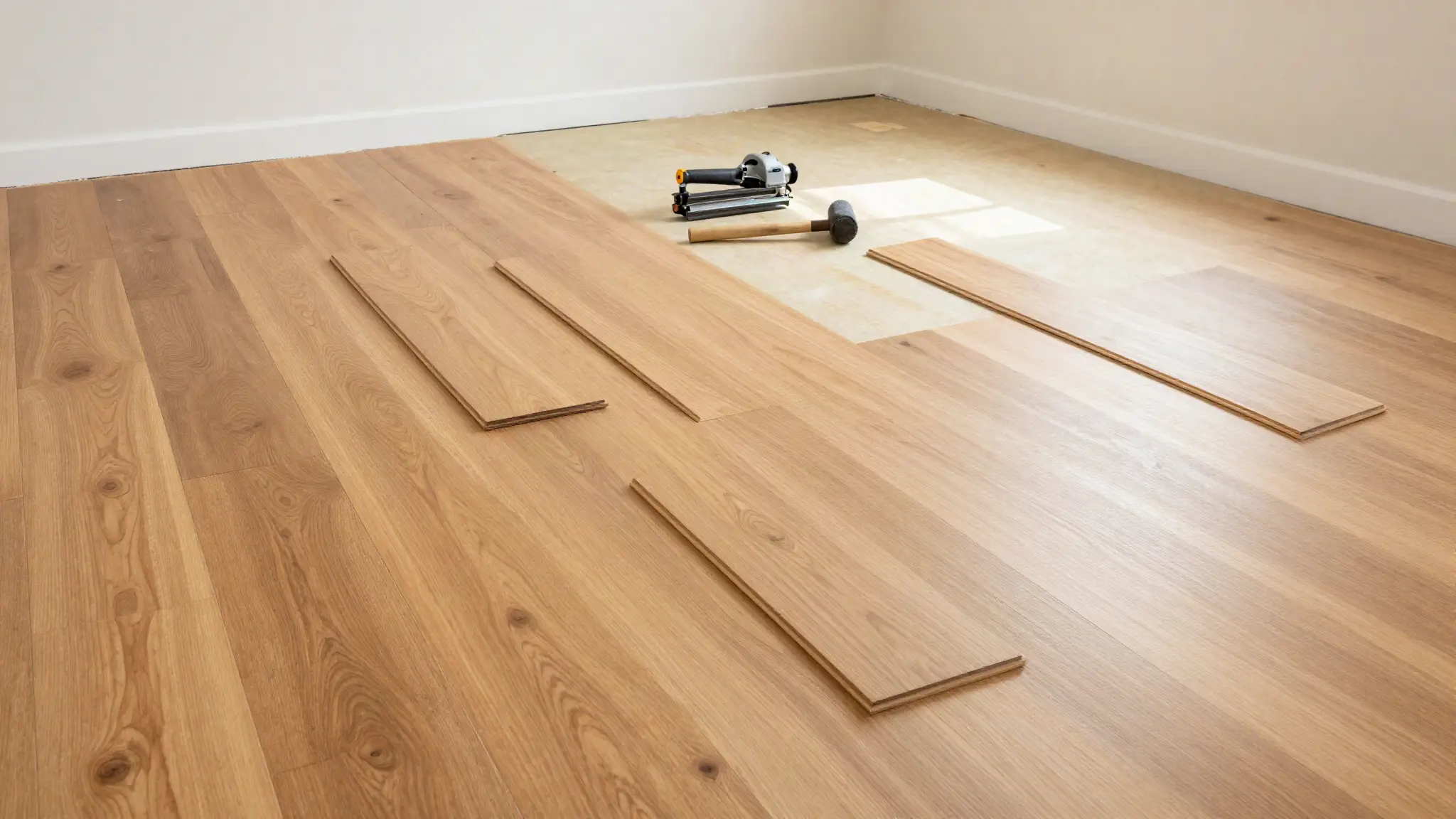
When I price a fit-out I look at the slab before I name the product, because the subfloor line decides the schedule. Prep and demolition belong on their own lines in the scope, not folded into a product price.
Two traps that stop a buildout mid-week
The first one is tax, and it surprises owners more than contractors. New Jersey exempts capital improvements from sales tax, which sounds like a fit-out should be exempt. It is not, on the floor covering.
The Division of Taxation is direct about it. Installing floor covering on the floor is taxable, even when the same materials on a wall or ceiling qualify as an exempt capital improvement. Ask for the tax treatment in writing before you compare scopes.
The installer has to collect the tax from the party it contracts with. On a general contractor job that comes out of the contractor's payment to the flooring subcontractor, so the subcontract is not the owner's budget.
The state sales tax rate has not changed since January 2018. If your bid compares one flooring scope against another, confirm that both carry the same tax treatment first, otherwise you are comparing two different numbers.
The second trap is asbestos, and it shows up in buildings from the 1960s and 70s being stripped for a new tenant. Vinyl and asbestos tile are resilient floor covering, and in New Jersey that is asbestos containing material above one percent asbestos.
The Department of Health notes that 9 by 9 tile from that era usually contains asbestos, and that all tile should be tested to be sure. If it will be sanded, ground, cut or abraded, or if it has become friable, it is regulated material.
That demolition needs a licensed contractor. EPA requires a thorough inspection before any demolition or renovation at a commercial building, and New Jersey requires written notice at least 10 calendar days before asbestos work starts.
None of that is paperwork I handle. It is a line on the demolition schedule the general contractor owns, and my job is to sequence the flooring around it so the floor goes in once the demo is clear and the slab is reachable.
What a good fit-out scope looks like
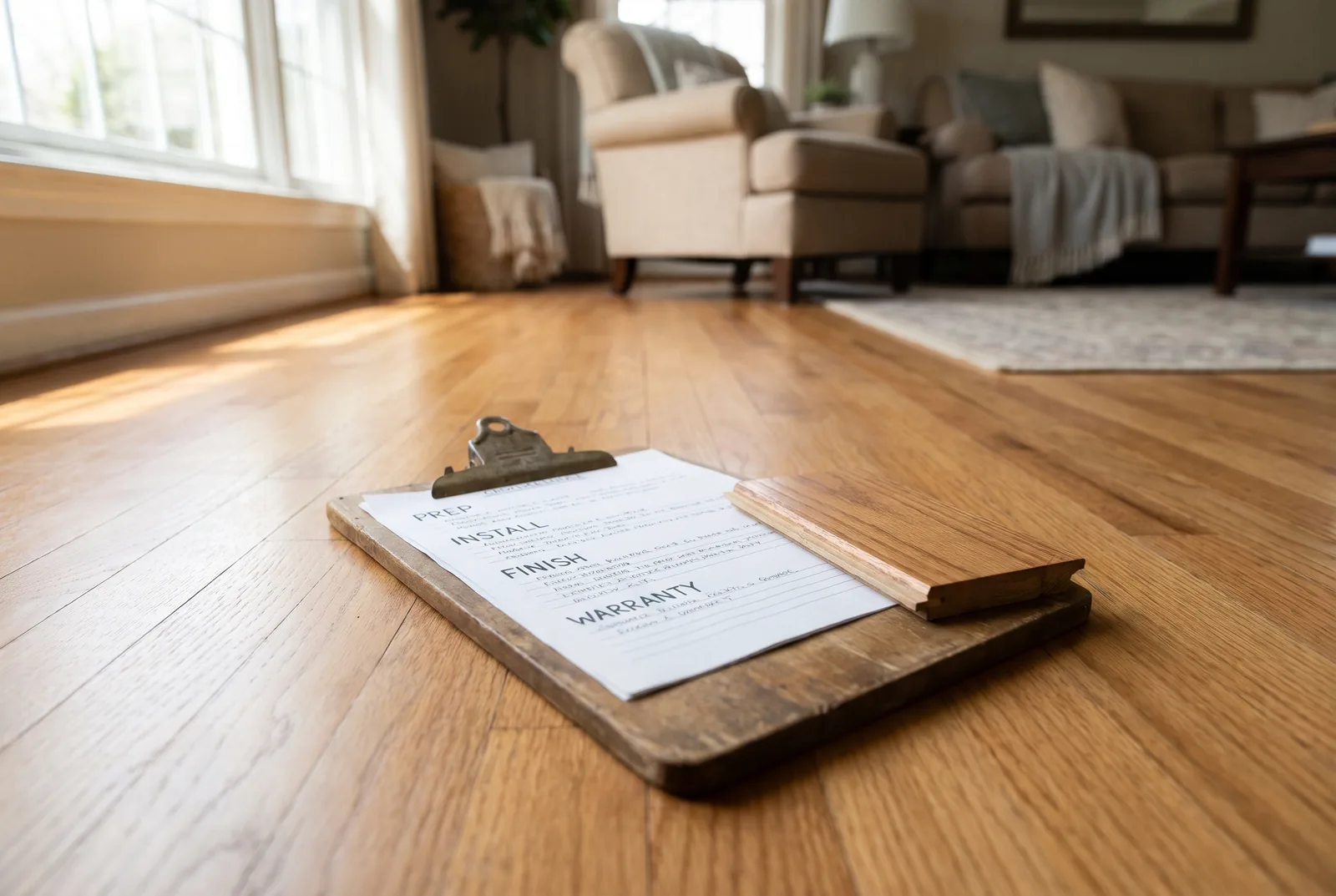
Name the product and the finish. Put prep and demolition on separate lines. Describe the slab condition the price is based on, and say what happens if that condition turns out to be different.
Then write down what triggers a change order, such as moisture over the limit for the product or a slab that will not take what was specified. A scope that names those triggers keeps a buildout from reopening the number halfway through.
For transitions, the 2010 ADA Standards set the rules for changes in level: up to a quarter inch vertical, a quarter to a half inch beveled at a slope no steeper than 1:2, and anything over a half inch has to ramp.
In a fit-out with a corridor outside the demised space, that detail belongs in the scope and not in the field. I write it into the scope so nobody has to decide on site whether a transition is compliant.
Where the work happens
We work commercial scope as a subcontractor for general contractors and property managers, in offices, retail, salons, gyms and multifamily common areas across Monmouth and Ocean County.
White-box buildouts, make-ready before a tenant moves in and punch-list repair after the other trades leave are all part of that scope. The tenant improvement and turnover service is the page that lists the details.
Punch-list flooring gets its own line, not a favor. A scratched threshold, a transition that shifted after another trade came back, a touch-up before handover. I price it separately so it gets tracked instead of turning into an argument at the end of the job.
If you are running a fit-out in Monmouth or Ocean County, our tenant improvement and turnover flooring page has the scope detail, and the commercial bid request form is the fastest way to get a written scope against your drawings.
You can also reach me at (732) 889-6029 or contact@jerseyconcept.com. Our ASTM F2170 explainer covers the slab test in depth, and our LVT, VCT and epoxy comparison covers the product choices that come up most in fit-out work.
Frequently Asked Questions
Do I need a licensed contractor for a commercial fit-out in New Jersey?
New Jersey home improvement registration covers work on existing residential property, so it does not apply to a space being used for commercial purposes. What a general contractor should verify instead is a certificate of insurance naming their entity, a written scope naming product, finish, prep and demolition, and a schedule that names the flooring line. Ask for each in writing before you compare bids.
Is sales tax charged on flooring installed as part of a capital improvement?
On the floor covering, yes. New Jersey exempts capital improvements from sales tax, which sounds like a fit-out should be exempt. It is not, on the floor. The Division of Taxation states that installing floor covering on the floor is taxable, even when the same materials on a wall or ceiling qualify as an exempt capital improvement, and that the installer collects the tax from whoever it contracts with.
When does demoing an old commercial floor trigger asbestos rules in New Jersey?
Resilient floor covering, which includes vinyl and asbestos tile, is asbestos containing material in New Jersey once it holds more than one percent asbestos. If it will be sanded, ground, cut or abraded, or if it has become friable, it is regulated material and the demolition needs a licensed contractor. EPA requires a thorough inspection before any demolition or renovation at a commercial building, and New Jersey requires written notice at least 10 calendar days ahead.
What should the flooring scope say for a white-box buildout?
Name the product and the finish, put prep and demolition on their own lines, and describe the slab condition you are pricing against. Then write down what triggers a change order, such as moisture above the limit or a slab that will not take the specified floor. A scope that names those triggers in advance is what keeps a buildout from reopening the number in the middle of a white-box delivery.