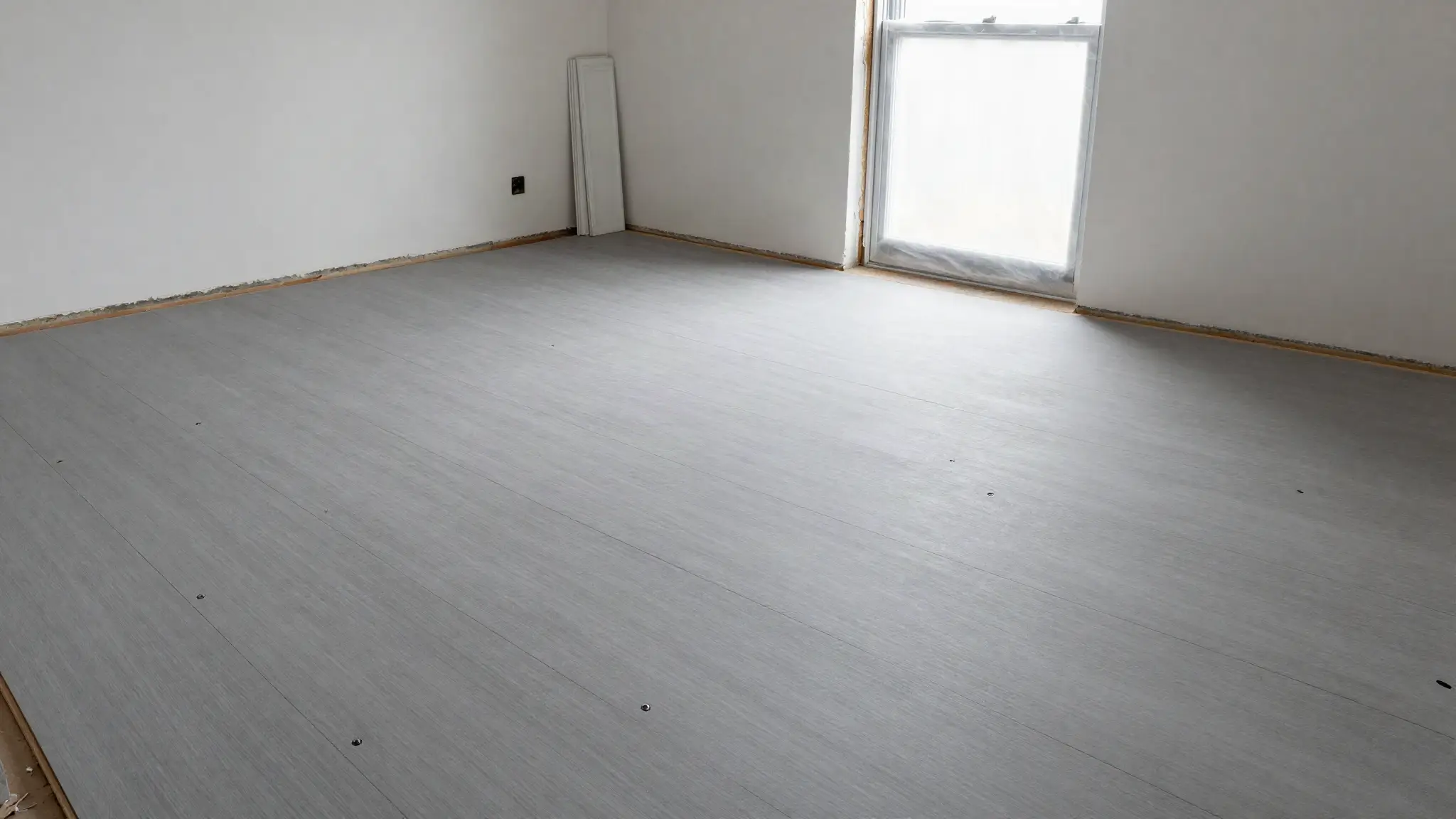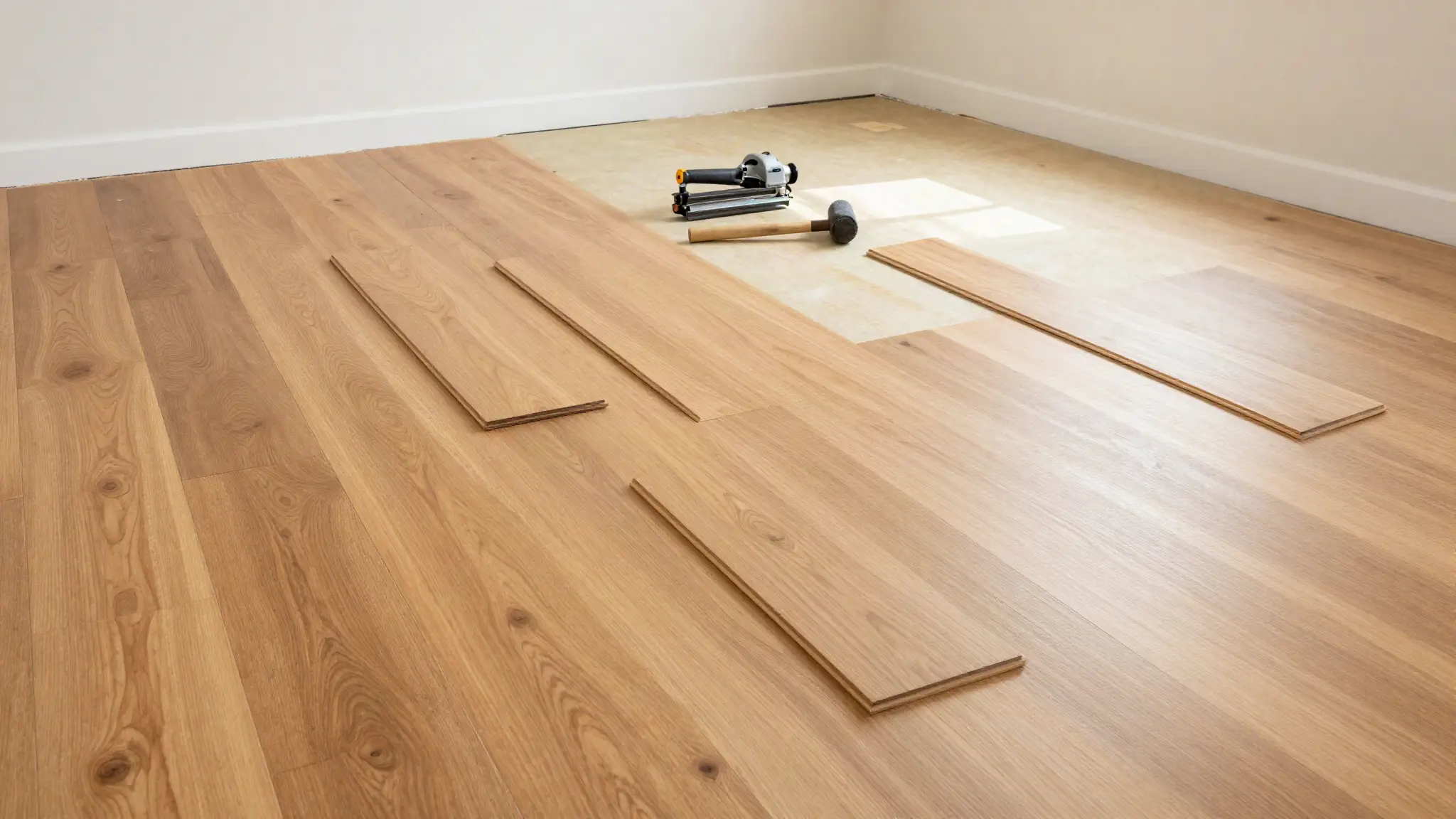
If you are standing in a 1,500 sq ft retail suite in Freehold with a bare concrete slab and you need to put a tile floor in before the lease starts, the first thing to know is that commercial tile is not bigger residential tile.
The rules are different, the products are different, and the failure modes are different. Here is how commercial tile actually gets specified, installed, and inspected in central NJ, what to ask a contractor before signing, and where Monmouth and Ocean County fits in the picture.
What 'commercial tile' means at the bid table
Three product families cover most central NJ commercial tile work: through-body porcelain, glazed ceramic, and quarry tile. Porcelain is the most common pick for offices, retail and lobbies because it absorbs almost no water and wears under foot traffic without showing the path.
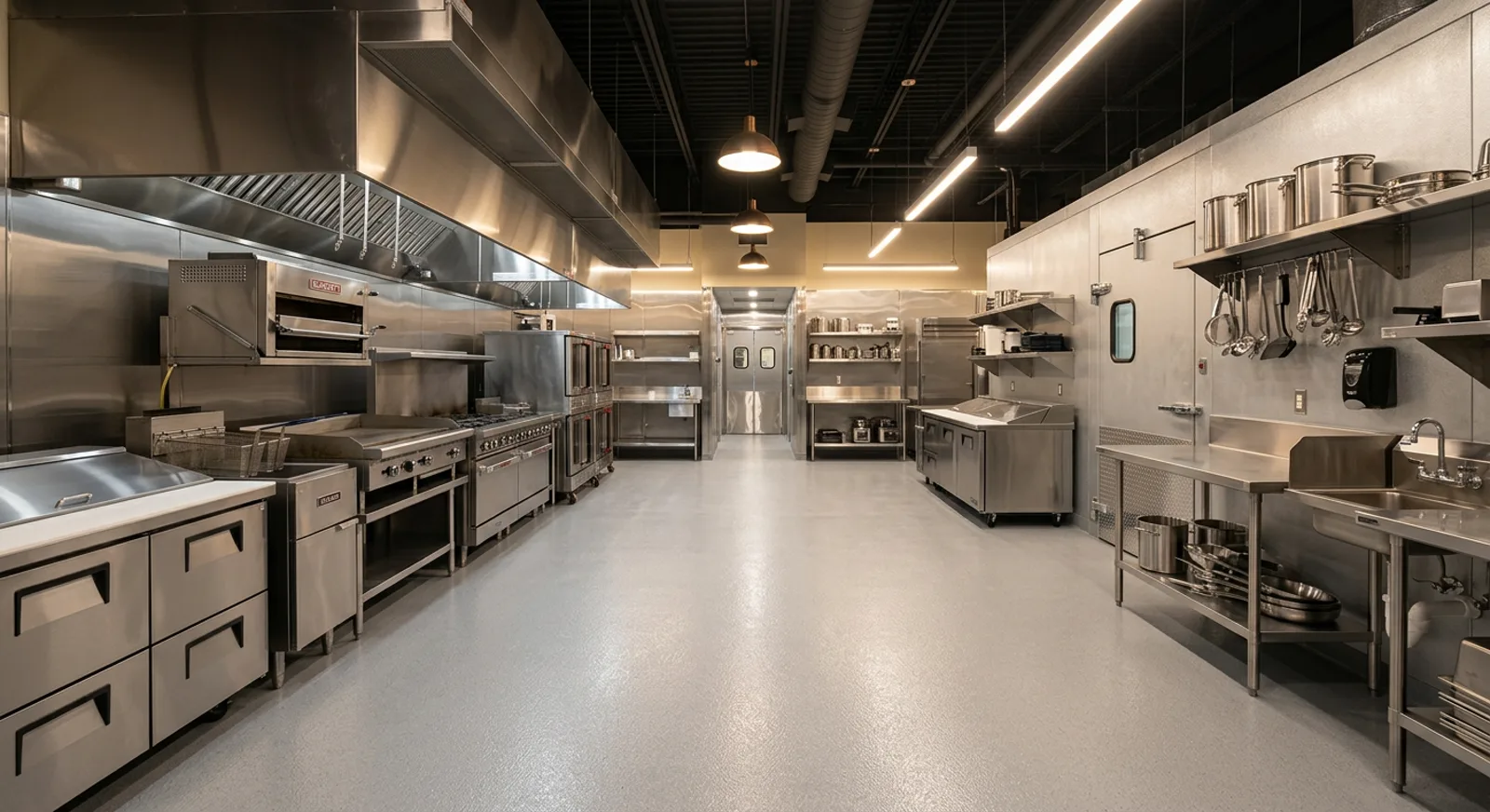
Glazed ceramic is the budget answer, usually fine in lighter-traffic offices. Quarry tile is the right call where grease, hot water, and a floor drain are part of the room, including restaurant kitchens and bar wash areas.
The slip rating, the Robinson test, and the ADA
Two numbers decide whether a commercial tile floor is right for the room before the bid even lands. The first is the wet DCOF, measured by ANSI A326.3. ANSI A137.1 sets a minimum of 0.42 for level interior spaces walked on when wet.
Entry foyers, toilet rooms, food prep areas, and any zone with tracked water need textured tile above that floor. Restaurant cook lines, dish pits, and any space with grease should plan for 0.60 or higher, always confirmed on the manufacturer's data sheet.
The second number is the Robinson floor test rating under ASTM C627. The test runs a three-wheel cart across a sample tile assembly in 14 cycles. The cycles survived become the service rating.
Service bands: 1 to 3 = Residential. 1 to 6 = Light Commercial, the right band for offices and small retail. 1 to 10 = Moderate. 1 to 12 = Heavy, shopping malls. 1 to 14 = Extra Heavy, airports.
The rating belongs to the full assembly, not the tile alone. A thinner subfloor or smaller tile drops the rating without warning. A Heavy-rated method in 12 by 12 porcelain can land at Moderate if the field installs 6 by 6 over a thinner slab.
ADA Section 302 is the third rule at play in any open-to-the-public commercial tile floor. Every accessible floor has to be stable, firm, and slip resistant.
Section 303 caps changes in level: vertical up to 1/4 inch, beveled between 1/4 and 1/2 inch at no steeper than 1:2, anything above 1/2 inch has to be a ramp.
The places this gets decided on a tile job are the transitions at the entry, the threshold at any restroom door, and the seam between tile and carpet at the office doorway.
What central NJ slab prep actually costs you
Three prep steps decide whether the tile holds for fifteen years or fails in two. The first is moisture testing on the concrete slab. A new slab pours with more moisture than tile adhesive can tolerate. ASTM F2170 in-situ relative humidity testing is the standard.
The second is substrate leveling. TCNA calls for no more than 1/4 inch variation in 10 feet for most thin-bed assemblies. The third is crack isolation membrane over any moving crack, because that crack telegraphs straight through the grout joint above it.
Every one of those steps has a line-item cost, and skipping any one of them to win the bid is the most expensive mistake in commercial tile. Skipping moisture testing on a 2,000 sq ft slab means guessing whether the adhesive will hold.
Skipping leveling means hollow spots under the tile that crack under a dolly or a chair caster. Skipping membrane over a moving crack means a return trip at month six to fix a tile row that has split along the slab crack below.
What the schedule does to the bid
Commercial tile is almost always installed in a building that is open or about to open, and the calendar drives the bid more than the square footage does.
Most Monmouth and Ocean County projects fall into one of three schedule patterns: overnight work while the tenant is closed, phased work in occupied sections, or a tight daytime window before a lease start or an inspection deadline.
Each of those patterns carries its own cost. Overnight work commands a premium because the crew is working off-hours and the building is paying for security, lights and elevator use.
Phased work adds time because the crew sets up and breaks down the same protection every visit. Daytime-window work before a deadline usually means a larger crew for a shorter run, which raises labor but keeps the schedule.
Cure time is the variable that catches owners by surprise. A standard polymer-modified thinset typically needs 24 hours before grout and 24 to 48 more before heavy foot traffic.
Two bids at the same square-foot price can differ by a full week of calendar time depending on which products the contractor specs and how the schedule was written. That week belongs on the comparison page, not as a footnote after the contract is signed.
What an honest central NJ commercial tile bid includes
Five lines have to be on the page before the number at the bottom means anything. First, the product and finish named, including manufacturer, collection, color, size, and the slip rating on the data sheet.
Second, prep spelled out, including moisture testing method, substrate leveling tolerance, and crack isolation membrane where the slab calls for it. Third, transitions and thresholds detailed, because that is where accessibility gets decided on a public floor.
Fourth, hours of work, cure times, and the schedule for moving furniture, fixtures, and equipment around the active area. Fifth, the conditions that trigger a change order: a wet slab, hidden damage to the substrate, or an out-of-level reading at the pour line.
A bid missing those is a placeholder, and two placeholders cannot be compared. Asking for the missing lines before signing is the cheapest part of the project.
How pricing actually works on a commercial tile bid
Three things move the number on a commercial tile bid in central NJ: the product spec, the prep, and the schedule. Material on a separate line, labor on a separate line, demolition usually its own line item. Labor-only for porcelain runs higher than residential, and out-of-hours work adds a premium that the building itself is paying for (security, lights, elevator use).
Substrate leveling on a slab that fails F2170 is a separate line. Crack isolation membrane, where called for, is a separate line. None of those numbers are hidden, but they all move the bottom line, and the move is what makes two bids at the same square-foot price land at very different totals.
When central NJ means Monmouth and Ocean County
Our commercial tile scope is Monmouth and Ocean County, and we take commercial flooring scope as a subcontractor for general contractors and property managers and direct for owners of offices, retail, salons, barbershops, gyms, and multifamily common areas.
If you are in Mercer, Middlesex, or Somerset County, the principles in this post still apply, but our physical reach stops at the Monmouth and Ocean line. We can name a contractor we trust in your county on a phone call.
The questions that make two commercial tile bids comparable
Five questions on every bid before you pick a number. First, what is the wet DCOF on the product data sheet, and does it match the room. Second, what Robinson service rating does the full assembly carry, and is it on the bid page.
Third, what does the prep line include, and what triggers an extra charge. Fourth, what are the hours of work, and how does the schedule work around an open building. Fifth, what is the cure time, and when can the room reopen to traffic.
Any contractor who answers those without reaching for the marketing sheet has walked a few of these jobs. Anyone who says the rating does not matter or that the schedule does not change the bid has not.
The cheapest number is rarely the cheapest job, and the contractor who writes the bid the way a project actually runs is the one whose number you can trust.
Get an honest commercial tile bid in central NJ
If you are bidding a commercial tile scope in Monmouth or Ocean County, send the address, the square footage, the existing slab condition, and the schedule you need to keep.
I will walk the space, look at the slab and the existing transitions, and write a bid with product, prep, transitions, schedule, and cure time as separate lines. No upsell, no padding. The number on the page is the number.
Phone or text is fine. (732) 889-6029, or email contact@jerseyconcept.com, or use the form at jerseyconcept.com/quote/ and tell me it is commercial.
Frequently Asked Questions
What should a central NJ commercial tile contractor put in writing?
A bid that lets you compare it names the product and finish, not just 'tile installed.' It lists prep, including moisture testing and what happens if the slab fails. It details transitions, because that is where accessibility gets decided. It includes hours of work, cure times, and the conditions that trigger a change order. Two bids missing those are placeholders, and two placeholders cannot be compared. A written scope is the floor under any contractor relationship.
What DCOF rating should commercial tile have in NJ?
ANSI A137.1 sets a minimum wet DCOF of 0.42 for level interior spaces walked on when wet. For commercial tile in Monmouth and Ocean County, that 0.42 is the floor, not the finish line. Entry foyers, toilet facilities, food prep areas, and any zone with tracked water need textured tile well above the minimum. For restaurant cook lines or any space with grease, plan for 0.60 or higher. Confirm the rating on the manufacturer's data sheet.
What does the Robinson floor test rating actually mean for commercial tile?
ASTM C627 is the Robinson floor test. A three-wheel cart rolls across a sample tile assembly in 14 cycles. Cycles survived become the service rating: 1 to 3 = Residential. 1 to 6 = Light Commercial, the right band for offices. 1 to 10 = Moderate. 1 to 12 = Heavy, shopping malls. 1 to 14 = Extra Heavy, airports. The rating belongs to the full assembly, not the tile alone. A thinner subfloor or smaller tile drops the rating without warning.
How do I compare two commercial tile bids in NJ?
Two bids at the same square-foot price can differ by a full week of calendar time depending on which products the contractor specs and how the schedule was written. Look at the product and finish named on the data sheet, the prep line, the transitions against ADA 303, the schedule in calendar dates with cure time, and the conditions that trigger a change order. The cheapest number is rarely the cheapest job. The contractor who writes the bid the way a project actually runs is the one whose number you can trust.
Sources & Further Reading
- Daltile DCOF slip resistance and test results
- TCNA ANSI A326.3 wet DCOF standards
- ASTM C627 Robinson floor test
- TCNA Robinson Test Overview (ICC NTA PDF)
- ADA 2010 Standards
- US Access Board ADA Chapter 3 - Floor and Ground Surfaces
- NJ UCC N.J.A.C. 5:23-2 (DCA codes)
- Custom Building Products - Commercial Kitchen Install